Protein advice has a way of making eating sound far more complicated than it needs to be. One person tells you to eat more meat. Another insists plants are the answer. Someone else has a list of foods you should avoid, a particular number you’re supposed to reach, or a meal plan that looks nothing like the way you actually eat.
But getting enough protein doesn’t require everyone to eat the same foods.
Whether you enjoy chicken and eggs, prefer fish and seafood, eat vegetarian meals, follow a fully vegan diet, or simply lean toward plants most of the time, there are practical ways to build a protein-rich eating pattern around your preferences.
The important part is understanding what different foods actually provide, how much protein you’re getting from realistic portions, and where you might need to make a few adjustments.
For women navigating their 40s, 50s, and beyond, this becomes especially useful. Muscle mass and strength can become harder to maintain with age, particularly through the menopause transition and later years. Adequate protein, alongside regular resistance training, helps provide the building blocks your body needs to maintain and repair muscle tissue.
But your body doesn’t require a particular dietary identity to make use of protein. It needs an adequate supply of amino acids, including the essential amino acids that must come from food.
How you provide those amino acids can look very different from one kitchen to another.
This guide isn’t here to convince you to become an omnivore, pescatarian, vegetarian, or vegan. It isn’t here to rank eating styles or suggest that one approach is automatically healthier than another. Instead, we’ll look at what each way of eating offers, which foods provide meaningful amounts of protein, where additional planning can help, and how to put those foods together into meals that make sense in everyday life.
We’ll also make room for the women who don’t fit neatly into any category. Maybe you eat mostly plant-based meals but enjoy salmon occasionally. Maybe you avoid dairy, don’t particularly like meat, or simply want more variety without changing everything about your diet.
That’s perfectly workable, too.
Because the goal isn’t to follow someone else’s definition of eating correctly. It’s to understand your options well enough to make informed choices that support your body.
You don’t have to change the way you eat to begin understanding how to make it work better for you.
What Actually Makes a Food a Good Protein Source?
One of the most confusing things about protein is that a food can contain protein without necessarily providing very much of it.
You’ll find protein in everything from chicken and eggs to beans, oats, broccoli, nuts, and whole grains. But the amounts vary considerably, and that difference matters when you’re trying to meet your needs through ordinary meals.
For example, a large egg provides approximately 6 grams of protein. A cup of cooked lentils provides about 18 grams, while a 3-ounce serving of cooked chicken breast provides approximately 26 grams. All three are useful protein sources, but they contribute different amounts in different serving sizes.
This doesn’t make one food inherently better than another. It simply means we need to understand what we’re getting.
Protein Content: Look at the Portion, Not Just the Food
When people hear that almonds, peanut butter, or broccoli contain protein, it’s easy to assume they’re interchangeable with foods such as eggs, tofu, fish, or Greek yogurt. Nutritionally, though, they serve somewhat different purposes.
Two tablespoons of peanut butter provide approximately 7 grams of protein, along with substantial amounts of fat and energy. That’s a perfectly reasonable food to enjoy, but it would take quite a lot of peanut butter to provide the same amount of protein as a serving of chicken or tofu.
Broccoli contains protein, too, but a cup of cooked broccoli provides only about 4 grams. It’s an excellent vegetable with plenty to offer nutritionally, but it isn’t usually a practical primary protein source.
By contrast, foods such as lentils, beans, tofu, tempeh, eggs, dairy products, fish, and meat can contribute more substantial amounts of protein in portions people commonly eat.
The distinction is especially helpful when building meals. Vegetables, grains, nuts, and seeds can all contribute to your daily protein intake, but they don’t necessarily replace a meaningful protein source on the plate.
Rather than asking whether a food contains protein, a more useful question is: How much protein does a portion I would actually eat provide?

Protein Quality: What Are You Getting Besides the Grams?
Protein is made up of amino acids, which your body uses to build and repair tissues, produce enzymes and other important compounds, and support countless physiological processes.
Nine amino acids are considered essential because your body cannot make them in sufficient amounts. They must come from the foods you eat.
Different protein sources contain different proportions of these amino acids. Many animal-derived proteins, including eggs, dairy, meat, and fish, provide all nine essential amino acids in proportions that generally meet human requirements. Soy foods, including tofu, tempeh, and edamame, are also valuable sources of all nine.
Other plant foods may provide relatively less of one or more essential amino acids compared with human requirements. Legumes, for example, tend to be relatively lower in methionine, while many grains are relatively lower in lysine.
That doesn’t mean these foods are incomplete in the sense that they’re missing amino acids entirely. It means their amino acid proportions differ.
It also doesn’t mean that someone eating a plant-based diet needs to carefully pair specific foods at every meal. Eating a variety of protein-containing foods across the day can provide the essential amino acids your body needs, provided overall intake is adequate.
We’ll explore that more closely later in this guide, particularly for vegetarian and vegan eating patterns.
Digestibility Matters, Too
The amount of protein listed on a nutrition label isn’t the only factor that determines how much your body can use. Protein digestibility also varies between foods.
Animal proteins and many refined or processed plant protein ingredients are generally highly digestible. Some whole plant foods contain fiber and naturally occurring compounds that can reduce protein digestibility to varying degrees.
Cooking, soaking, fermenting, and other food preparation methods can improve digestibility in many plant foods. This is one reason foods such as cooked beans, tofu, and tempeh can be particularly useful in plant-based eating patterns.
For most people eating a varied diet, these differences don’t require complicated calculations. But they help explain why meeting protein needs on an entirely plant-based diet can sometimes require a little more attention to food choices and total intake.
A Practical Look at Protein Amounts
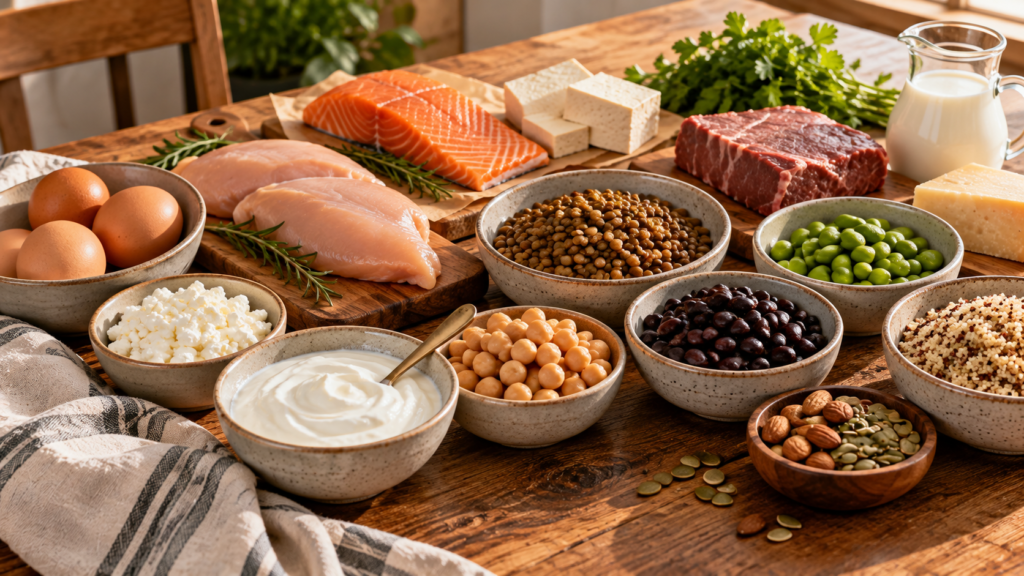
The following amounts are approximate. Actual protein content varies with the product, preparation method, and serving size.
| Food | Typical serving | Approximate protein |
|---|---|---|
| Chicken breast, cooked | 3 ounces | 26 g |
| Salmon, cooked | 3 ounces | 22 g |
| Lean beef, cooked | 3 ounces | 22–26 g |
| Eggs | 2 large | 12–13 g |
| Plain Greek yogurt | ¾ cup | 15–18 g |
| Cottage cheese | ½ cup | 12–14 g |
| Firm tofu | ½ cup | 10–20 g |
| Tempeh | 3 ounces | 16–18 g |
| Edamame, cooked and shelled | ½ cup | 9 g |
| Lentils, cooked | 1 cup | 18 g |
| Chickpeas, cooked | 1 cup | 14–15 g |
| Black beans, cooked | 1 cup | 15 g |
| Quinoa, cooked | 1 cup | 8 g |
| Peanut butter | 2 tablespoons | 7–8 g |
Notice that there are useful options across several eating styles. The main difference isn’t whether protein is available, but how you assemble enough of it throughout the day.
It’s also worth noticing that serving sizes aren’t necessarily interchangeable. Three ounces of cooked salmon and one cup of cooked lentils differ considerably in volume, fiber, fat, carbohydrate, and other nutrients. Both can be part of a nourishing diet, but they won’t create identical meals.
This is why looking at protein in isolation can only take us so far.
Protein Is Important, but It Isn’t the Whole Meal
A food’s protein content matters, but so does everything else it brings to the table.
Salmon provides omega-3 fats. Lentils offer fiber, folate, and iron. Dairy foods can contribute calcium. Eggs provide choline and other nutrients. Soy foods can offer protein alongside iron and, depending on the product, calcium. Nuts and seeds contribute unsaturated fats, minerals, and additional energy.
There are also differences within food groups. Some protein sources contain more saturated fat or sodium than others, and heavily processed products can vary widely in their nutritional profiles.
The goal isn’t to choose foods based on protein grams alone. It’s to build an overall eating pattern that provides adequate protein alongside fiber, healthy fats, vitamins, minerals, and enough food to meet your energy needs.
And that’s where your individual eating style becomes useful.
Once you understand which foods provide meaningful amounts of protein, you can begin choosing the ones that fit your preferences and building meals around them.
The best protein sources for you aren’t necessarily the ones with the highest numbers on a chart. They’re the ones that help you meet your needs consistently within a varied, satisfying way of eating.
Five Ways to Build Your Protein Intake
Once you understand what makes a food a useful protein source, the next question becomes much more practical: how do you get enough of it while eating foods you actually enjoy?
There isn’t one answer, because there isn’t one way to eat.
Some women enjoy meat, fish, eggs, and dairy. Others avoid meat but regularly eat seafood. Some rely on eggs and dairy alongside plant foods, while others choose to eat entirely plant-based. And plenty of women fall somewhere in between, eating mostly plants without eliminating animal foods altogether.
Each approach can provide adequate protein. The foods you rely on, the portions you choose, and the amount of planning involved may differ, but the underlying goal remains the same: provide your body with enough protein and essential amino acids throughout the day.
Let’s look at what that can mean in practice.
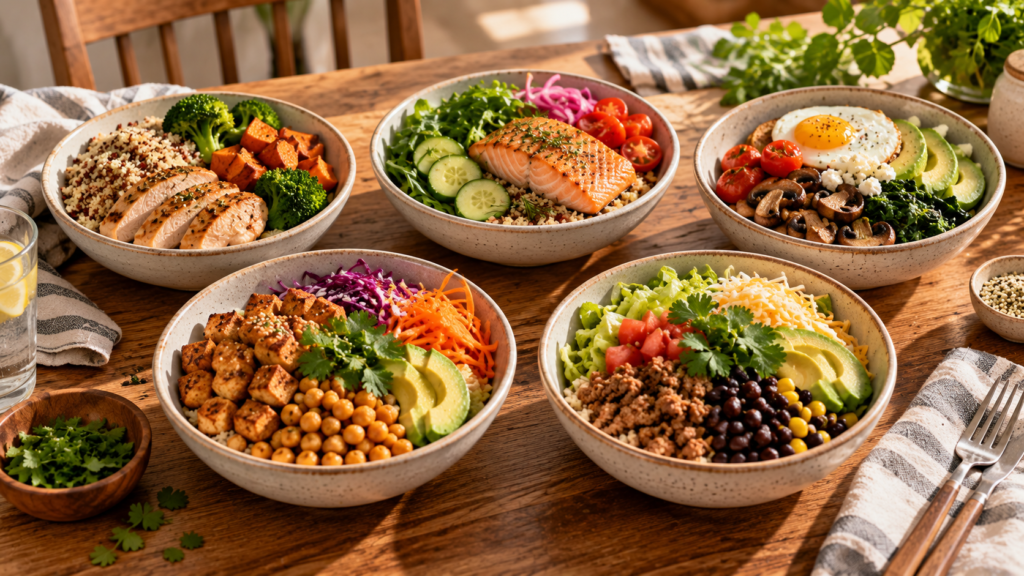
1. Omnivore: Protein From Both Animal and Plant Foods
An omnivorous eating pattern includes both animal-derived and plant-derived foods. That might mean eggs at breakfast, chicken or beans at lunch, salmon at dinner, and a variety of vegetables, grains, fruits, nuts, and seeds throughout the day.
One advantage of this approach is the wide range of protein sources available. Meat, poultry, seafood, eggs, and dairy can provide substantial amounts of protein in relatively modest portions, while legumes, soy foods, whole grains, nuts, and seeds contribute additional protein alongside other valuable nutrients.
But having access to many protein sources doesn’t automatically mean you’re getting enough.
It’s entirely possible to eat an omnivorous diet in which breakfast provides very little protein, lunch is mostly refined carbohydrates, and nearly all the day’s protein arrives at dinner. That doesn’t make those meals wrong, but it may leave room for improvement, especially if you’re trying to support muscle maintenance and strength.
The solution doesn’t necessarily involve eating more meat. Sometimes it means making better use of the variety already available.
Useful protein sources include:
- •Chicken, turkey, lean beef, pork, and other meats
- •Salmon, tuna, sardines, shrimp, and other seafood
- •Eggs and egg whites
- •Greek yogurt, cottage cheese, milk, and cheese
- •Tofu, tempeh, and edamame
- •Lentils, beans, and chickpeas
- •Nuts, seeds, and whole grains as additional contributors
A practical omnivorous breakfast might include eggs with whole-grain toast and fruit, or Greek yogurt with berries and oats. Lunch could be a chicken sandwich, lentil soup with a side of cottage cheese, or a grain bowl with tofu. Dinner might feature salmon with potatoes and vegetables, a turkey-and-bean chili, or a stir-fry with chicken and edamame.
Notice that none of these meals requires a special diet product or an entirely new way of cooking.
One consideration worth keeping in mind is variety. Relying heavily on processed meats or higher-saturated-fat choices can crowd out other foods that offer different nutritional benefits. Choosing a mixture of seafood, leaner meats, dairy, legumes, and plant proteins can make the overall eating pattern more balanced.
For an omnivore, the biggest opportunity is often not finding more protein sources. It’s using the ones already available more intentionally.
2. Pescatarian: Protein From Seafood, Plants, and Often Eggs and Dairy
A pescatarian eating pattern excludes meat and poultry but includes fish and seafood. Many pescatarians also eat eggs and dairy, although individual preferences vary.
This approach offers considerable protein variety. Fish and shellfish provide substantial amounts of high-quality protein, while eggs, yogurt, cottage cheese, tofu, beans, lentils, and other plant foods can help fill out meals throughout the week.
Seafood also offers nutritional benefits beyond protein. Fatty fish such as salmon, sardines, and trout provide long-chain omega-3 fatty acids, including EPA and DHA, which are important for several aspects of health.
However, pescatarian eating doesn’t have to mean seafood at every meal.
Useful protein sources include:
- •Salmon, trout, sardines, tuna, cod, and other fish
- •Shrimp, scallops, mussels, and other shellfish
- •Eggs and dairy products, when included
- •Tofu, tempeh, and edamame
- •Lentils, beans, chickpeas, and peas
- •Whole grains, nuts, and seeds as additional contributors
Breakfast might look much like an omnivorous breakfast, with eggs or Greek yogurt providing the main protein. Lunch could be a tuna sandwich, chickpea salad with feta, or tofu grain bowl. Dinner might feature baked cod with roasted vegetables, shrimp stir-fry, or lentil pasta with a satisfying sauce.
One important consideration is seafood selection.
Fish and shellfish vary in mercury content, and eating a variety of lower-mercury options is generally preferable to relying heavily on species with higher concentrations. Salmon, sardines, trout, and shrimp are examples of commonly available lower-mercury choices.
Women who are pregnant, breastfeeding, or planning pregnancy should pay particular attention to current FDA and EPA seafood guidance.
Another consideration is that seafood can be expensive or inconvenient to prepare regularly. Frozen fish, canned salmon, canned sardines, and appropriately selected canned tuna can offer practical alternatives to fresh seafood.
For pescatarians who eat little or no dairy or eggs, plant proteins become even more important for building adequate intake across the day.
The key is to treat seafood as one valuable category within a broader collection of protein-rich foods, rather than assuming every meal must revolve around fish.

3. Vegetarian: Protein Without Meat or Fish
Vegetarian eating patterns exclude meat, poultry, and seafood, but many include eggs, dairy, or both.
This distinction matters because vegetarian diets can look quite different. Someone who regularly eats eggs, Greek yogurt, and cottage cheese has a different collection of convenient protein sources than someone who avoids eggs and eats very little dairy.
Both approaches can work, but the meal-building strategy may need to change.
Vegetarian protein sources include several foods that provide substantial amounts of protein in realistic servings. Eggs and dairy can make meeting protein needs relatively straightforward, while tofu, tempeh, edamame, beans, and lentils offer additional variety.
Useful protein sources include:
- •Eggs and egg whites
- •Greek yogurt, cottage cheese, milk, and cheese
- •Tofu, tempeh, and edamame
- •Lentils, black beans, kidney beans, and chickpeas
- •Seitan, for those who eat gluten
- •Soy milk and other protein-containing dairy alternatives
- •Whole grains, nuts, and seeds as additional contributors
A vegetarian breakfast might include Greek yogurt with fruit and oats, scrambled eggs with toast, or a tofu scramble. Lunch could be lentil soup with a yogurt-based side, a chickpea-and-egg salad sandwich, or a grain bowl with tempeh. Dinner might be tofu stir-fry, bean chili with cheese, or a lentil-based pasta dish.
One common challenge is assuming that removing meat from a meal automatically leaves a protein-rich vegetarian meal behind.
A plate of pasta with tomato sauce and vegetables can be delicious and nourishing, but depending on the portions and ingredients, it may provide relatively little protein. Adding lentils, tofu, beans, cheese, or another substantial protein source can make it better suited to meeting higher protein needs.
Similarly, a vegetable salad topped with a small sprinkling of nuts may not provide as much protein as expected. Nuts are nutritious, but a generous portion of beans, tofu, eggs, or another concentrated source may make a bigger difference.
Vegetarian diets also deserve some attention to nutrients such as iron, vitamin B12, and, depending on food choices, zinc, calcium, and omega-3 fats. Eggs and dairy can contribute B12, but people who consume little of either may need to pay closer attention.
The advantage of vegetarian eating is that there are many ways to build satisfying, protein-rich meals without meat or fish. The important part is making protein a deliberate component of the meal rather than assuming vegetables and grains will always provide enough on their own.
4. Vegan: Meeting Protein Needs Entirely Through Plants
A vegan eating pattern excludes all animal-derived foods, including meat, fish, eggs, dairy, and ingredients derived from animals.
Adequate protein intake is absolutely possible with a well-planned vegan diet. However, because the available food sources differ from those in omnivorous or vegetarian eating patterns, it can require more deliberate attention to portions, variety, and overall intake.
The most useful starting point is understanding which plant foods provide substantial protein and which contribute smaller amounts.
Soy foods are particularly valuable. Tofu, tempeh, edamame, and soy milk can provide meaningful amounts of protein, and soy protein contains all nine essential amino acids. Lentils, beans, chickpeas, seitan, and certain higher-protein plant-based products can also make important contributions.
Useful protein sources include:
- •Tofu, tempeh, and edamame
- •Soy milk and soy yogurt with meaningful protein content
- •Lentils, beans, chickpeas, and split peas
- •Seitan, for those who tolerate gluten
- •Textured vegetable protein (TVP) and soy crumbles
- •Higher-protein legume-based pastas
- •Peanuts, pumpkin seeds, hemp seeds, and other nuts and seeds as additional contributors
- •Whole grains such as oats, quinoa, and whole wheat as additional contributors
A vegan breakfast might include a tofu scramble with toast, oats prepared with soy milk and topped with seeds, or a substantial serving of high-protein soy yogurt with fruit. Lunch could be a lentil-and-grain bowl, a tofu sandwich, or chickpea pasta with vegetables. Dinner might feature tempeh stir-fry, a bean-and-soy chili, or a curry built around tofu and lentils.
A major practical consideration is the amount of food needed to provide a given amount of protein.
Beans and lentils offer valuable protein, fiber, and micronutrients, but they also contain substantial carbohydrate and fiber. That’s not a problem in itself. In fact, those components can be beneficial. But relying entirely on legumes may mean eating relatively large volumes of food to reach higher protein targets.
Including more concentrated plant protein sources, such as tofu, tempeh, seitan, or TVP, can make meeting those targets easier without requiring unusually large meals.
Protein quality is another consideration, although it is frequently misunderstood. Plant proteins contain essential amino acids, but the proportions vary. Eating a variety of protein-rich plant foods across the day helps provide a complementary range of amino acids. You do not need to combine beans and rice in precisely calculated amounts at every meal.
For women with higher protein needs, particularly those actively strength training, paying attention to total protein intake and including substantial protein sources across meals may be especially useful.
There is also one nutritional consideration that deserves particular emphasis: vitamin B12.
Reliable vitamin B12 sources are limited in unfortified plant foods. People following vegan diets need a dependable source through appropriately fortified foods or supplementation. This is not simply an optional optimization; inadequate B12 intake can lead to serious health problems.
Depending on the overall diet, iron, calcium, iodine, vitamin D, zinc, and omega-3 fatty acids may also deserve attention.
We’ll explore those considerations later, because adequate protein is only one part of a nutritionally complete eating pattern.
A vegan diet doesn’t need to imitate an omnivorous diet to be successful. It needs to provide adequate energy, protein, essential amino acids, and the other nutrients the body requires.
With the right foods and some thoughtful planning, that is entirely achievable.

5. Flexitarian or Plant-Forward: More Plants Without Strict Rules
Not everyone wants or needs a formal dietary label.
Some women enjoy mostly vegetarian meals but eat fish once or twice a week. Others include eggs and dairy regularly, choose beans or tofu for many meals, and occasionally cook chicken or beef. Some simply want to eat more plants while keeping their favorite animal foods.
This is often described as flexitarian or plant-forward eating.
It’s not a completely separate nutritional category. Rather, it’s a flexible approach that emphasizes plant foods without necessarily excluding animal products.
For women who dislike rigid food rules, that flexibility can be particularly appealing.
Useful protein sources include:
- •Beans, lentils, chickpeas, and split peas
- •Tofu, tempeh, and edamame
- •Eggs, yogurt, and cottage cheese
- •Fish and seafood, when desired
- •Chicken, turkey, or other meats in amounts that suit individual preferences
- •Nuts, seeds, and whole grains as additional contributors
A plant-forward breakfast might include Greek yogurt with berries and oats or tofu scramble with vegetables. Lunch could be a bean-and-grain bowl, a chickpea sandwich, or leftover salmon with greens. Dinner might feature lentil chili one night, chicken with roasted vegetables another, and tofu stir-fry later in the week.
There is no required ratio of plant foods to animal foods that someone must follow to use this approach. The emphasis is on building meals around a variety of nutritious foods while allowing individual preferences to guide the details.
One particularly practical strategy is to think in terms of additions rather than substitutions.
You might add lentils to a meat-based chili, include edamame in a chicken stir-fry, or combine beans with eggs in a breakfast dish. These combinations can contribute protein, fiber, and other nutrients without requiring you to eliminate foods you already enjoy.
Plant-forward eating can also make it easier to explore unfamiliar protein sources gradually. Rather than committing to a completely different eating pattern, you can experiment with one meal at a time.
For many women, this approach provides a useful middle ground: more variety, more plant foods, and plenty of flexibility.
The Common Thread Across All Five Approaches
These eating styles may look different on the plate, but they share the same fundamental principles.
Adequate protein requires enough total intake, useful sources of essential amino acids, and meals that fit your appetite, preferences, and daily life. Variety helps provide other important nutrients, and practical food choices make consistency easier.
No eating style automatically guarantees adequate protein. An omnivore can fall short just as a vegan can. And no eating style automatically prevents someone from meeting their needs.
What matters is understanding which foods are available to you, what they contribute, and how to use them in amounts that support your goals.
Your eating style determines which foods you choose. It doesn’t change your body’s need for protein.
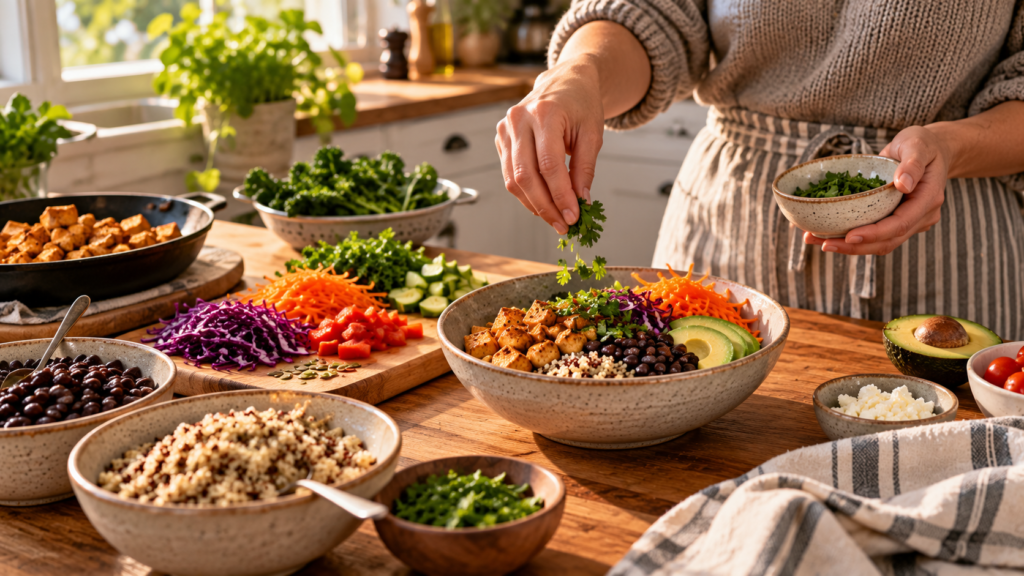
Protein Quality and Combining Plant Proteins: What Actually Matters?
If you’ve ever looked into plant-based eating, you’ve probably encountered the idea that certain proteins are “complete” while others are “incomplete.” You may have also heard that you need to combine specific foods, such as rice and beans, at the same meal to get all the amino acids your body needs.
There’s some legitimate nutrition science behind these ideas, but the way they’re often explained makes eating sound far more complicated than it needs to be.
The important distinction isn’t whether a food belongs in the complete or incomplete category. It’s whether your overall eating pattern provides enough protein and the essential amino acids your body needs.
What Does “Complete Protein” Actually Mean?
Every protein is made from amino acids. Your body uses these amino acids to maintain and repair tissues, support immune function, produce enzymes and hormones, and build and maintain muscle.
Of the amino acids used to make proteins, nine are considered essential. Your body cannot produce them in sufficient amounts, so they must come from food.
A protein is commonly described as complete when it provides all nine essential amino acids in proportions that meet human requirements. Eggs, dairy products, fish, meat, and soy foods are familiar examples of protein sources with favorable essential amino acid profiles.
But the term incomplete protein can be misleading.
Beans, lentils, grains, nuts, and seeds generally contain all nine essential amino acids, too. The difference is that some contain relatively smaller amounts of particular amino acids compared with what the body requires.
For example, legumes tend to contain less methionine relative to their other amino acids, while many grains contain relatively less lysine. Neither food group is missing those amino acids entirely.
And that’s where dietary variety becomes useful.
Do You Need to Combine Proteins at Every Meal?
No. You do not need to eat carefully matched combinations of plant proteins at every meal to obtain all nine essential amino acids.
The familiar pairing of rice and beans illustrates how different foods can complement one another. Beans provide relatively more lysine, while rice contributes amino acids in different proportions. Together, they offer a more balanced amino acid profile than either food alone.
But your body doesn’t require you to eat those foods together in a precisely calculated ratio.
Protein digestion and amino acid metabolism occur continuously, and your body maintains a circulating pool of amino acids that can be used for different physiological processes. Eating a variety of protein-containing foods throughout the day can help provide an adequate supply of essential amino acids.
That means lentils at lunch and a tofu-based dinner can both contribute to your daily intake without requiring you to calculate which amino acids appeared in each meal.
There is one important qualification, however: variety doesn’t compensate for eating too little protein overall. Someone consuming very small amounts of protein may still fall short of essential amino acid requirements, even if their food choices are diverse.
The practical goal is adequate total protein from a range of useful sources, not perfect food pairing.
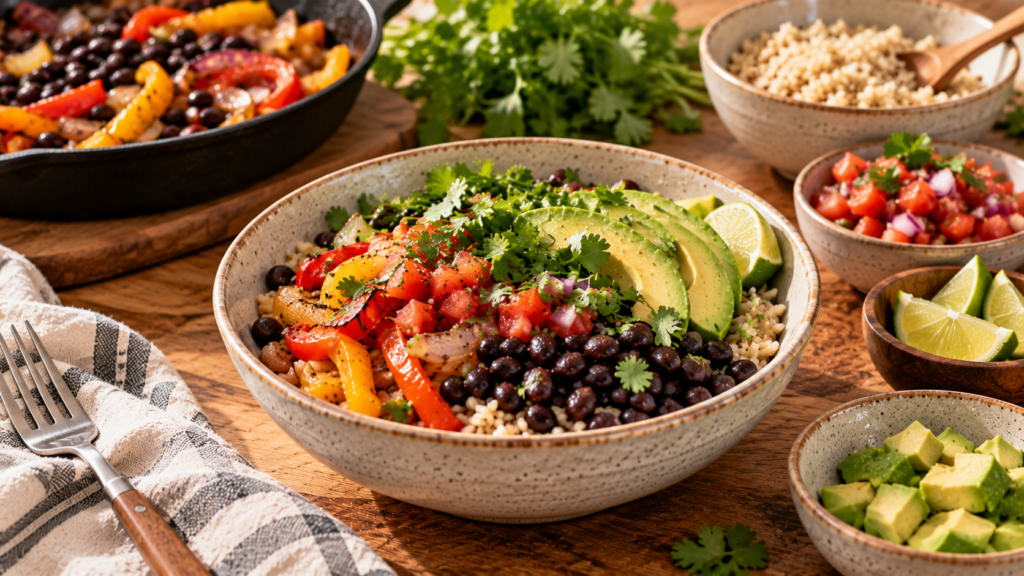
What About Leucine and Muscle Maintenance?
For women interested in maintaining or building muscle, one amino acid deserves a little extra attention: leucine.
Leucine is an essential amino acid involved in signaling the process of muscle protein synthesis, through which the body builds new muscle proteins. It acts as part of the biological machinery that helps initiate this process, particularly in response to protein-containing meals.
However, leucine alone isn’t enough to build muscle. The body also needs the other essential amino acids, sufficient overall nutrition, and, for meaningful improvements in strength and muscle mass, an appropriate training stimulus.
Different foods provide different amounts of leucine relative to their total protein content. Dairy proteins, eggs, meat, fish, and soy are useful sources. Other plant proteins contribute leucine as well, although some provide smaller amounts per serving or have lower digestibility.
This is one reason the amount of protein in a meal matters alongside the source.
For example, a meal containing a small handful of nuts may provide some protein and leucine, but considerably less than a meal built around a substantial portion of tofu, Greek yogurt, fish, or lentils combined with other protein-rich foods.
Research on muscle protein synthesis also suggests that older adults may require a larger protein dose to stimulate a comparable muscle-building response than younger adults, a phenomenon sometimes described as anabolic resistance.
That doesn’t mean every woman over 40 needs to count leucine grams or buy specialized supplements. It means that eating adequate amounts of high-quality protein, particularly alongside resistance training, becomes increasingly relevant as we age.

Can Plant Proteins Support Muscle Growth?
Absolutely.
A well-planned plant-based eating pattern can support muscle maintenance and growth, including in people who regularly strength train.
The key considerations are sufficient total protein, adequate essential amino acids, enough overall energy, and consistent resistance training.
Some plant proteins are less digestible or contain lower proportions of particular essential amino acids than commonly consumed animal proteins. In practice, that may mean someone eating entirely plant-based benefits from choosing substantial protein sources, including soy foods, legumes, seitan, and other protein-rich options, rather than relying mainly on small contributions from vegetables, grains, nuts, and seeds.
It may also be useful to distribute protein-containing foods across meals rather than consuming very little protein until dinner.
Importantly, research comparing animal and plant protein for muscle-related outcomes has produced nuanced findings. Differences can depend on the protein sources, amounts consumed, study populations, and whether participants are strength training. Some studies show advantages for particular animal proteins under certain conditions, while others find comparable outcomes when total protein and training are appropriately matched.
The evidence does not support the idea that animal protein is the only effective option for building muscle.
Nor does it mean that all protein sources are identical in every respect.
The useful conclusion is that different eating styles can support strength and muscle health, but the details of food selection and intake matter.
What This Means for Your Everyday Meals
If you eat a mixture of animal and plant foods, meeting essential amino acid needs is often relatively straightforward, provided you consume enough protein overall.
If you’re vegetarian and include eggs or dairy, those foods can contribute high-quality protein alongside legumes, soy foods, and grains.
If you’re vegan, including substantial servings of foods such as tofu, tempeh, edamame, lentils, beans, seitan, and soy milk can help provide both adequate protein and a varied amino acid intake.
You don’t need to turn breakfast into a chemistry experiment. You don’t need to memorize the amino acid composition of every food. And you certainly don’t need to assume that plant proteins are somehow useless unless they’re paired with another ingredient.
Instead, pay attention to the bigger picture: Are you eating enough? Do your meals include meaningful protein sources? Are you choosing a variety of foods that meet your nutritional needs? And if maintaining muscle is a priority, are you giving your body the additional stimulus of regular strength training?
Those questions are far more useful than worrying about whether every individual food earns a complete-protein label.
Your body needs essential amino acids, not perfectly matched food combinations. A varied, adequately protein-rich eating pattern can provide them in more than one way.
Common Nutritional Gaps Worth Paying Attention To
Protein is important, but it isn’t the only nutritional consideration when choosing how to eat. Different foods provide different combinations of vitamins, minerals, fats, and other nutrients, and removing entire food groups can sometimes make certain nutrients harder to obtain.
That doesn’t mean one eating style is automatically deficient or that everyone needs a cabinet full of supplements. It means understanding where particular nutrients come from and recognizing when your usual food choices might leave a gap.
For women in their 40s, 50s, and beyond, this awareness can be especially valuable. Changes in menstrual patterns, bone health, muscle mass, and overall nutritional needs can influence which nutrients deserve attention. But those considerations don’t apply equally to everyone, and menopause itself doesn’t automatically create a deficiency.
The goal is to identify potential gaps before they become problems, without turning eating into another source of anxiety.
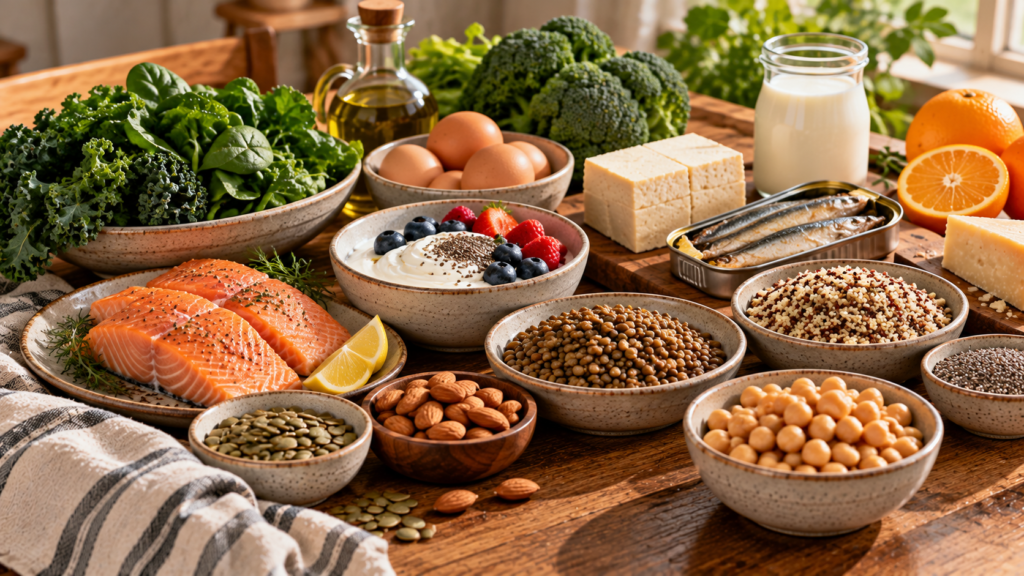
Vitamin B12: Particularly Important for Vegan Diets
Vitamin B12 is essential for healthy nerve function, red blood cell formation, and DNA synthesis. Inadequate intake can eventually cause anemia, neurological symptoms, and other serious health problems.
Reliable natural dietary sources of B12 are primarily animal-derived foods, including meat, fish, eggs, and dairy products. For omnivores, pescatarians, and many vegetarians, these foods can contribute meaningful amounts.
For people following a vegan diet, however, unfortified plant foods are not dependable sources of vitamin B12.
Certain plant foods are sometimes promoted as natural B12 sources, but they may contain inactive forms or provide inconsistent amounts. They should not be relied upon to prevent deficiency.
Anyone following a vegan diet needs a reliable source of vitamin B12 through fortified foods, an appropriate supplement, or a combination of the two.
Vegetarians who eat few eggs or dairy products may also need to pay attention to their intake.
B12 absorption can become less efficient with age, and certain medications or digestive conditions can interfere with absorption regardless of eating style. Anyone with risk factors or symptoms of deficiency should discuss appropriate testing and supplementation with a healthcare professional.
Iron: Amounts Matter, but So Does Absorption
Iron helps the body transport oxygen through hemoglobin and supports numerous other physiological functions. Inadequate iron can contribute to iron-deficiency anemia, which may cause fatigue, weakness, and reduced exercise tolerance.
Iron comes in two dietary forms: heme iron, found in animal foods such as meat and seafood, and non-heme iron, found in plant foods as well as animal foods.
Heme iron is generally absorbed more efficiently. Non-heme iron absorption varies more depending on the meal and the body’s iron status.
Plant-based iron sources include lentils, beans, tofu, fortified cereals, pumpkin seeds, and certain leafy greens. These foods can make valuable contributions, but people who avoid meat may need to pay closer attention to both intake and absorption.
One simple strategy is to include vitamin C-rich foods alongside plant sources of iron. For example, adding bell peppers or tomatoes to a lentil dish, or serving citrus fruit with a meal, can improve non-heme iron absorption.
Iron needs also change across adulthood. Women who are still menstruating, particularly those experiencing heavy or irregular bleeding during perimenopause, may have higher iron needs than women who are postmenopausal.
After menopause, iron requirements generally decrease because menstrual blood loss has ended.
This is one nutrient where more is not automatically better. Excess iron can be harmful, and iron supplements should not be taken routinely without a clear reason or appropriate medical guidance.

Calcium and Vitamin D: Supporting Bone Health
Calcium and vitamin D work together to support bone health, although they serve different roles.
Calcium is a major structural component of bones and teeth and also contributes to muscle contraction, nerve signaling, and other functions. Vitamin D helps regulate calcium absorption and supports normal bone metabolism.
Bone health becomes increasingly important through the menopause transition and afterward, when declining estrogen levels can accelerate bone loss.
Dairy foods such as milk, yogurt, and cheese are familiar calcium sources, but they aren’t the only options.
Calcium-set tofu, fortified plant milks, certain leafy greens, and canned fish with edible bones can also provide meaningful amounts. The calcium content of tofu and plant milks varies considerably, so checking the label is useful.
Women who avoid dairy should pay particular attention to whether their usual alternatives actually provide calcium. Almond milk, oat milk, and soy milk may look similar in a glass, but their calcium and protein contents can differ substantially depending on fortification and formulation.
Vitamin D presents a somewhat different challenge because relatively few foods naturally contain substantial amounts. Fatty fish, egg yolks, and fortified foods can contribute, while sunlight exposure supports vitamin D production in the skin.
However, sunlight-derived vitamin D varies with season, latitude, skin pigmentation, age, sunscreen use, and time spent outdoors. Living somewhere with long, cloudy winters can make consistent vitamin D production particularly difficult.
People with limited dietary intake, low sun exposure, osteoporosis risk factors, or certain medical conditions may benefit from discussing vitamin D intake and whether testing or supplementation is appropriate with a healthcare professional.
Omega-3 Fatty Acids: Different Sources Provide Different Forms
Omega-3 fatty acids play important roles in cell membranes and several physiological processes.
The three commonly discussed forms are alpha-linolenic acid (ALA), eicosapentaenoic acid (EPA), and docosahexaenoic acid (DHA).
ALA is found in plant foods such as ground flaxseed, chia seeds, walnuts, and certain oils. EPA and DHA are found primarily in fatty fish and seafood, as well as algae-derived products.
The body can convert some ALA into EPA and DHA, but that conversion is limited and varies between individuals.
For omnivores and pescatarians, eating a variety of seafood, particularly lower-mercury fatty fish, can provide EPA and DHA directly.
Vegetarians and vegans can obtain ALA from plant foods, while algae-derived EPA and DHA products offer an animal-free source of the longer-chain omega-3 fats.
Not everyone needs an omega-3 supplement. But someone who never eats fish or seafood may find it useful to review their omega-3 intake, particularly if their diet also contains few ALA-rich foods.
Iodine: Easy to Overlook When Food Choices Change
Iodine is required to produce thyroid hormones, which help regulate metabolism, growth, and numerous physiological processes.
Common dietary sources include iodized salt, dairy products, seafood, and eggs. The iodine content of foods can vary depending on agricultural practices, animal feed, and processing methods.
People who avoid dairy and seafood and use only non-iodized salts may have relatively few dependable iodine sources in their diets.
This can be particularly relevant for some vegan eating patterns.
Seaweed contains iodine, but the amounts vary enormously between species and products. Some seaweeds provide excessive quantities, so eating large amounts or relying on kelp supplements isn’t necessarily a safe solution.
Using iodized salt in appropriate amounts, choosing fortified foods where available, or discussing supplementation when needed may provide more predictable options.
Because excessive iodine can also interfere with thyroid function, this is another nutrient where indiscriminate supplementation isn’t advisable.
Zinc: Available in Plants, but Absorption Can Differ
Zinc supports immune function, wound healing, protein synthesis, and many other biological processes.
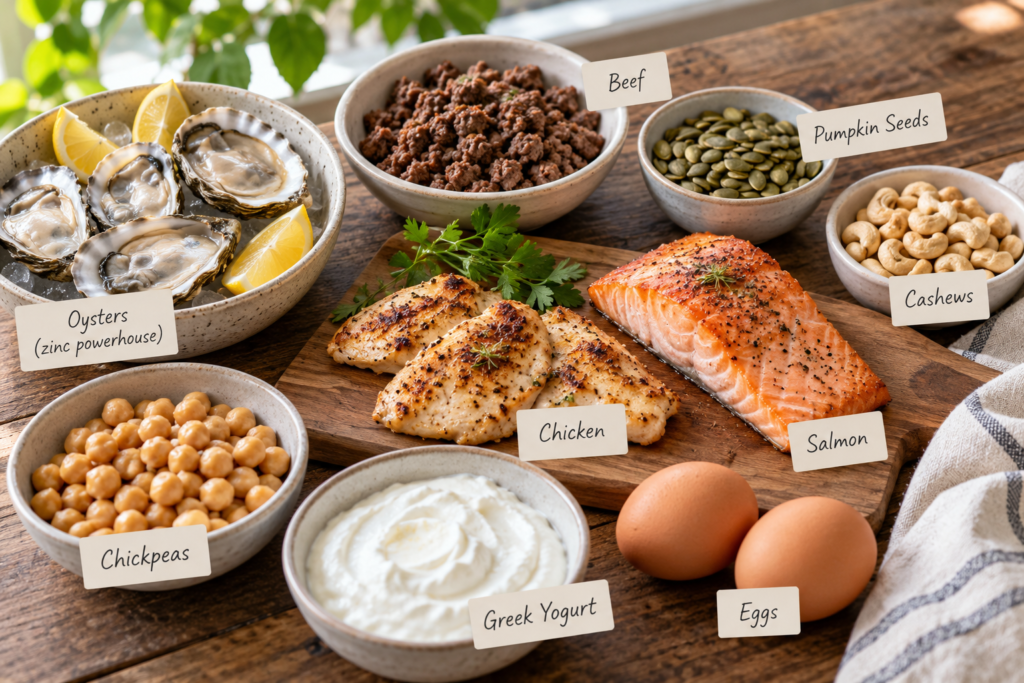
Meat and seafood are useful sources, with oysters providing particularly large amounts. Dairy products and eggs contribute smaller amounts.
Plant sources include beans, lentils, whole grains, nuts, seeds, and soy foods.
However, certain plant compounds known as phytates can reduce zinc absorption. Phytates occur naturally in foods such as legumes, grains, nuts, and seeds.
This doesn’t make those foods unhealthy. They provide many valuable nutrients, including fiber and minerals. It simply means zinc availability can differ between eating patterns.
Soaking, sprouting, fermenting, and using leavened grain products can reduce phytate content or improve mineral availability in some foods.
For people following vegetarian or vegan diets, regularly including a variety of zinc-containing foods is a practical starting point.
Fiber and Overall Food Variety Matter, Too
Nutritional gaps aren’t limited to nutrients that become harder to obtain when animal foods are excluded.
An eating pattern built heavily around meat, eggs, dairy, and refined grains may provide plenty of protein while falling short on fiber, particularly if legumes, vegetables, fruits, and whole grains are limited.
Fiber supports digestive health, contributes to healthy cholesterol levels, and helps nourish beneficial gut microorganisms. Different plant foods provide different types of fiber and other compounds that support overall dietary quality.
This is one reason protein intake shouldn’t become the sole measure of a successful meal.
An omnivorous diet can benefit from more beans, lentils, vegetables, and whole grains. A vegan diet can benefit from more substantial protein sources and careful attention to B12. A pescatarian diet can benefit from seafood variety. A vegetarian diet may need additional attention to iron or other nutrients depending on the foods included.
Every eating pattern has strengths, and every eating pattern can develop gaps when variety becomes too limited.
How to Know Whether You Need to Make Changes
It’s tempting to respond to a list of potentially important nutrients by buying supplements for all of them. But that isn’t necessarily helpful, and in some cases it can be harmful.
A better approach begins with your actual eating habits.
Consider which major food groups you regularly include, which you avoid, and whether your meals provide a reasonable variety of protein sources, vegetables, fruits, grains, and other nutrient-rich foods.
If you follow a vegan diet, establishing a dependable B12 source is essential. If you avoid dairy, calcium deserves attention. If you rarely eat seafood, it may be useful to review your iodine and omega-3 sources. If you experience heavy menstrual bleeding, unusual fatigue, or other symptoms that could indicate iron deficiency, medical evaluation may be appropriate.
Dietary patterns can help identify possible concerns, but they cannot diagnose a deficiency. Symptoms can have many causes, and blood testing is useful for some nutrients but not equally informative for all of them.
A registered dietitian or qualified healthcare professional can help evaluate individual needs, particularly when dietary restrictions, medical conditions, medications, or symptoms complicate the picture.
The goal isn’t to make every meal nutritionally perfect. It’s to recognize the nutrients that deserve deliberate attention and build an eating pattern that supplies them reliably over time.
Getting enough protein is one important part of nourishing your body. Making sure the rest of your nutritional needs are met is what turns a collection of protein-rich foods into a well-rounded way of eating.

How to Put It Together in Real Life
Understanding which foods provide protein is useful. Knowing how to work those foods into an ordinary Tuesday, when the refrigerator is half-empty and everyone needs dinner, is where that information becomes practical.
You don’t need five separate meal plans for five different eating styles. You don’t need to weigh every ingredient, prepare elaborate recipes, or rebuild your entire grocery list.
What helps most is learning to recognize the protein sources you already enjoy, understanding roughly how much they contribute, and making small adjustments when a meal needs a little more.
The goal is to build meals that work for your nutritional needs, preferences, schedule, and household—not to make your life revolve around protein.
Start With the Protein Source, Then Build the Meal
One of the simplest ways to make protein intake more consistent is to identify the main protein source before deciding what else goes on the plate.
That doesn’t mean protein must dominate every meal. It simply gives you a useful starting point.
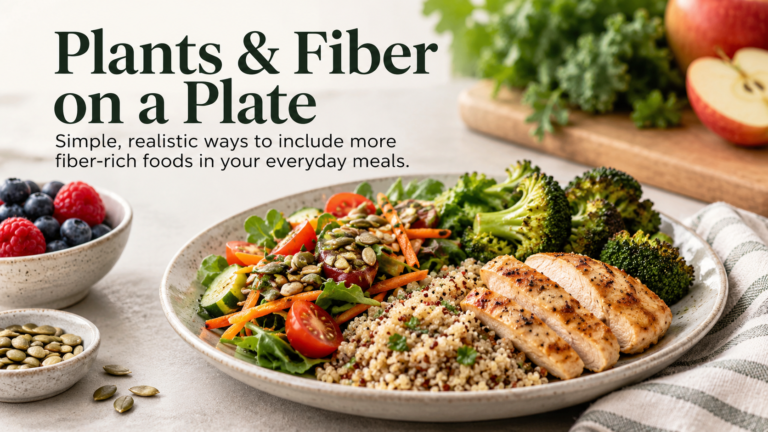
If you’re making dinner, you might begin with salmon, chicken, tofu, lentils, eggs, or beans. From there, add vegetables, grains, potatoes, fruit, or other foods that make the meal satisfying and balanced.
For example, a salmon dinner might include roasted potatoes and green beans. A tofu dinner could feature rice, broccoli, and a ginger-garlic sauce. A lentil-based meal might include roasted vegetables, a whole grain, and a yogurt-based dressing or tahini sauce.
All three meals follow the same basic principle, even though their ingredients and protein contributions differ.
This approach can also reveal when a meal contains protein without providing very much of it.
A salad topped with a tablespoon of sunflower seeds contains some protein, but those seeds are unlikely to make it a protein-rich meal. Adding chickpeas, tofu, chicken, salmon, or another substantial protein source changes the nutritional picture considerably.
Similarly, a bowl of oatmeal made with water and topped with berries can be a nutritious breakfast, but it provides less protein than oatmeal prepared with soy milk and accompanied by Greek yogurt, eggs, or another protein-rich food.
Neither meal is automatically wrong. The question is whether it helps you meet your needs over the course of the day.
What Protein-Rich Meals Can Look Like Across Different Eating Styles
There is no single ideal protein menu. The following examples illustrate how familiar meals can be adapted to different preferences without requiring entirely different approaches to eating.
| Eating style | Breakfast | Lunch | Dinner |
|---|---|---|---|
| Omnivore | Eggs with cottage cheese and whole-grain toast | Chicken and vegetable grain bowl | Beef or chicken with roasted vegetables and potatoes |
| Pescatarian | Greek yogurt with berries and oats | Tuna and white bean salad | Salmon with rice and broccoli |
| Vegetarian | Cottage cheese with fruit and toast | Lentil soup with a side of Greek yogurt | Tofu stir-fry with vegetables and rice |
| Vegan | Tofu scramble with whole-grain toast | Lentil and quinoa bowl with vegetables | Tempeh stir-fry with rice and edamame |
| Flexitarian | Greek yogurt with oats and fruit | Chickpea and chicken salad, or a fully plant-based version | Bean chili with optional turkey or beef |
These are meal ideas, not nutritionally equivalent menus. Protein amounts depend on portion sizes, ingredients, and preparation methods.
For instance, a serving of lentil soup may provide considerably less protein than a generous serving of chicken. That doesn’t make lentil soup a poor choice, but someone relying on it as a primary protein source may need a larger portion or an additional protein-containing food.
Likewise, a tofu stir-fry can provide a substantial amount of protein when tofu is used generously, but a dish containing only a few small cubes of tofu will contribute much less.
The eating style matters less than what actually ends up on the plate.
Simple Substitutions That Make a Difference
Sometimes improving a meal’s protein content requires very little change.
You might replace a lower-protein ingredient with a more protein-rich alternative, add something to a meal you already enjoy, or adjust the proportions of ingredients you’re already using.
Consider a few familiar examples:
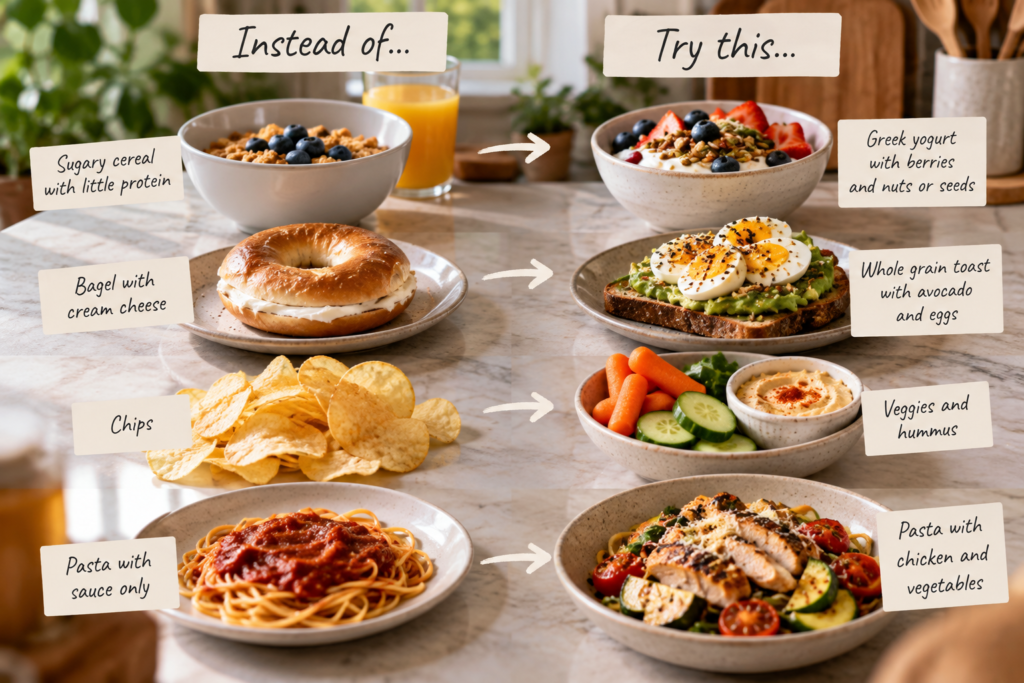
Breakfast: Instead of replacing your favorite breakfast, look at what could accompany it. Toast and fruit might become toast, fruit, and eggs. Oatmeal could be prepared with dairy milk or fortified soy milk instead of water. A smoothie might include Greek yogurt or silken tofu rather than relying entirely on fruit and juice.
Lunch: A vegetable soup could become a heartier meal with lentils, beans, chicken, or tofu. A green salad might include salmon, hard-boiled eggs, chickpeas, or tempeh. Leftover rice and vegetables could become a complete lunch with edamame or another substantial protein source.
Dinner: Pasta doesn’t have to disappear from the menu. You might serve it with a meat sauce, lentil-based sauce, seafood, or a side of protein-rich food. Tacos can be made with fish, chicken, beef, beans, tofu, or combinations of those ingredients. Stir-fries are especially adaptable because the vegetables, grains, and protein sources can change independently.
Snacks: Fruit can be paired with cottage cheese, Greek yogurt, or soy yogurt that contains meaningful protein. Crackers might accompany tuna, hummus, or cheese. Roasted edamame can offer a more concentrated protein contribution than many conventional snack foods.
These adjustments aren’t rules. They’re options.
And they work best when they make meals more satisfying and practical rather than adding another layer of food-related stress.
A Note About Plant-Based Substitutes
Not every product marketed as a plant-based alternative provides the same nutritional benefits as the food it replaces.
For example, almond milk and soy milk are both dairy-free beverages, but their protein contents are usually very different. Unsweetened soy milk commonly provides around 7–8 grams of protein per cup, while many almond milks provide approximately 1 gram.
Plant-based yogurts vary just as widely. Some soy-based products provide meaningful protein, while certain coconut-based yogurts contain very little.
Meat alternatives also differ. A tofu- or soy-based product may provide substantial protein, while a vegetable-based patty made primarily from starches and vegetables may provide relatively little.
None of these foods is inherently a bad choice. They simply serve different nutritional purposes.
If you’re using a substitute specifically to replace the protein contribution of meat, dairy, or eggs, checking the nutrition label is worthwhile.
Look at the serving size, grams of protein, and other nutrients that matter for your overall eating pattern. Fortified calcium and vitamin B12 may be especially relevant when replacing dairy or animal-derived foods.
A substitute can be delicious and useful without being nutritionally identical to the original food.
How Much Protein Should You Aim for at Each Meal?
For many women, spreading protein intake across breakfast, lunch, and dinner can be more practical than trying to consume most of it in one meal.
Research on muscle protein synthesis suggests that a substantial serving of protein at a meal can stimulate muscle-building processes, particularly when paired with resistance training. However, the ideal amount varies with body size, age, activity level, protein source, and overall daily intake.
A commonly discussed practical range is approximately 25–40 grams of protein per main meal, especially for adults prioritizing muscle maintenance or strength. This is a planning range, not a universal requirement or a strict limit on what the body can use.
Smaller people may need less, while larger or highly active people may benefit from more. Someone with a lower overall protein target may not need three meals containing 40 grams each.
The important starting point is your total daily protein intake. Meal distribution can then help you meet that target consistently.
For example, someone aiming for approximately 100 grams of protein per day might find it manageable to eat around 30 grams at breakfast, 30 grams at lunch, and 35 grams at dinner, with the remaining amount coming from other foods throughout the day.
Another person might prefer smaller meals and a protein-containing snack. That can work, too.
There’s no need to treat every meal as a mathematical test. The numbers are useful for understanding patterns, not for deciding whether you’ve eaten correctly.
People with chronic kidney disease or other conditions requiring individualized protein management should follow guidance from their healthcare team rather than adopting a general higher-protein target.
What If Your Family Doesn’t Eat the Same Way You Do?
This is one of the most practical considerations, and it’s often overlooked in nutrition advice.
Maybe you’re trying to eat more plant-based meals, but your partner prefers meat. Maybe one family member eats fish while another won’t touch it. Or perhaps you’re simply trying to increase your protein intake without preparing a separate dinner for yourself every night.
The solution doesn’t have to involve cooking multiple complete meals.
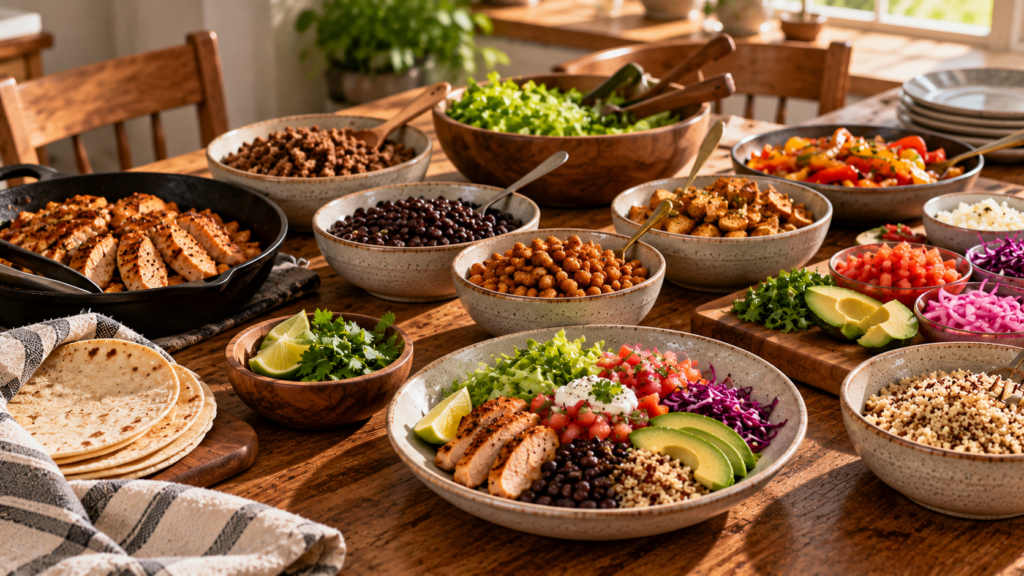
Instead, consider meals with a shared foundation and interchangeable protein sources.
A taco night can include beans, chicken, fish, or tofu alongside the same tortillas, vegetables, and toppings. A grain bowl can begin with rice or quinoa and roasted vegetables, with different protein choices added at the end. Pasta can be served with a common sauce while individual portions include meatballs, lentils, or another protein source.
Even a simple baked-potato dinner can accommodate different preferences through toppings such as chili, beans, cottage cheese, shredded chicken, or a tofu-based mixture.
This approach allows family members to eat largely the same meal while meeting different preferences and nutritional needs.
It also reduces the temptation to abandon a useful eating pattern because it doesn’t fit the rest of the household.

Convenience Foods Have a Place
There is nothing nutritionally superior about making every ingredient from scratch.
Canned beans, canned salmon or tuna, frozen edamame, frozen fish, precooked chicken, plain Greek yogurt, cottage cheese, tofu, and packaged lentils can all make protein-rich meals easier to assemble.
Frozen vegetables and microwaveable grains can help complete those meals with very little preparation.
Some convenience foods contain more sodium or other ingredients than their homemade equivalents, so comparing labels can be helpful when those factors matter to you. But convenience itself doesn’t make a food less valuable.
A bowl assembled from frozen vegetables, microwaveable rice, and precooked protein can still be a nourishing dinner.
A sandwich made with canned fish or leftover chicken can still be a useful lunch.
And a breakfast of yogurt, fruit, and toast doesn’t need to be transformed into an elaborate recipe to count as a good start to the day.
The most effective eating pattern is one you can maintain when life is busy, not just when you have unlimited time to shop and cook.
Consistency Matters More Than Perfection
Some days your meals will be thoughtfully planned. Other days you’ll eat leftovers, improvise from the pantry, or grab something convenient between responsibilities.
That’s normal.
You don’t need to hit an exact protein number at every meal or create perfectly balanced plates seven days a week.
What matters more is the pattern that develops over time.
If breakfast regularly contains very little protein, that’s a useful opportunity for adjustment. If you tend to rely on vegetables and grains at lunch without a substantial protein source, you can experiment with additions. If dinner is already working well, you may not need to change it at all.
The most helpful changes are often surprisingly small.
You don’t need a new diet to eat more protein. You need a few reliable foods, meals you actually enjoy, and a practical way to make them work in your everyday life.
Finding Your Starting Point
By now, you’ve seen that there are many ways to meet your protein needs. You can include meat, fish, eggs, and dairy. You can build meals around tofu, tempeh, lentils, beans, and other plant foods. You can combine approaches, change your preferences over time, or simply work with the foods you’ve always enjoyed.
But knowing your options and knowing where to begin are two different things.
If you’ve spent years hearing conflicting advice about protein, the temptation may be to overhaul everything at once. Calculate a new target, buy different groceries, redesign every meal, and start tracking every gram.
You don’t have to do any of that to make meaningful progress.
A more useful approach is to begin with what you’re already eating, identify where protein may be missing, and make adjustments that fit your actual life.

First, Look at What You’re Already Eating
Before changing anything, take a look at two or three ordinary days of meals.
Not your most organized days. Not the days when you had time to cook everything from scratch. Just the kinds of days that represent how you usually eat.
Think about breakfast, lunch, dinner, and anything you eat between meals.
Where are your main protein sources coming from? Are they substantial portions of protein-rich foods, or smaller amounts scattered throughout the day? Do you regularly include protein at breakfast and lunch, or does most of it appear at dinner?
You may discover that you’re already doing quite well.
You might also notice that certain meals contribute less protein than you assumed.
For example, a breakfast of toast and fruit contains some protein, but usually not very much. A lunch of vegetable soup and crackers may be satisfying without providing a substantial amount. Meanwhile, dinner might include chicken, fish, tofu, or another food that supplies a significant portion of your daily protein.
None of those observations means you’ve been eating incorrectly.
They simply show you where an adjustment might be useful.
You can estimate your intake using food labels, familiar portion sizes, or a nutrition reference if you’d like a clearer picture. But you don’t have to begin by weighing food or recording every bite.
Start by recognizing the pattern.
Next, Consider Your Individual Needs
Protein requirements aren’t identical for everyone.
Body size, age, physical activity, health conditions, and personal goals all influence how much protein may be appropriate.
The standard adult Recommended Dietary Allowance of 0.8 grams per kilogram of body weight per day is intended to meet the basic needs of most healthy adults. It isn’t necessarily the most useful target for someone actively trying to build muscle, preserve strength during aging, or support recovery from regular resistance training.
Research and professional recommendations for physically active adults and older populations often discuss higher intakes, although the appropriate range depends on individual circumstances.
For women navigating midlife, maintaining muscle and physical function is an important consideration. Resistance training provides the stimulus that encourages muscles to adapt, while adequate dietary protein supplies the amino acids needed to support those adaptations.
But higher protein intake isn’t automatically better without limit, and it doesn’t replace the importance of sufficient calories, dietary variety, sleep, and regular movement.
If you’ve already worked through our main Protein guide, you can use the information there to help estimate a reasonable starting target.
If you have kidney disease, another medical condition affecting protein metabolism, or specific dietary restrictions, individualized guidance from a registered dietitian or healthcare professional is especially important.
You don’t need to choose the highest number you encounter online. You need an amount that makes sense for your body and circumstances.
Choose One Meal to Improve First
Once you have a general sense of your intake, resist the urge to change every meal.
Choose the one that offers the clearest opportunity.
For many people, that’s breakfast.
If breakfast usually consists of coffee and toast, adding eggs, Greek yogurt, cottage cheese, tofu, or another protein-rich food may make a noticeable difference to daily intake.
If lunch is the meal that tends to fall short, focus there instead. Add lentils to soup, include tuna or salmon in a sandwich, make a substantial tofu bowl, or prepare extra protein at dinner to use the following day.
If you regularly skip meals because of a demanding schedule, the first adjustment may simply be making a convenient protein-containing option available when you need it.
The point is to make one manageable change, repeat it often enough that it becomes familiar, and then decide whether anything else needs attention.

Build a Short List of Reliable Protein Foods
One of the easiest ways to make protein intake more consistent is to keep a handful of foods you genuinely enjoy available.
Your list doesn’t need to look like anyone else’s.
An omnivore might rely on eggs, chicken, Greek yogurt, ground turkey, and canned salmon.
A pescatarian might choose fish, eggs, cottage cheese, edamame, and lentils.
A vegetarian might keep tofu, eggs, yogurt, beans, and tempeh on hand.
A vegan might rely on tofu, soy milk, lentils, seitan, edamame, and other legumes.
And someone who eats a mixture of animal and plant foods may choose a little from every category.
The best list isn’t necessarily the one containing the foods with the highest protein content. It’s the one containing foods you’ll actually buy, prepare, and eat.
Think about cost, convenience, storage, preparation time, and the kinds of meals your household enjoys.
A food that provides 30 grams of protein isn’t particularly useful to your routine if you dislike it or never have time to prepare it.
A reliable food you enjoy can contribute far more over the course of months and years.
Pay Attention to What Changes
After making an adjustment, give yourself time to see how it fits.
Are your meals easier to assemble? Are you consistently including more substantial protein sources? Do you feel comfortably satisfied after eating? Does your routine support your strength-training goals?
These observations can help you evaluate whether your approach is practical.
At the same time, avoid expecting protein alone to produce dramatic changes in energy, body composition, appetite, or strength.
Those outcomes are influenced by many factors, including overall food intake, sleep, physical activity, health status, and individual physiology.
A protein-rich breakfast won’t necessarily eliminate afternoon fatigue. Eating more protein won’t automatically build muscle without an appropriate training stimulus. And increasing protein intake doesn’t guarantee weight loss.
Protein is one important nutritional input, not a universal solution.
You can also assess progress through more objective measures when they’re relevant to your goals. For example, someone strength training might track whether they can gradually perform more repetitions, lift heavier weights, or complete familiar movements with greater ease.
These changes take time, and they reflect the combined effects of training, nutrition, recovery, and consistency.
Let Your Eating Pattern Evolve With You
The way you eat today doesn’t have to be the way you eat forever.
You might decide to include more plant-based meals because you enjoy them, want greater variety, or prefer their cost and convenience. You might begin eating fish more regularly. You might discover that a particular protein source doesn’t agree with your digestion or simply isn’t worth the preparation effort.
Your schedule may change. Your activity level may increase. Your household’s preferences may shift.
An eating pattern that works well should have room for those changes.
You don’t need to declare yourself permanently omnivorous, pescatarian, vegetarian, vegan, or flexitarian to make thoughtful food choices.
Those labels can describe preferences and help organize information, but they aren’t nutritional achievements in themselves.
What matters is whether the foods you regularly eat provide the nutrients you need and support the life you’re trying to live.
The Most Useful Place to Begin
If all of this still feels like a lot of information, simplify it to three questions:
- 1. Where is my protein coming from now? Look at your usual meals and identify your most substantial sources.
- 2. Where could I make one useful improvement? Choose a meal or routine where adding a meaningful protein source would be practical.
- 3. Can I repeat that change consistently? Make sure it fits your preferences, budget, schedule, and household.
You can return to those questions whenever your needs or circumstances change.
You don’t need to master every detail of protein nutrition before you begin. You don’t need a perfect menu or a rigid set of food rules.
You need enough information to make a useful choice, the flexibility to adapt it, and the willingness to keep learning what works for you.
The best place to start isn’t with a completely different way of eating. It’s with one practical change to the way you already eat.
Explore More in the Kitchen
Finding protein sources that fit the way you eat is only one part of building a nourishing, sustainable eating pattern. Once you understand your options, the next step is learning how to use them in meals that work for your everyday life.
You don’t have to figure everything out at once. Whether you’re exploring how much protein you need, comparing different food sources, or looking for simple ways to improve familiar meals, there are more resources waiting for you in The Signals Project Kitchen.
Keep Exploring Protein
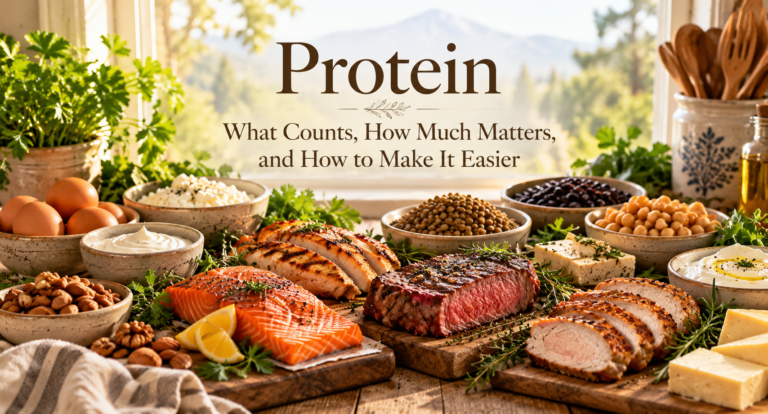
Protein — Real Food and Simple Ideas
Start with the bigger picture. Learn why protein matters, how your needs may change with age and activity, and how to think about getting enough without turning every meal into a calculation.
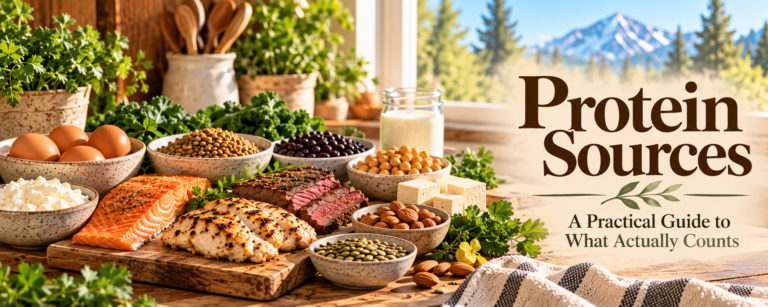
Protein Sources: A Practical Guide to What Actually Counts
Not every food described as a protein source provides the same amount. Explore common foods, their approximate protein contributions, and how to recognize which ones can serve as the foundation of a protein-rich meal.
Protein on a Plate
Move beyond individual ingredients and see how protein fits alongside vegetables, carbohydrates, fats, and other foods to create satisfying, balanced meals.
Easy Protein Add-Ons
Sometimes the simplest changes make the biggest practical difference. Discover ways to add meaningful protein to meals and snacks you already enjoy without completely changing what you eat.
There’s More to Nourishment Than Protein
Protein matters, particularly when you’re working to maintain muscle and strength as you get older. But it works alongside many other nutritional inputs, including adequate energy, essential fats, carbohydrates, fiber, vitamins, and minerals.
As you continue exploring the Kitchen, you’ll find resources devoted to these other parts of nourishment, too. The goal isn’t to elevate one nutrient above everything else. It’s to understand how different foods contribute to the body’s needs and how those contributions fit together.
You don’t need to follow someone else’s perfect diet. You don’t need to eliminate entire food groups unless there’s a reason to do so. And you don’t need to make every meal a project.
You can learn a little, change a little, and build from there.
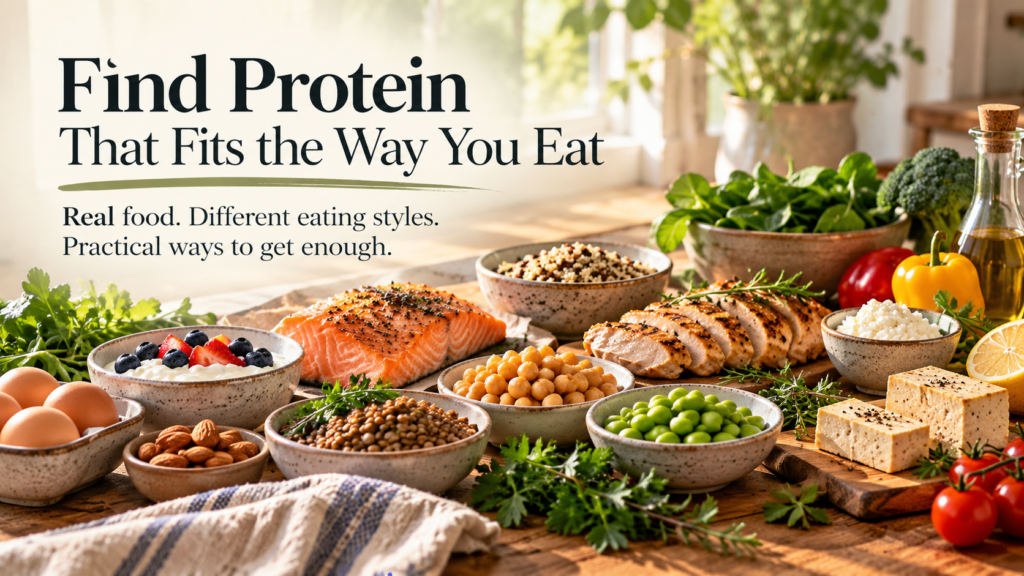
Real food. Different eating styles. Practical ways to get enough.
That’s what this guide was meant to help you find.
Sources
This guide draws on peer-reviewed research, professional nutrition recommendations, and resources from the National Institutes of Health. The following references provide additional information about protein requirements, amino acid quality, plant-based eating patterns, and nutrients that may require particular attention.
This guide draws on peer-reviewed research, professional nutrition recommendations, and resources from the National Institutes of Health. The following references provide additional information about protein requirements, amino acid quality, plant-based eating patterns, and nutrients that may require particular attention.
Academy of Nutrition and Dietetics — Vegetarian Dietary Patterns for Adults (2025)
A professional position paper examining the nutritional adequacy of vegetarian and vegan dietary patterns, protein quality, essential amino acids, and considerations for meeting nutritional needs.
Read the position paper.
International Society of Sports Nutrition — Position Stand: Protein and Exercise (2017)
A research-based review of dietary protein requirements for physically active adults, including protein distribution, muscle protein synthesis, leucine, and resistance training.
Read the research.
National Institutes of Health, Office of Dietary Supplements — Vitamin B12
Information about dietary sources, absorption, deficiency risks, and considerations for people who eat little or no animal-derived food.
Read the vitamin B12 fact sheet.
National Institutes of Health, Office of Dietary Supplements — Omega-3 Fatty Acids
An overview of ALA, EPA, and DHA, including food sources, conversion of plant-derived omega-3 fatty acids, and dietary considerations.
Read the omega-3 fact sheet.
National Institutes of Health, Office of Dietary Supplements — Vitamin and Mineral Fact Sheets
A collection of evidence-based resources covering iron, calcium, vitamin D, iodine, zinc, and other nutrients discussed in this guide.
Explore the NIH nutrient fact sheets.
Nutrition research continues to evolve. This guide is intended for general education and is not a substitute for individualized medical or dietary advice.