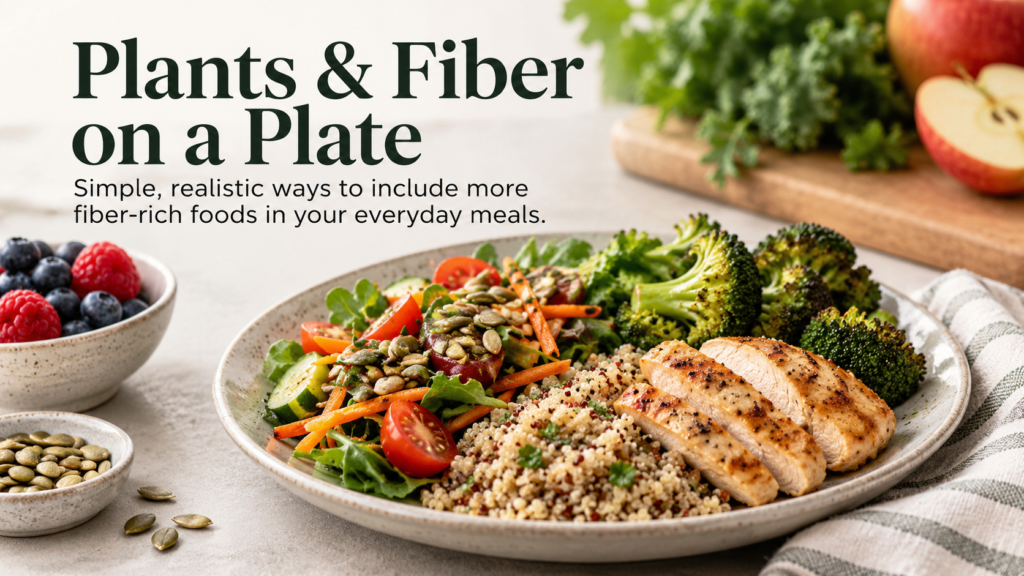
What Does More Fiber Actually Look Like on a Plate?
It’s one thing to hear that you should eat more fiber. It’s another to stand in your kitchen at lunchtime and figure out what that actually means.
Do you need a giant salad? A bowl of beans? A completely different breakfast? Not necessarily.
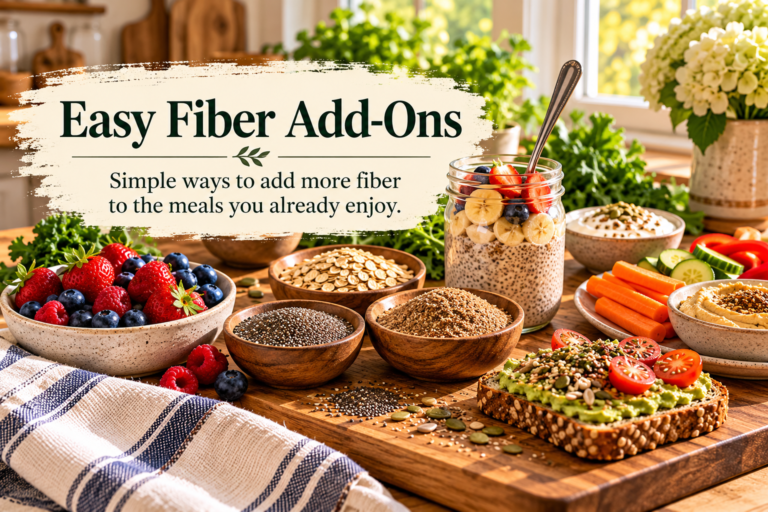
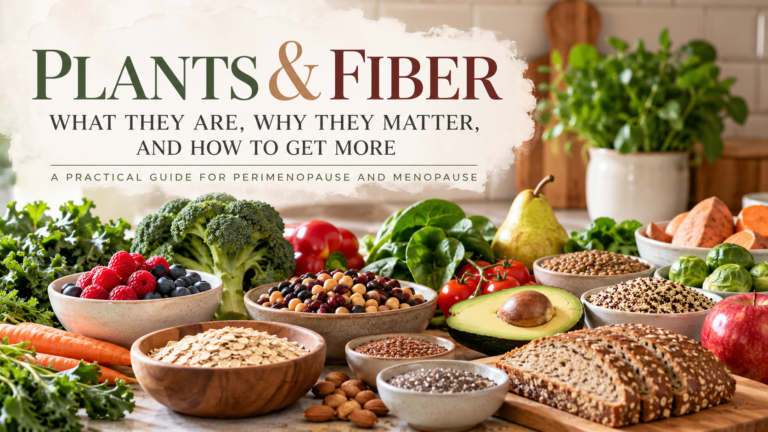
Fiber comes from a wide variety of plant foods, including vegetables, fruit, beans, lentils, whole grains, nuts, and seeds. Each brings something different to the table, and you don’t need to eat all of them at every meal to benefit.
A practical way to think about fiber is to look at the meals you’re already eating and ask one simple question: Where could another fiber-rich food fit?
Maybe that’s berries stirred into yogurt, beans added to soup, lentils mixed into a familiar dinner, or vegetables tucked into a sandwich. Sometimes the easiest improvement isn’t rebuilding the entire meal. It’s adding something useful to what’s already there.
And while fiber is important, it isn’t the only thing your plate needs. Protein, dietary fats, and other nutrients still matter. The goal isn’t to make every meal as high in fiber as possible. It’s to build satisfying meals that include a variety of foods and gradually increase your fiber intake over time.
Let’s look at what that can mean for breakfast, lunch, dinner, and everything in between.
Breakfast: Start With What You Already Eat
Breakfast is often one of the easiest places to add fiber because so many familiar breakfast foods already have plant-based ingredients. Oats, whole-grain bread, berries, apples, nuts, and seeds can all contribute without requiring an entirely new morning routine.
If you enjoy eggs and toast, consider choosing whole-grain bread and adding fruit on the side. If yogurt is your usual breakfast, berries, chia seeds, or ground flaxseed can bring fiber to a meal that otherwise contains very little. And if oatmeal is already part of your morning, you’re off to a good start. Adding fruit, nuts, or seeds can increase both the variety of plant foods and the fiber content.
The important distinction is that adding fiber doesn’t mean replacing everything else on your plate. Eggs, yogurt, cottage cheese, and other protein-rich foods can still have a place at breakfast. You’re simply bringing more plant foods into the meal alongside them.
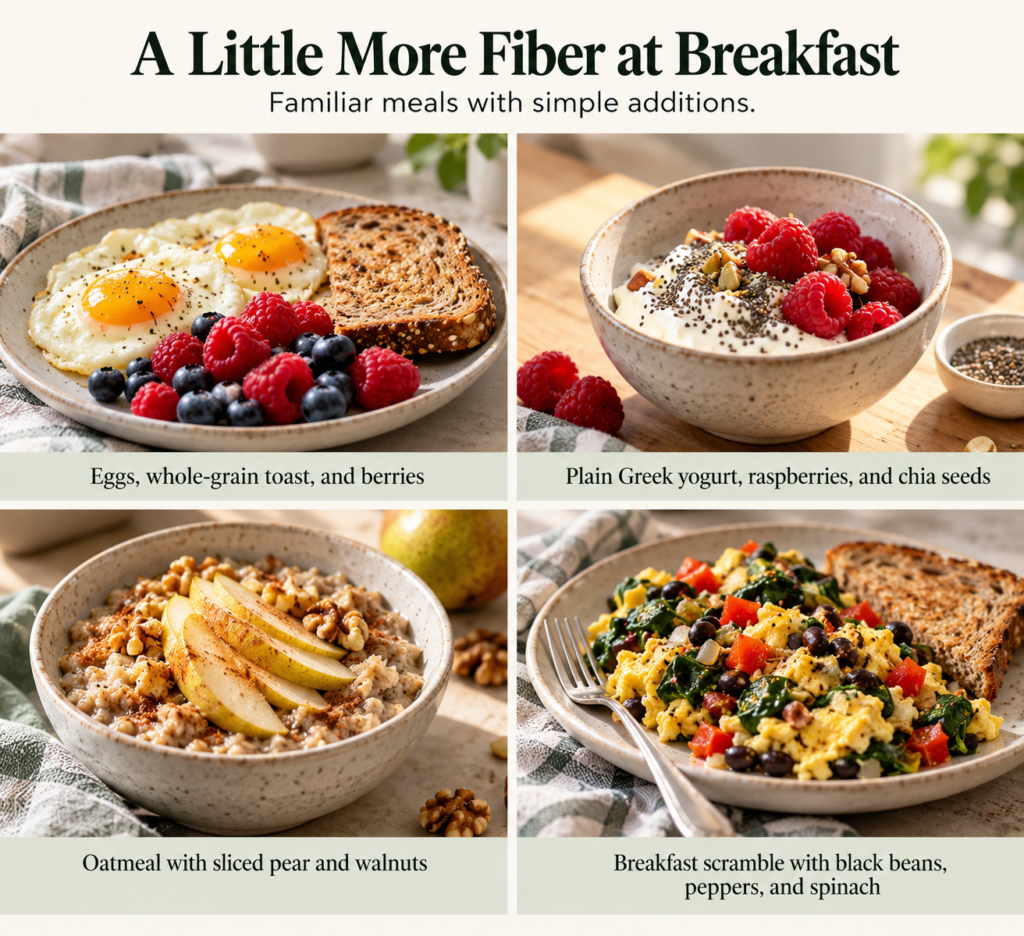
A Few Breakfast Plates to Try
- Eggs, whole-grain toast, and berries: A familiar breakfast with fiber from the bread and fruit.
- Plain Greek yogurt, raspberries, and chia seeds: Protein from the yogurt, with fiber from the berries and seeds.
- Oatmeal with sliced pear and walnuts: A combination of whole grains, fruit, and nuts.
- Whole-grain toast with peanut butter and a banana: A quick option when there’s little time to cook.
- A breakfast scramble with black beans, peppers, and spinach: An easy way to include legumes and vegetables in a savory breakfast.
None of these meals needs to be followed exactly. They’re examples of how fiber-rich foods can fit alongside the things you already enjoy eating.
The takeaway: Before changing your entire breakfast, look at what’s already on the plate. Sometimes adding one serving of fruit, choosing a higher-fiber grain, or including beans or seeds is enough to make a meaningful difference.
Lunch: Build Around What You Already Like
Lunch doesn’t have to become a carefully arranged salad bowl to include more fiber. Sandwiches, soups, wraps, leftovers, and even a quick plate assembled from whatever is in the refrigerator can all provide opportunities to include more plant foods.
A sandwich made with whole-grain bread already has a starting point. Add lettuce, tomato, cucumber, or sliced peppers, and you’ve introduced more variety without changing the meal itself. A bowl of soup can become more fiber-rich with beans, lentils, barley, or additional vegetables. Even leftover chicken and rice can take on a different nutritional profile when you add roasted vegetables or a spoonful of black beans.
Beans and lentils are especially useful at lunchtime because they contribute fiber along with plant protein. They work in soups, salads, wraps, grain bowls, and plenty of meals that don’t require much preparation. Canned varieties can make this particularly convenient; simply drain and rinse them when appropriate.
And remember, a lunch that includes fiber doesn’t have to be entirely plant-based. Chicken, tuna, eggs, cheese, and other familiar foods can sit alongside vegetables, whole grains, legumes, and fruit. The goal is a satisfying meal with a little more plant variety, not a completely different way of eating.
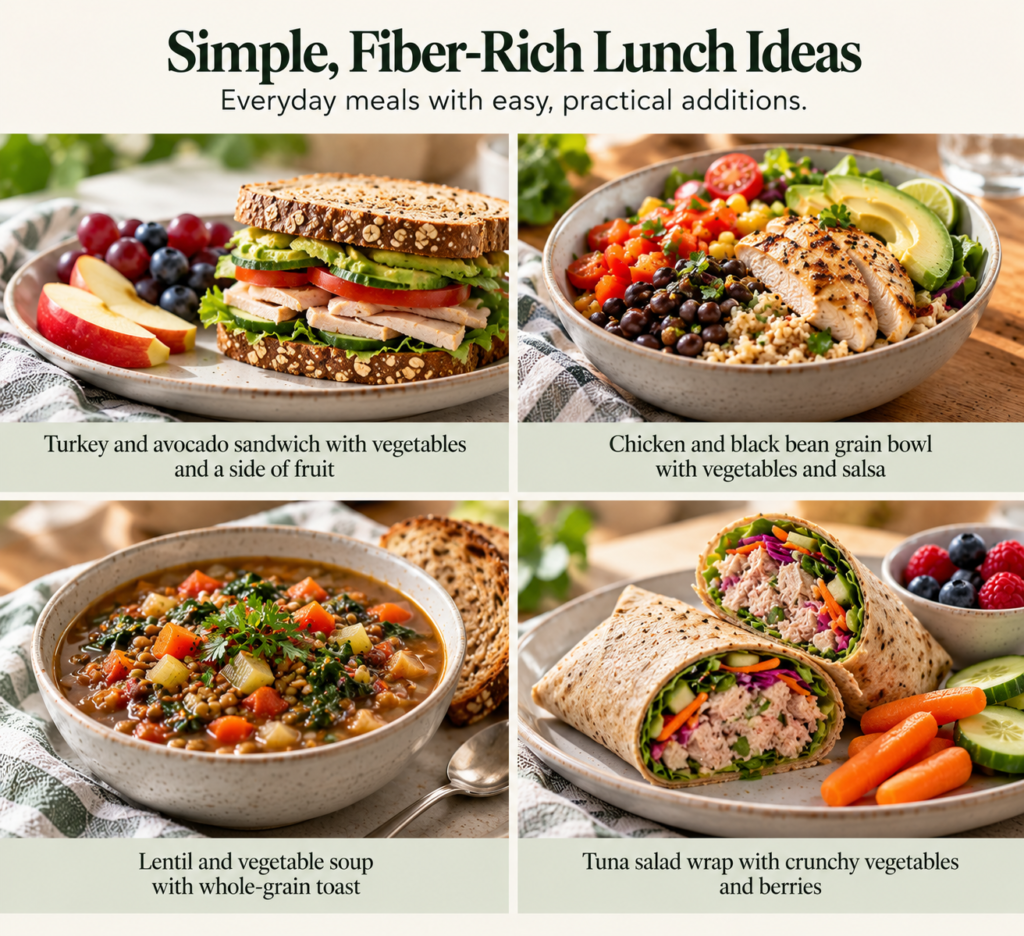
A Few Lunch Plates to Try
- Turkey and avocado sandwich on whole-grain bread: Add lettuce, tomato, and a side of fruit for additional fiber.
- Chicken and black bean grain bowl: Combine chicken, brown rice, black beans, peppers, and salsa for a filling lunch.
- Lentil and vegetable soup with whole-grain toast: A simple combination of legumes, vegetables, and whole grains.
- Tuna salad wrap with crunchy vegetables: Use a whole-grain tortilla, add shredded carrots or cabbage, and serve with berries or an apple.
- Leftover roasted vegetables with chickpeas and quinoa: Add your preferred protein and dressing to turn yesterday’s ingredients into today’s lunch.
These are starting points rather than prescriptions. The amounts and combinations can change depending on your appetite, preferences, and what you have available.
The takeaway: Lunch is a good opportunity to use what you already have. A handful of vegetables, a serving of beans, or a higher-fiber grain can make an ordinary meal more fiber-rich without adding much work.
Dinner: Let Fiber Share the Plate
Dinner is often where we fall into familiar routines, especially when we’re feeding more than just ourselves. Chicken with potatoes, spaghetti, tacos, grilled salmon, stir-fries, and casseroles are all perfectly reasonable starting points. Adding more fiber doesn’t mean replacing those meals or preparing something entirely different for yourself.
Instead, consider where vegetables, beans, lentils, or whole grains might naturally fit. Roasted broccoli alongside chicken and potatoes adds fiber and variety. Black beans tucked into taco filling can stretch the meal while contributing fiber and plant protein. A familiar pasta dinner can include sautéed mushrooms, spinach, or lentils stirred into the sauce. Even something as simple as adding a vegetable side to a favorite meal can make a difference.
It’s also worth remembering that potatoes, sweet potatoes, corn, peas, and other starchy vegetables contribute fiber, too. They don’t need to be avoided or treated as nutritionally inferior to nonstarchy vegetables. Different plant foods provide different nutrients, and variety across the week matters more than making every dinner fit a particular plate arrangement.
The goal is to make fiber-rich foods a regular part of meals you genuinely enjoy. A dinner that works for your household and gets eaten is far more useful than an elaborate meal plan nobody wants to follow.
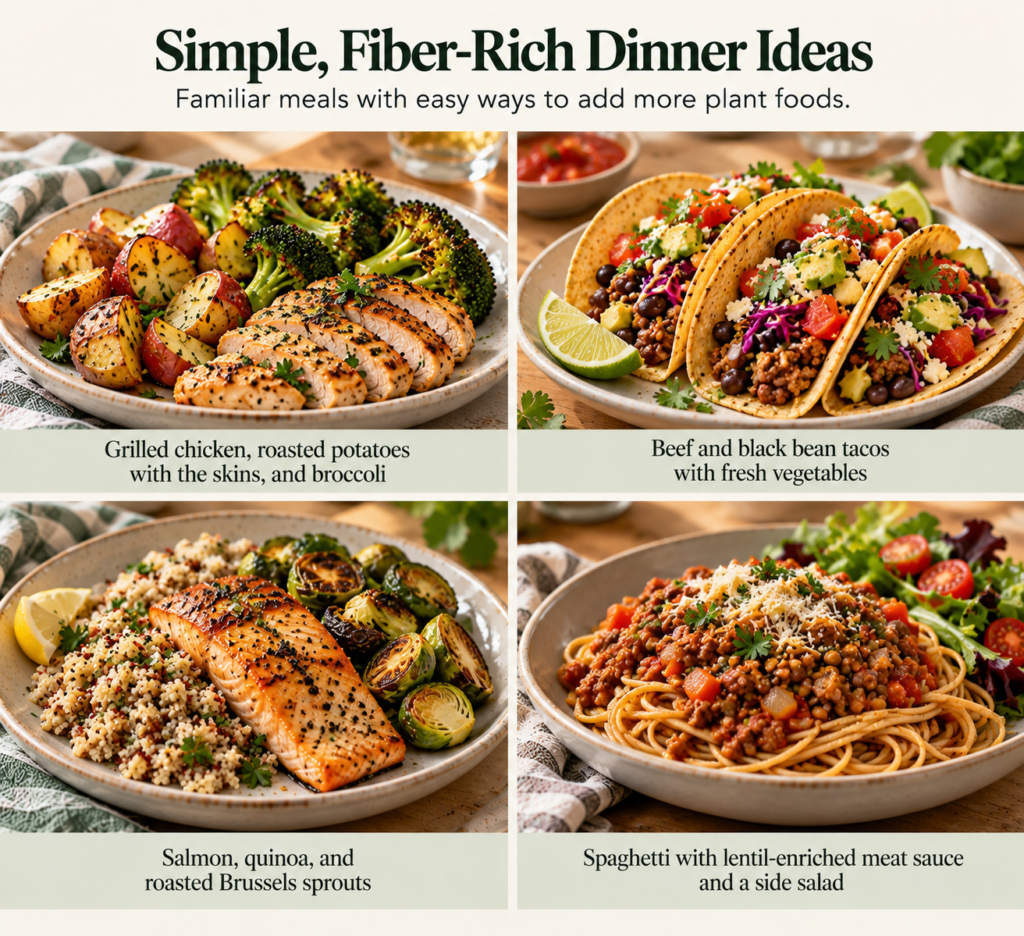
A Few Dinner Plates to Try
- Grilled chicken, roasted potatoes with the skins, and broccoli: A familiar combination with fiber from the potatoes and vegetables.
- Beef and black bean tacos: Combine seasoned ground beef with black beans, then add cabbage, tomatoes, salsa, or avocado in corn or whole-grain tortillas.
- Salmon, quinoa, and roasted Brussels sprouts: A balanced meal with fiber from the quinoa and vegetables.
- Spaghetti with lentil-enriched meat sauce: Add cooked lentils, mushrooms, or finely chopped vegetables to a familiar tomato-based sauce. Whole-wheat pasta is another option.
- Chicken and vegetable stir-fry with brown rice: Include broccoli, carrots, snap peas, or other vegetables your household enjoys.
- Baked sweet potato with chili: Top a sweet potato with beef-and-bean or vegetarian chili for a satisfying meal that includes several fiber sources.
These combinations are examples, not rules. White rice, regular pasta, and other lower-fiber foods can still be part of a nutritious diet. You don’t need to replace every grain or make every component of dinner a fiber source.
The takeaway: Keep the dinners your household enjoys. Look for natural opportunities to include vegetables, legumes, whole grains, or other fiber-rich plants alongside them.
Snacks: Small Opportunities That Add Up
Snacks are another opportunity to include fiber, especially on days when meals don’t contain as many plant foods as you’d like. They don’t need to be elaborate, and they certainly don’t need to become another thing to track or perfect.
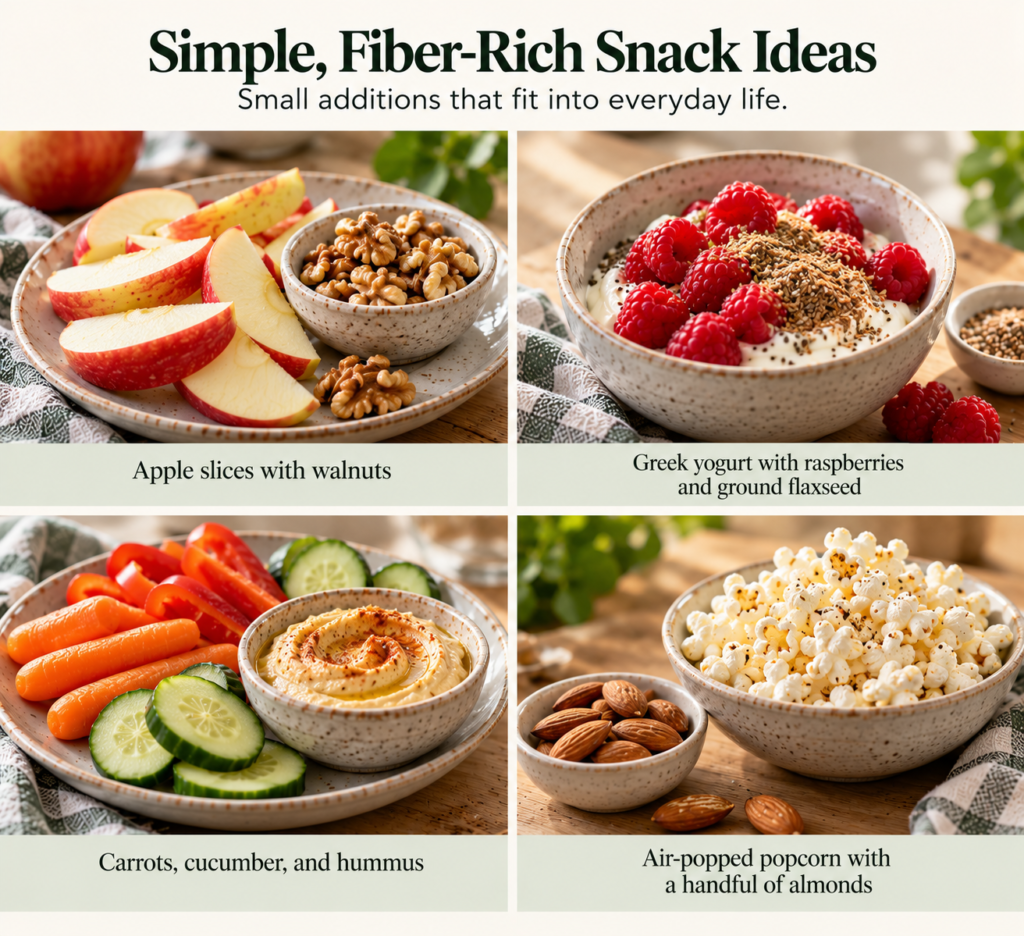
Fruit is one of the simplest options. An apple, pear, orange, or handful of berries can contribute fiber with almost no preparation. Nuts and seeds offer another convenient choice, while vegetables paired with hummus or a bean-based dip bring together several useful nutrients. Even popcorn, when prepared as a whole-grain snack, contributes fiber.
Pairing fiber-rich foods with protein or fat can also make a snack more satisfying. An apple with peanut butter, berries with Greek yogurt, or whole-grain crackers with cheese are familiar combinations that provide more than one nutrient. There’s no requirement to include every nutrient in every snack, but thinking about what will actually satisfy your hunger can be more helpful than focusing on fiber alone.
And snacks aren’t mandatory. If your meals keep you comfortably satisfied, there’s no reason to add extra eating occasions simply to increase fiber. These are options for the times when you genuinely want something between meals.
A Few Snacks to Try
- Apple or pear with peanut butter: Fiber from the fruit, alongside protein and fat from the peanut butter.
- Greek yogurt with raspberries and ground flaxseed: A simple way to add fiber to a protein-rich snack.
- Carrot sticks, cucumber, and hummus: Vegetables paired with a dip made from chickpeas.
- Air-popped popcorn: A convenient whole-grain option.
- Roasted chickpeas: A crunchy snack that contributes both fiber and plant protein.
- Whole-grain crackers with cheese and sliced vegetables: A combination of grains, vegetables, and protein.
- A small handful of almonds with fruit: Easy to pack when you’re away from home.
The takeaway isn’t that every snack needs to contain fiber. It’s that ordinary foods you may already enjoy can contribute to your overall intake throughout the day.
A Few Things Worth Remembering
Increasing fiber doesn’t need to happen all at once. In fact, making large changes too quickly can cause bloating, gas, or digestive discomfort, particularly if your usual intake has been relatively low. Adding fiber gradually gives your digestive system time to adjust, and drinking adequate fluids is important as intake increases.
Different sources of fiber also offer different benefits. Oats and beans contain soluble fiber, while whole grains, vegetables, fruits, nuts, and seeds provide varying combinations of soluble and insoluble fibers. Eating a variety of plant foods is a practical way to include both without needing to memorize which foods contain which types.
If you have a digestive condition, have been advised to follow a restricted-fiber diet, or experience persistent digestive symptoms, individual guidance from a qualified healthcare professional may be appropriate. More fiber isn’t automatically better for every person in every circumstance.
And although fiber recommendations are often expressed as daily gram targets, you don’t have to count every gram to begin making useful changes. Paying attention to the plant foods that regularly appear in your meals is a reasonable place to start.
The Bigger Picture
A fiber-rich plate doesn’t have to look a particular way. It might be oatmeal with berries in the morning, a turkey sandwich on whole-grain bread at lunch, or tacos with black beans at dinner. It might be a bowl of soup, a baked potato, or an apple eaten on the way out the door.
What matters is the pattern that develops over time.
You don’t need to replace every food you enjoy, prepare separate meals for yourself, or turn eating into another complicated project. You can start with the meals already familiar to you and look for small, practical ways to bring more plant foods to the table.
Sometimes building a more fiber-rich plate is as simple as asking: What could I add?
And then doing that again tomorrow.
Related reading: Fiber Sources: A Practical Guide to What Actually Counts
Sources
National Institutes of Health — MedlinePlus. Fiber. Explains soluble and insoluble fiber, food sources, and digestive effects.
National Institute of Diabetes and Digestive and Kidney Diseases (NIDDK). Eating, Diet, & Nutrition for Constipation. Covers fiber-rich foods, gradual increases, and hydration.
American Heart Association. 8 Ways to Focus on Fiber. Practical ways to include whole grains, beans, vegetables, and fruit in everyday meals.
NIH — MedlinePlus. Soluble vs. Insoluble Fiber. Explains the different types of dietary fiber and their functions.