You Don’t Have to Start Over
When someone suggests eating more fiber, it’s easy to imagine an entirely different grocery list, unfamiliar ingredients, or meals that look nothing like the food you normally enjoy.
But increasing your fiber intake doesn’t have to begin with replacing everything on your plate. Sometimes the easiest place to start is with a meal you’re already making.
A handful of berries added to breakfast. Some black beans stirred into taco meat. A spoonful of ground flaxseed mixed into yogurt. An extra vegetable added to soup.
These aren’t dramatic changes, but they’re useful ones. Over time, small additions can help increase the amount and variety of fiber-rich plant foods in your diet without making everyday eating unnecessarily complicated.
The idea isn’t to make every meal perfect. It’s to notice where a little more fiber might fit.
Start With Breakfast
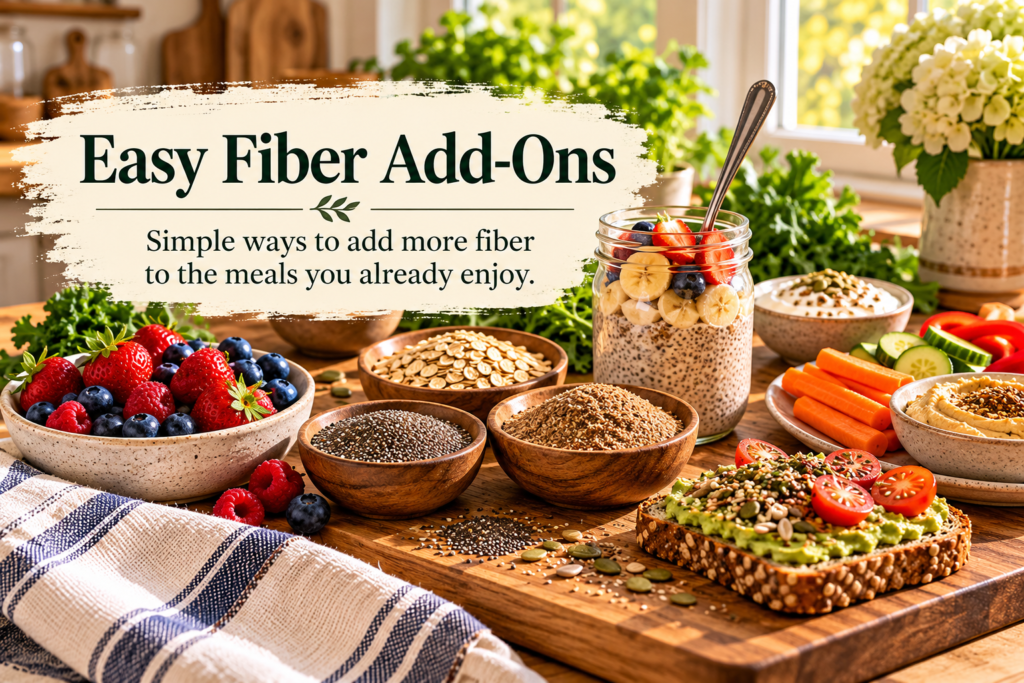
Breakfast offers plenty of opportunities to add fiber without changing the entire meal.
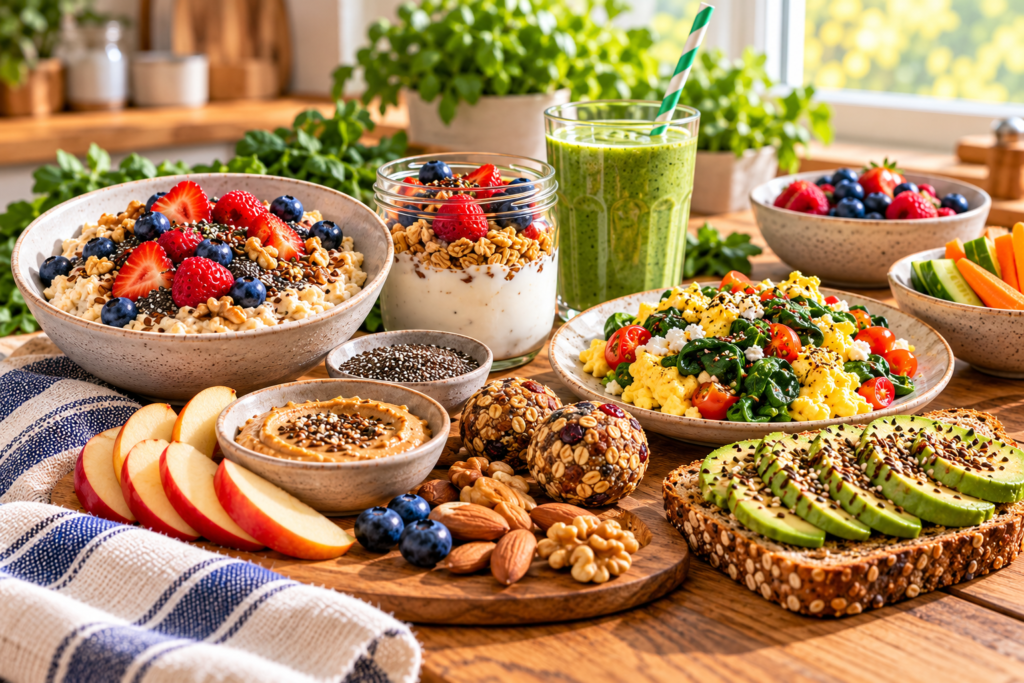
- Add berries to yogurt. Raspberries and blackberries are particularly useful choices when you’re looking for fiber.
- Stir ground flaxseed into oatmeal or yogurt. Start with a small amount and increase gradually as tolerated.
- Sprinkle chia seeds over oatmeal. They also work well in yogurt or overnight oats.
- Add beans or vegetables to scrambled eggs. Black beans, spinach, and peppers can turn a familiar breakfast into a more plant-rich meal.
- Choose whole-grain toast and add fruit. An apple, pear, or handful of berries can contribute additional fiber alongside your usual breakfast.
- Add nuts to your oatmeal. Walnuts or almonds provide texture, flavor, and some additional fiber.
You don’t need to use all of these ideas at once. One addition to a breakfast you already enjoy is a perfectly reasonable place to begin.
Easy Add-Ons for Lunch
Lunch doesn’t have to be elaborate to include more fiber. Whether you’re making a sandwich, reheating leftovers, or putting together something quick between errands, there are plenty of small additions worth considering.
- Add chickpeas to a salad. A few spoonfuls can bring additional fiber, protein, and texture without changing the rest of the meal.
- Pile extra vegetables onto sandwiches and wraps. Spinach, shredded carrots, cucumber, and bell peppers are easy additions.
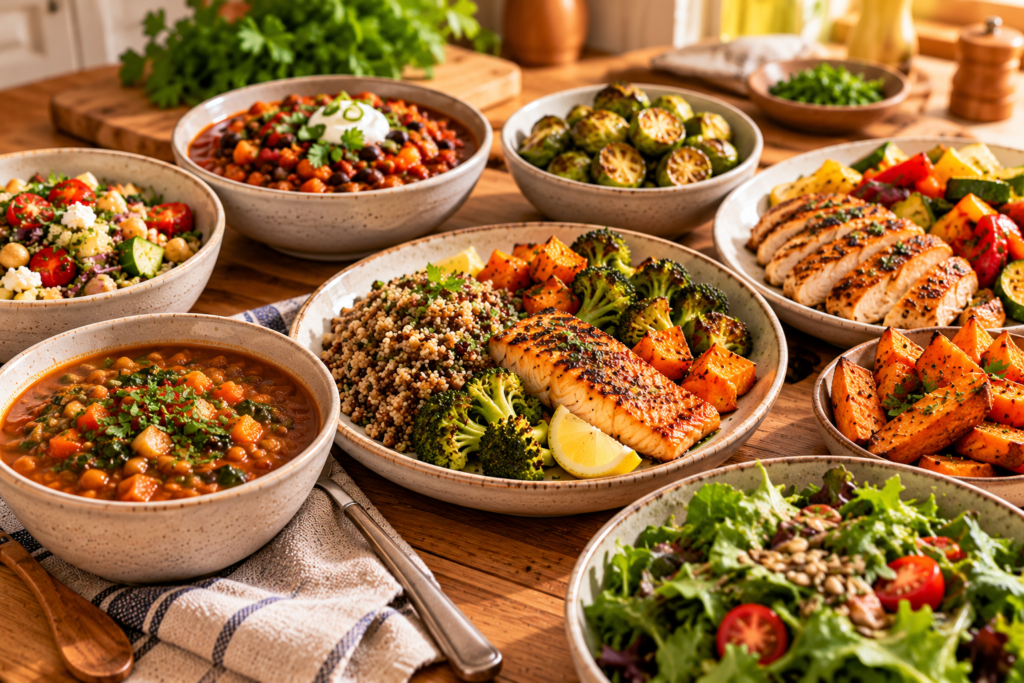
- Stir beans into soup. White beans work especially well in vegetable and chicken soups, while black beans are a natural fit for chili-inspired flavors.
- Add leftover roasted vegetables to a grain bowl. Broccoli, Brussels sprouts, carrots, and sweet potatoes can all make good use of yesterday’s leftovers.
- Sprinkle pumpkin seeds over a salad. They add crunch, along with a modest amount of fiber and other nutrients.
- Include a piece of whole fruit. An apple, pear, or handful of berries can be a simple addition to a lunch that otherwise contains relatively little fiber.
You don’t have to turn every lunch into a salad or grain bowl. Sometimes the most practical improvement is adding something to the sandwich you were already planning to eat.
Easy Add-Ons for Dinner
Dinner is another opportunity to build on familiar meals rather than replace them. Many fiber-rich ingredients work particularly well in dishes that are already part of everyday cooking.
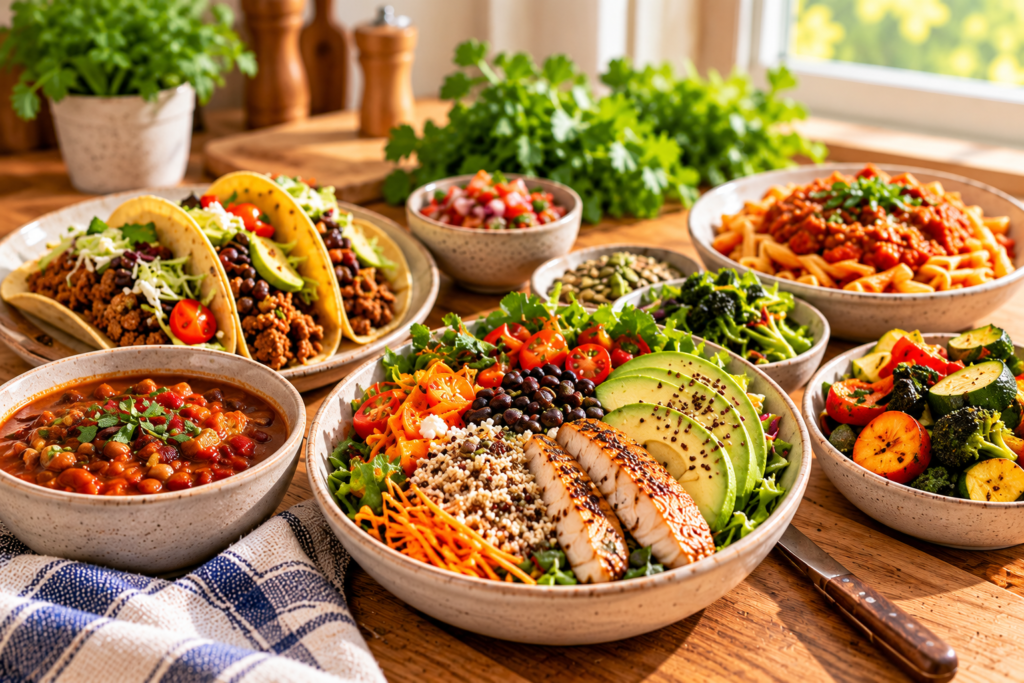
- Mix lentils into ground meat dishes. Cooked lentils can blend into spaghetti sauce, taco filling, sloppy joes, and other recipes while adding fiber.
- Add black beans to tacos or burritos. They work alongside meat, rice, vegetables, or other familiar fillings.
- Stir extra vegetables into pasta sauce. Mushrooms, zucchini, spinach, carrots, and bell peppers can be incorporated into sauces you already make.
- Add a side of roasted vegetables. Broccoli, cauliflower, Brussels sprouts, and carrots are all straightforward options.
- Keep the skin on potatoes when appropriate. Potato skins contribute fiber, so leaving them on is one easy way to retain more of it.
- Add beans to chili, stews, or casseroles. Kidney beans, white beans, chickpeas, and lentils can fit into a wide variety of dishes.
- Swap in a whole grain occasionally. Brown rice, barley, or quinoa can add variety when they suit the meal, although their fiber content varies
Not every addition needs to happen at once. If you’re making spaghetti tonight, adding lentils or vegetables to the sauce might be enough. If tomorrow is taco night, perhaps that’s when the black beans come out.
The goal is to make fiber-rich foods easier to include in the meals your household already enjoys.
Easy Add-Ons for Snacks
Snacks can be another opportunity to include fiber, especially when you’re reaching for something familiar and want to make it a little more satisfying.
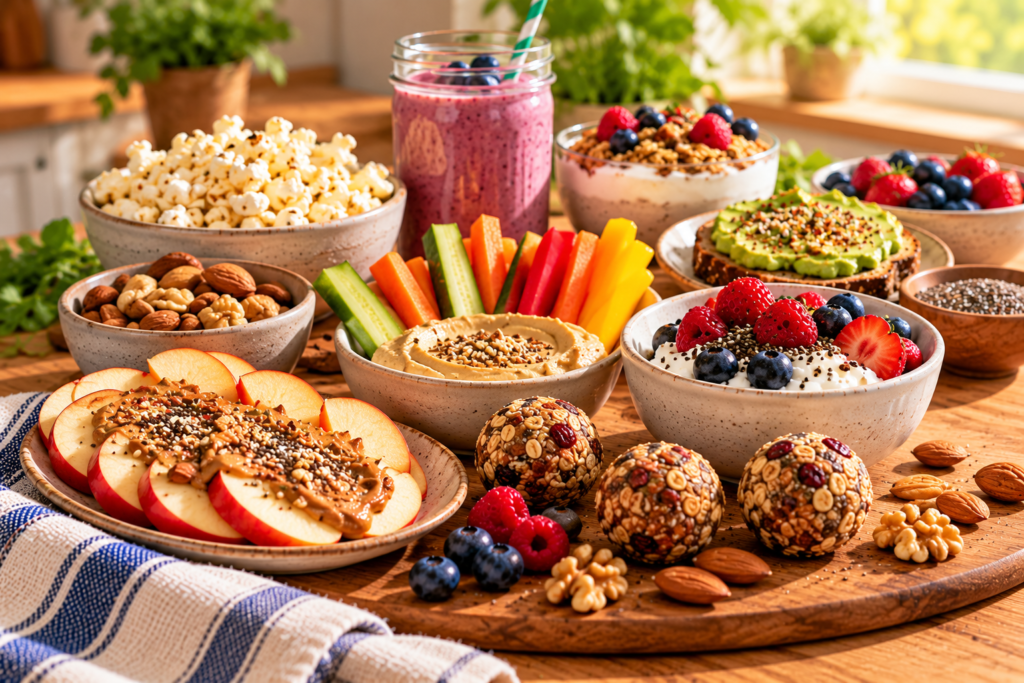
- Add walnuts or almonds to fruit. An apple or pear alongside a handful of nuts provides a combination of fiber, healthy fats, and texture.
- Sprinkle ground flaxseed into yogurt. It mixes easily into plain or flavored yogurt and works especially well with berries.
- Add hummus to your usual vegetables or crackers. Because hummus is made primarily from chickpeas, it contributes some fiber alongside its protein and fat.
- Toss berries into cottage cheese. Cottage cheese provides protein but little to no fiber on its own. Berries make an easy addition.
- Pair popcorn with nuts. Air-popped popcorn is a whole grain, and a small handful of almonds adds additional fiber and crunch.
- Add seeds to a smoothie. Chia seeds or ground flaxseed can contribute fiber without requiring an entirely different recipe.
You don’t need to turn every snack into a carefully constructed combination of nutrients. Sometimes it’s simply a matter of adding fruit, nuts, seeds, or vegetables to something you were going to eat anyway.
Keep a Few Easy Fiber Add-Ons Around
One reason small food changes can be difficult to maintain is that they often require extra planning. If the ingredients aren’t available when you’re making a meal, even a simple addition becomes another task.
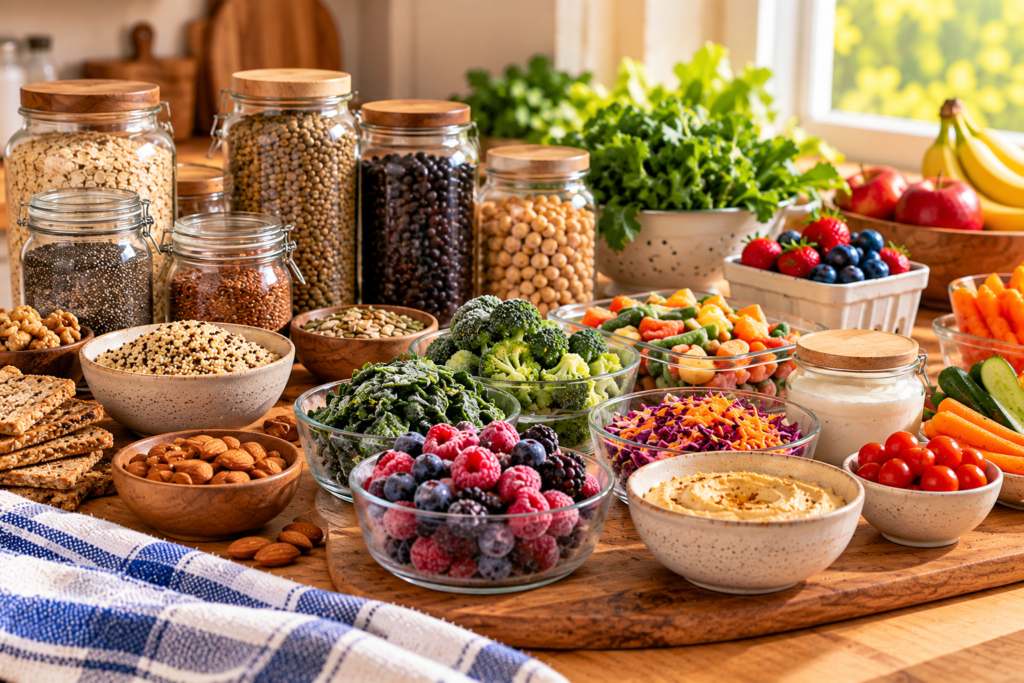
Keeping a few versatile options in your kitchen can make fiber-rich additions much easier.
In the pantry
- Canned black beans, chickpeas, and white beans
- Dry or canned lentils
- Chia seeds and ground flaxseed
- Rolled oats
- Whole-grain crackers
- Nuts and seeds
- Air-popping popcorn kernels or plain popcorn
In the freezer
- Frozen raspberries, blackberries, or mixed berries
- Frozen broccoli, spinach, and mixed vegetables
- Frozen edamame
- Frozen vegetables suitable for soups and stir-fries
In the refrigerator or fruit bowl
- Apples and pears
- Carrots, cucumbers, and bell peppers
- Leafy greens
- Hummus
- Fresh berries when available
You don’t need to stock every item on this list. Choose a few ingredients that fit the meals you already prepare, your preferences, and your grocery budget.
Frozen vegetables, canned beans, and frozen berries can be especially useful because they keep longer than many fresh ingredients. Rinsing canned beans can also help reduce their sodium content.
The easiest add-on is often the one that’s already in your kitchen when you need it.
A Few Things to Remember When Adding More Fiber
Adding fiber can be beneficial, but increasing your intake too quickly may leave you feeling bloated, gassy, or uncomfortable. Your digestive system may need time to adjust, particularly if your usual diet has been relatively low in fiber.
A gradual approach is generally more comfortable. Rather than adding beans, chia seeds, whole grains, and several extra servings of vegetables all in one day, try introducing one or two changes and seeing how your body responds.
A few things worth keeping in mind:
- Increase gradually. Start with manageable additions and build from there rather than trying to reach a particular fiber target overnight.
- Pay attention to fluids. Adequate hydration helps support normal digestive function, particularly as fiber intake increases.
- Include a variety of plant foods. Fruits, vegetables, legumes, whole grains, nuts, and seeds provide different combinations of fiber and other nutrients.
- Remember that more isn’t always better. Your individual needs, digestive tolerance, and overall eating pattern matter more than adding as much fiber as possible.
- Make adjustments when necessary. Certain digestive conditions or medical circumstances may require individualized fiber recommendations. A registered dietitian or healthcare professional can help if you’re unsure what is appropriate for you.
Fiber isn’t one single substance, either. Soluble and insoluble fibers behave differently in the digestive system, and many plant foods contain a combination of both. Eating a variety of fiber-containing foods is generally more useful than trying to focus exclusively on one type.
The Bigger Picture
It’s easy to make nutrition more complicated than it needs to be. We hear about nutrients we should eat more of, foods we should eat less of, and targets we’re supposed to meet. Before long, even a simple meal can start to feel like a project.
But adding more fiber doesn’t have to work that way.
It might mean stirring black beans into the taco filling your family already enjoys. Keeping frozen raspberries available for breakfast. Adding lentils to spaghetti sauce once in a while. Or remembering that the apple sitting on the counter is an easy addition to lunch.
These choices don’t need to be dramatic to be worthwhile. They’re small ways to give your body more of the fiber-rich foods that support digestive health and contribute to an overall nutritious eating pattern.
Start with what you already eat. Add what fits. Let those small changes become familiar.
Keep Exploring
If you’d like to learn more about where fiber comes from and how to build it into everyday meals, these Kitchen resources are a good place to continue:
Fiber Sources: A Practical Guide to What Actually Counts — Explore common sources of dietary fiber and learn which foods contribute meaningful amounts.
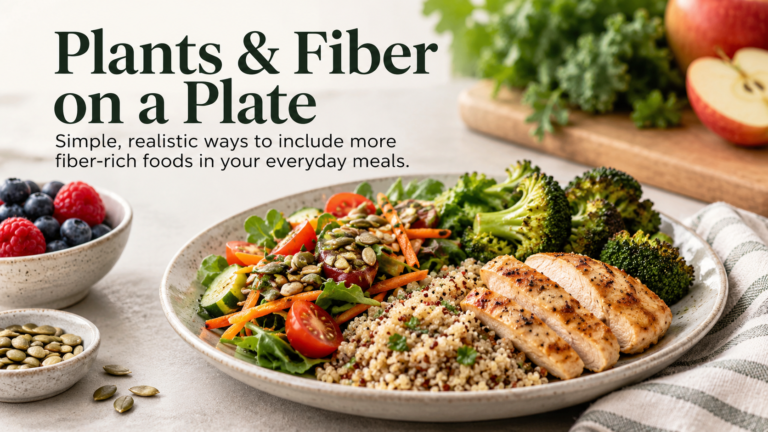
Plants & Fiber on a Plate — See practical examples of breakfasts, lunches, dinners, and snacks that include more fiber-rich plant foods.
Sources
- MedlinePlus — Fiber
- National Institute of Diabetes and Digestive and Kidney Diseases — Eating, Diet, & Nutrition for Constipation
- American Heart Association — 8 Ways to Focus on Fiber
- MedlinePlus — Soluble vs. Insoluble Fiber