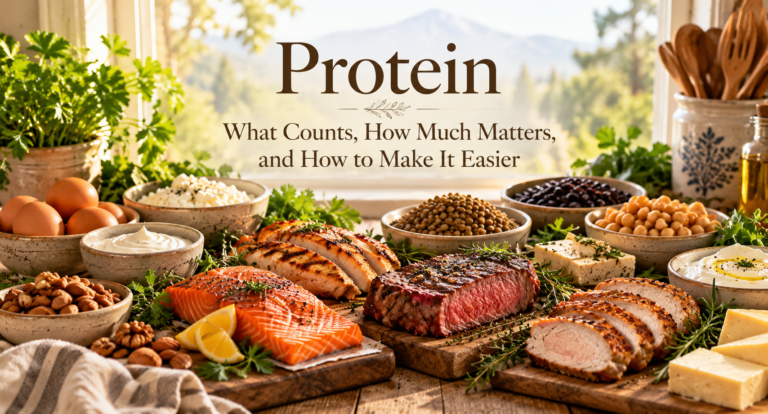
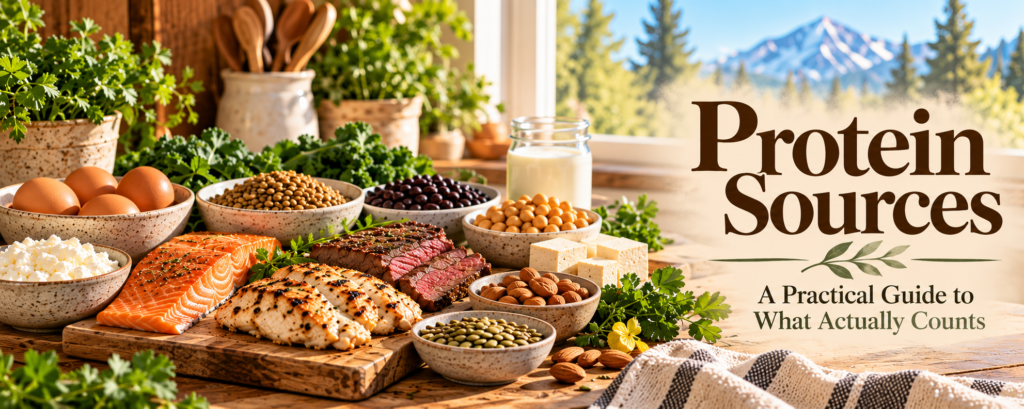
Protein shows up in more foods than you might think. Meat, fish, eggs, dairy, beans, lentils, grains, nuts, seeds, and even vegetables all contribute some protein. But that doesn’t mean they contribute the same amount—or play the same role when you’re trying to build a meal around protein.
That distinction can make eating enough protein much easier. You don’t need a list of “good” and “bad” foods, and you certainly don’t need to start weighing everything you eat. It helps simply to recognize which foods can provide a substantial amount of protein on their own, which ones work well together, and which foods contribute a little protein without necessarily being a primary source.
The amounts below are approximate. Brands, varieties, preparation methods, and serving sizes vary, so think of these as useful landmarks rather than numbers you need to hit perfectly.
Animal Protein Sources
Animal foods tend to provide a substantial amount of protein in a relatively compact serving, which can make them an easy anchor for a meal.
| Food | Typical serving | Approx. protein* |
|---|---|---|
| Chicken breast, cooked | 3 oz | 26 g |
| Turkey breast, cooked | 3 oz | 25 g |
| Lean beef, cooked | 3 oz | 22–25 g |
| Pork loin, cooked | 3 oz | 22–24 g |
| Salmon, cooked | 3 oz | 21–22 g |
| Tuna, canned | 3 oz | 20–22 g |
| Shrimp, cooked | 3 oz | 20 g |
| Eggs | 2 large | 12–13 g |
| Greek yogurt, plain | ¾–1 cup | 15–20+ g |
| Cottage cheese | 1 cup | 24–28 g |
| Cow’s milk | 1 cup | about 8 g |
| Cheese | 1 oz | about 6–7 g |
You’ll notice that serving size matters. Two eggs absolutely provide protein, for example, but they provide considerably less than a serving of chicken or a cup of cottage cheese. That doesn’t make eggs a poor choice—it just means you might pair them with another protein-containing food when you want a higher-protein meal.
Plant Protein Sources
Plant foods can provide plenty of protein too. Some are especially protein-dense, while others bring protein along with fiber, carbohydrates, healthy fats, and a wide range of nutrients.
| Food | Typical serving | Approx. protein* |
|---|---|---|
| Seitan | 3 oz | about 20–25 g |
| Tempeh | ½ cup | about 15–17 g |
| Extra-firm tofu | ½ cup | about 10–15 g |
| Edamame, cooked | 1 cup | about 18 g |
| Lentils, cooked | 1 cup | about 18 g |
| Black beans, cooked | 1 cup | about 15 g |
| Chickpeas, cooked | 1 cup | about 14–15 g |
| Kidney beans, cooked | 1 cup | about 15 g |
| Split peas, cooked | 1 cup | about 16 g |
| Soy milk | 1 cup | about 7–9 g |
There’s also no requirement that a meal contain only one protein source. A grain bowl with lentils, edamame, seeds, and whole grains can accumulate protein from several foods at once. That is particularly useful when most or all of your protein comes from plants.
Foods That Contribute Protein—but Usually Aren’t the Main Source
This is where protein conversations can get confusing.
Nuts, seeds, nut butters, whole grains, and many vegetables contain protein. They count. But in an ordinary serving, most provide considerably less protein than the foods above.
Two tablespoons of peanut butter, for example, provide roughly 7 grams of protein. An ounce of almonds provides around 6 grams. A tablespoon of chia seeds contributes roughly 2 grams. A cup of cooked quinoa provides about 8 grams.
Those amounts can add up across a meal, and these foods bring plenty of other nutritional benefits. But if you’re specifically trying to increase protein, “contains protein” and “provides enough protein to anchor this meal” are two different questions.
Avocado is another good example. It’s a wonderfully nutritious food and a source of fiber and unsaturated fat, but a whole avocado contains only a few grams of protein. You don’t need to make avocado prove its worth by calling it a protein source. It already has plenty of other jobs. 😂
A Quick Note About Complete Protein
Proteins are made from amino acids, including nine essential amino acids that your body cannot make on its own. Animal proteins generally provide all nine essential amino acids in sufficient proportions, while some plant proteins—including soy—also provide all nine.
Other plant foods may be lower in one or more essential amino acids, which is where the old advice about carefully “combining proteins” at every meal came from.
Fortunately, your body is considerably less demanding than the old food-combining charts made it sound. Eating a varied diet with enough total protein and a range of plant foods throughout the day can provide the essential amino acids you need. You do not need to engineer the perfect bean-and-grain combination every time you sit down to eat.
Protein Sources Can Stack
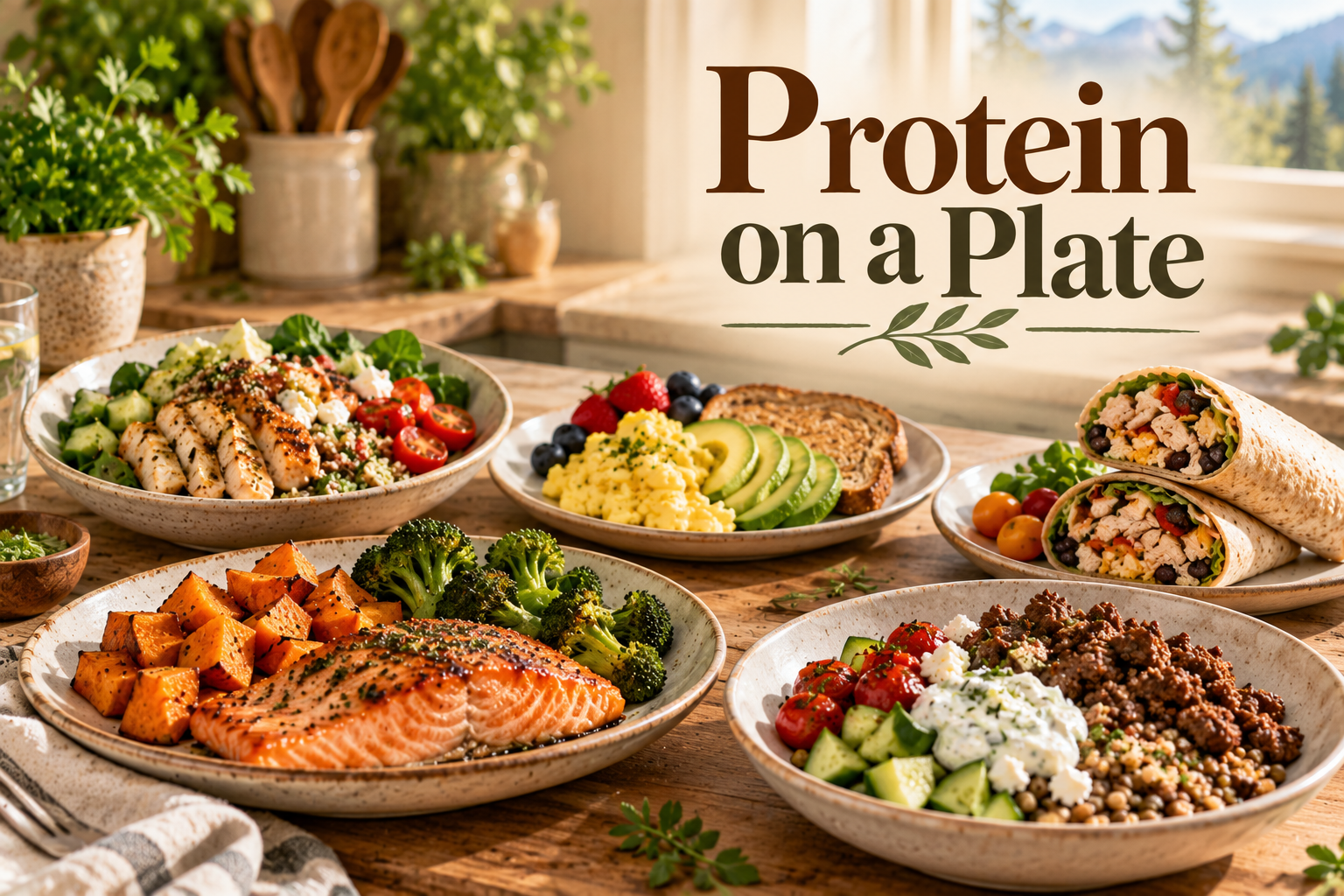
A meal doesn’t have to begin with one giant piece of meat—or any meat at all—to contain a meaningful amount of protein. Often, several ordinary foods do the job together.
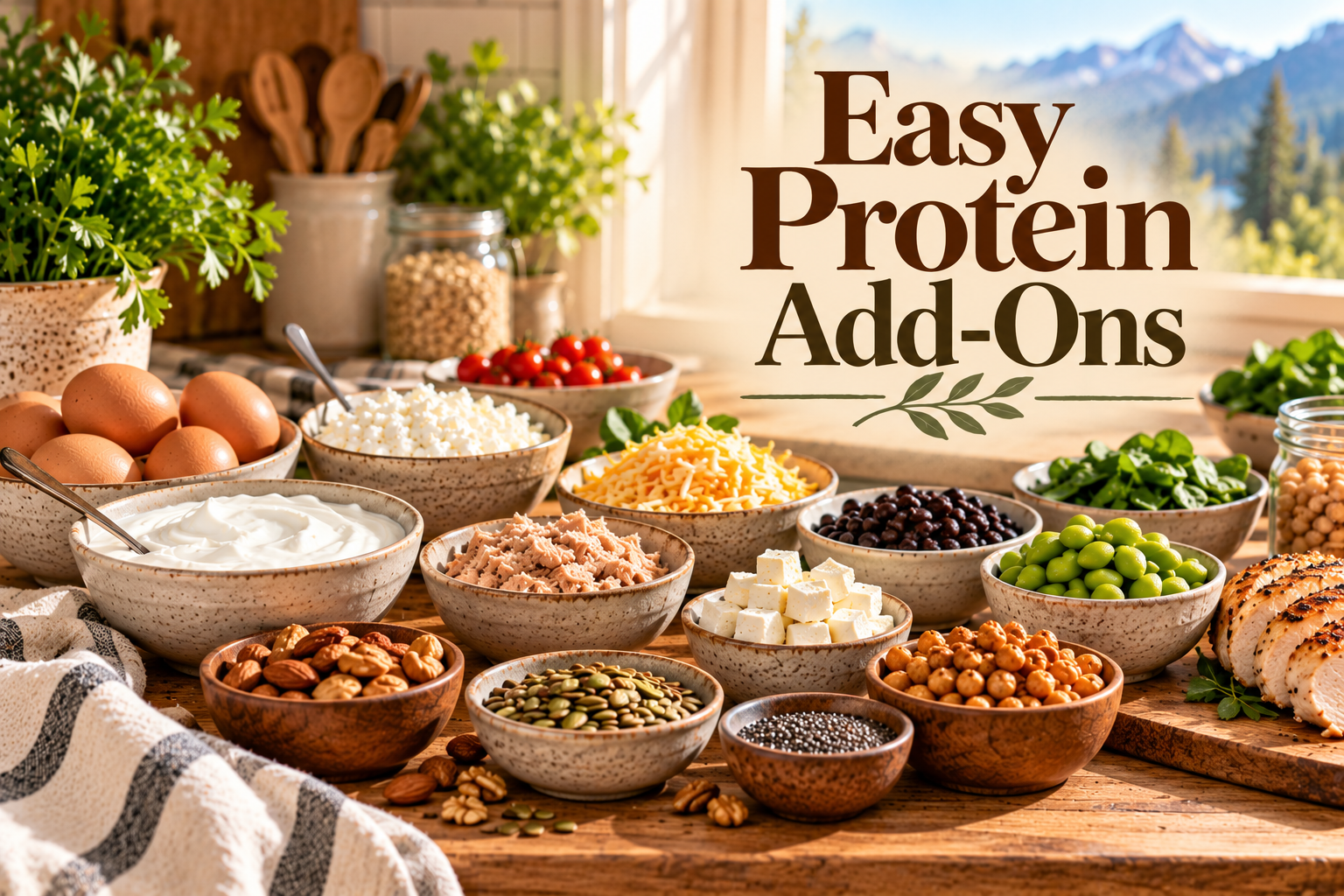
Greek yogurt topped with nuts and seeds gets protein from all three. Eggs served with cottage cheese provide more than the eggs would alone. Lentils over quinoa with edamame add protein from multiple plant sources. A chicken-and-bean bowl gets protein from both the chicken and the beans.
That’s one reason it can be more useful to look at the whole meal than to ask whether every individual food qualifies as a “protein food.”
You’re not assembling nutrients in isolation. You’re eating breakfast.
The Part Worth Remembering
You don’t need to memorize a protein chart.
Start by learning which foods provide enough protein to meaningfully anchor a meal. Then notice the other foods on your plate that contribute a little more. Once you can recognize those sources, answering “Where’s my protein?” becomes much easier.
Not every meal has to contain the same amount. Not every source has to look the same. And none of this requires turning lunch into a math problem.
The goal is simply to make the signal easier to send: give your body enough of the raw material it needs, often enough, to support the work you’re asking it to do.
*Protein amounts are approximate and vary by food, brand, preparation method, and serving size.
Sources
U.S. Department of Agriculture, Agricultural Research Service. FoodData Central.
Food composition and nutrient database.
USDA FoodData Central FoodData Central
Rozga M, et al. Vegetarian Dietary Patterns for Adults: A Position Paper of the Academy of Nutrition and Dietetics. Journal of the Academy of Nutrition and Dietetics. 2025;125(6):831–846.e2.
Academy of Nutrition and Dietetics — Vegetarian Dietary Patterns for Adults PubMed
Melina V, Craig W, Levin S. Position of the Academy of Nutrition and Dietetics: Vegetarian Diets. Journal of the Academy of Nutrition and Dietetics. 2016;116(12):1970–1980. doi:10.1016/j.jand.2016.09.025.
PubMed record