Sometimes the meal is already decided.
You made oatmeal. You grabbed toast. There’s leftover soup in the refrigerator. Pasta is happening for dinner because pasta is happening for dinner. 😂
And then you look at it and realize: there really isn’t much protein here.
That doesn’t mean you need a different meal.
One of the easiest ways to make protein more practical is to stop thinking every meal has to be designed perfectly from the beginning. Sometimes you build the meal around a protein source. Sometimes you simply look at what you’re already eating and add something that helps.
You Don’t Have to Rebuild the Meal
Nutrition advice has an unfortunate habit of turning one useful idea into an entire lifestyle renovation.
Want more protein at breakfast? Apparently you need seventeen ingredients, meal-prep containers, and a Sunday afternoon you were hoping to spend doing literally anything else.
You really don’t.
If the meal already works for you, keep the meal.
Then ask:
What could I add that would give this a little more protein?
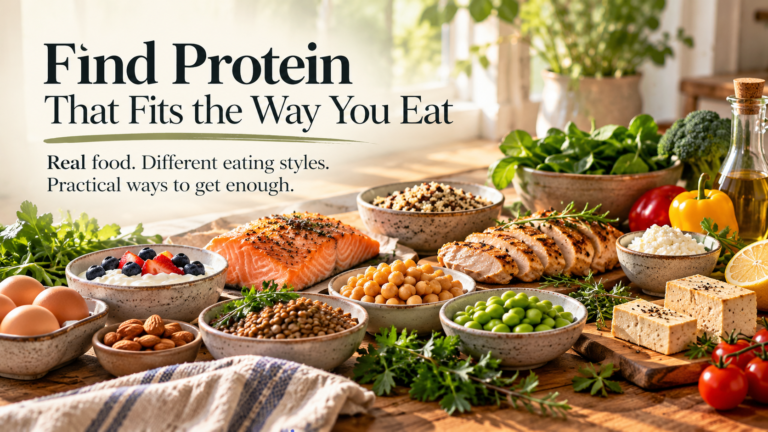
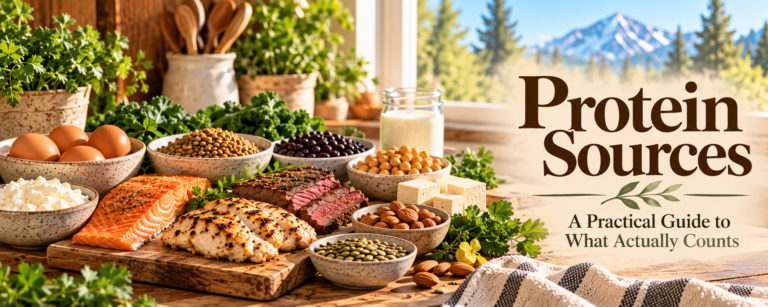
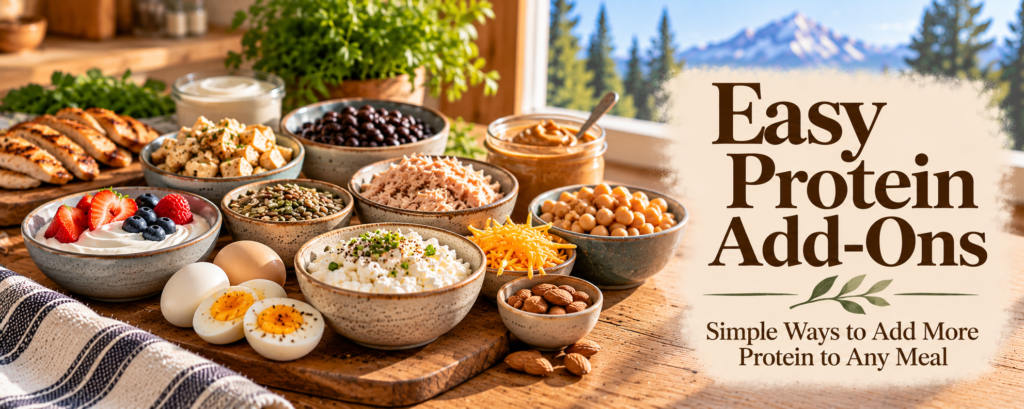
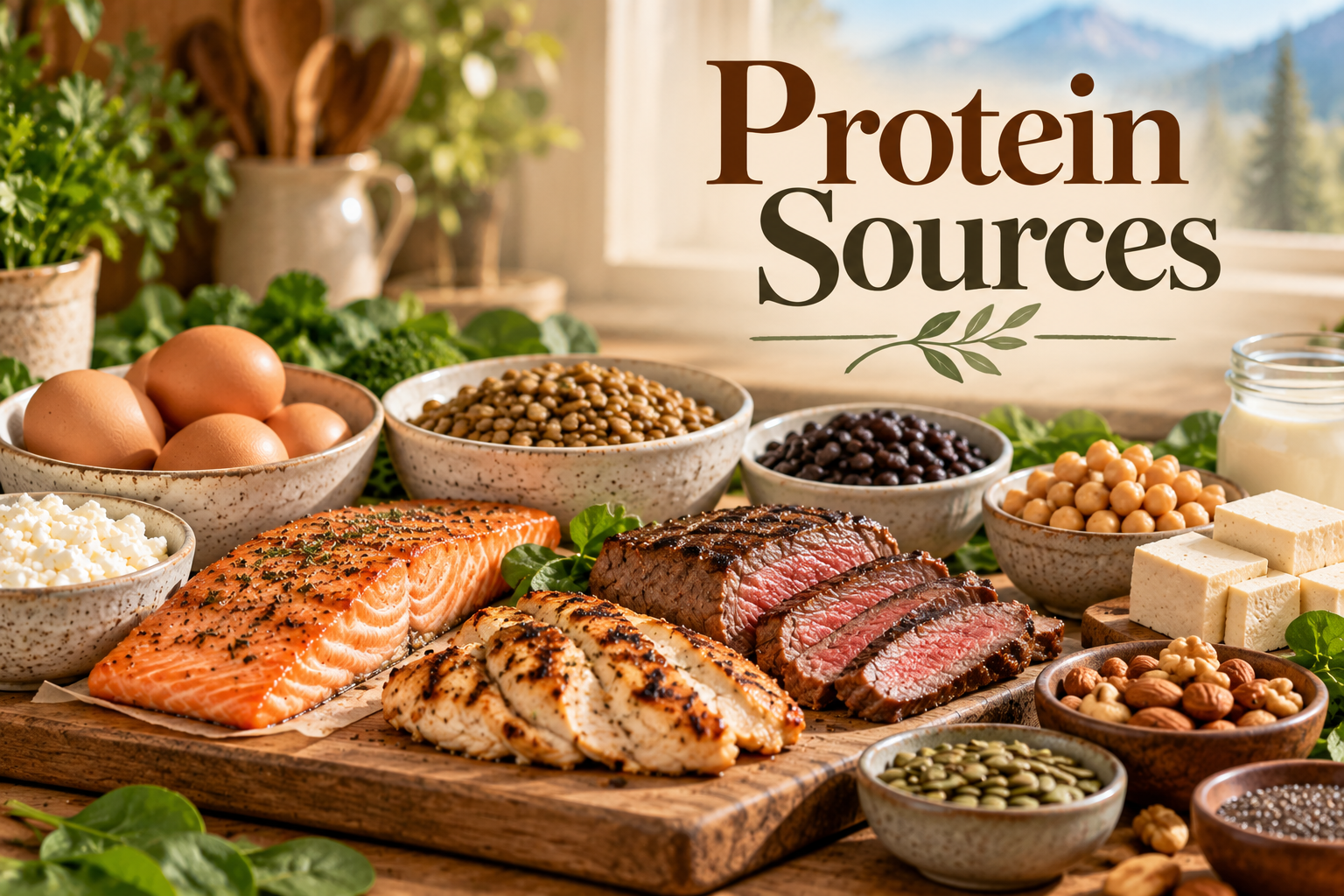
Maybe it’s an egg. Maybe it’s Greek yogurt. Maybe it’s leftover chicken, a scoop of beans, cottage cheese, tofu, edamame, cheese, milk, or soy milk.
The best add-on isn’t necessarily the food with the most protein. It’s the one you actually like, have available, and can realistically add to the meal in front of you.
Easy Protein Add-Ons at Breakfast
Breakfast is a particularly useful place to practice this because many familiar breakfasts aren’t naturally very high in protein.
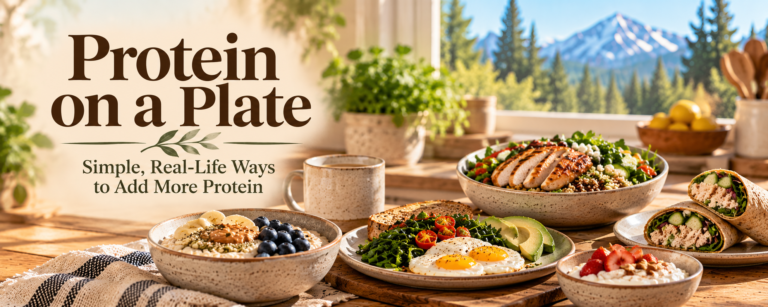
If you’re having oatmeal, try making it with milk or soy milk instead of water, or add Greek yogurt, nuts, seeds, or nut butter.
If you’re having toast, add eggs, cottage cheese, Greek yogurt, cheese, or another protein-rich food alongside it.
If you’re having fruit, pair it with Greek yogurt, cottage cheese, nuts, nut butter, or cheese.
If you’re having cereal, milk or soy milk contributes protein, and yogurt or eggs on the side can add more.
And if breakfast is whatever you can grab while walking out the door, keeping things like hard-boiled eggs, individual yogurts, cottage cheese, or cheese in the refrigerator can make the answer considerably easier.
You don’t need to turn breakfast into a project.
You just need a few options you can reach for.
Easy Add-Ons for Lunch and Dinner
The same idea works later in the day.
A bowl of vegetable soup can get beans, lentils, shredded chicken, turkey, tofu, or a little cheese depending on what actually tastes good with it.
A salad can get chicken, tuna, salmon, eggs, cottage cheese, beans, lentils, tofu, tempeh, or edamame.
Pasta can get meat or poultry, shrimp, tuna, beans, lentils, cheese, or a higher-protein pasta made from legumes if you happen to like one.
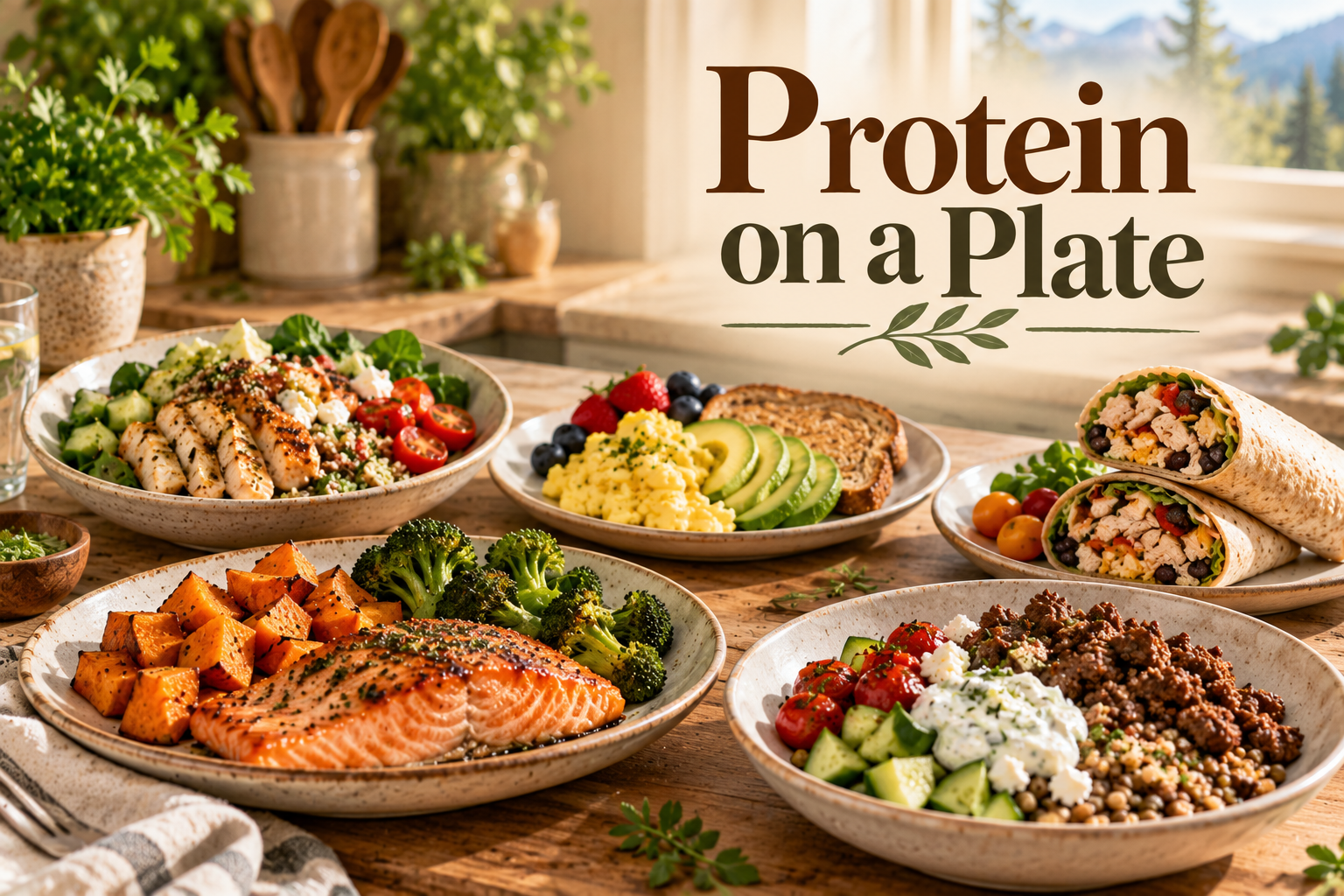
A rice or grain bowl makes it particularly easy: add chicken, fish, tofu, tempeh, beans, lentils, edamame, eggs, or whatever protein source fits the flavors already there.
Even a plate of leftovers can be adjusted. Maybe there isn’t enough chicken left for another full serving, but there is enough to combine with some beans. Maybe you add an egg. Maybe you put cottage cheese or Greek yogurt alongside something where it makes sense.
It doesn’t have to be culinary genius.
Tuesday night dinner is allowed to be mostly logistics.
Small Things Can Stack
Not every add-on needs to contribute a huge amount of protein by itself.
Cheese contributes some. Nuts contribute some. Seeds contribute some. Whole grains contribute some. Beans may contribute more. The other foods already in your meal may contribute too.
Put several of those together and the total changes.
That’s why it can be more useful to look at the whole meal than to decide whether one individual food is “high protein” enough to count.
A bowl of oatmeal made with soy milk and topped with Greek yogurt, nuts, and seeds is different from oatmeal made with water and eaten plain.
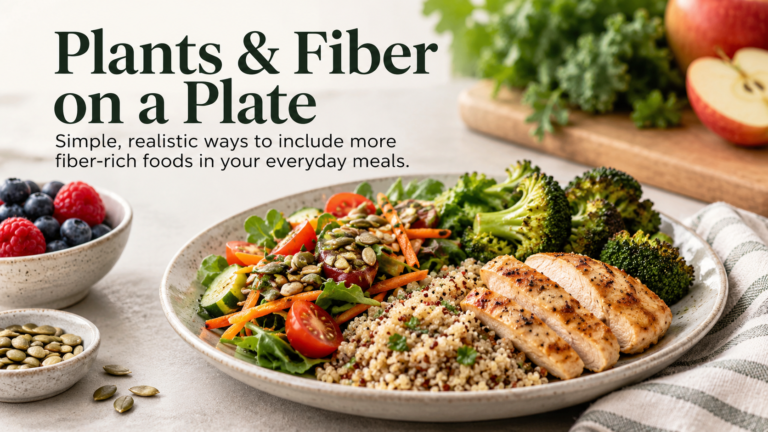
A grain bowl with quinoa, beans, edamame, and seeds gets protein from several places.
None of those foods has to do all the work alone.
Snacks Can Help Too
You also don’t have to solve your entire day’s protein intake at three official meals.
If you’re hungry between them, snacks can contribute.
Greek yogurt.
Cottage cheese.
Hard-boiled eggs.
Edamame.
Cheese.
Hummus.
Nuts or nut butter.
Leftover chicken or turkey rolled into a tortilla.
Fruit paired with one of the above.
And sometimes you just want popcorn.
Still legal. 😂
The goal isn’t to sneak protein into every single thing you eat. It’s to recognize that snacks are another place protein can show up when it’s useful.
Keep a Few Easy Options Around
This may be the most practical strategy of all.
Getting enough protein is considerably easier when getting protein doesn’t require cooking something from scratch every time you’re hungry.
Your personal list might include:
Greek yogurt or cottage cheese in the refrigerator.
Eggs already boiled.
Canned tuna or salmon in the pantry.
Beans and lentils canned, frozen, or cooked ahead.
Frozen edamame.
Cheese.
Tofu or tempeh.
Cooked chicken or other leftovers.
Milk or soy milk.
Nuts, seeds, or nut butter.
You don’t need all of them.
In fact, please don’t interpret this as an instruction to buy fourteen protein foods and cram them into your refrigerator. 😂
Pick a handful that your household actually eats.
Convenience isn’t cheating. Making a useful choice easier to repeat is part of making it work.
The Part Worth Remembering
Getting more protein doesn’t always require changing what you eat.
Sometimes it means looking at the meal you already wanted and asking:
What could I add?
Keep the oatmeal. Keep the pasta. Keep the soup. Keep the toast.
Then, when it makes sense, give protein a little more room on the plate.
A scoop here. An egg there. Some beans tossed into dinner. Yogurt beside breakfast. Leftover chicken added to lunch.
Small additions count.
And when those small choices become easier to make again and again, protein stops being another nutrition problem you have to solve—and starts becoming something you simply know how to include.
Sources
Nunes EA, Colenso-Semple L, McKellar SR, et al. Systematic review and meta-analysis of protein intake to support muscle mass and function in healthy adults. Journal of Cachexia, Sarcopenia and Muscle. 2022;13(2):795–810. https://pubmed.ncbi.nlm.nih.gov/35187864/
U.S. Department of Agriculture, Agricultural Research Service. FoodData Central. Food composition and nutrient database. https://fdc.nal.usda.gov/