
There are plenty of claims about what happens when we go outside. Morning light helps set your body clock. Walking through a forest can lower stress. Trees release compounds we can breathe in. Time near water can affect how we feel. Moss grows on the north side of trees.
Some of those ideas have good evidence behind them. Some are true with a few important caveats. Some are still being studied. And some have been repeated so many times that they’ve started to sound like facts whether the evidence supports them or not.
That doesn’t make the questions any less interesting.
Learn is where we get curious about what’s happening around us, what it might be doing within us, and what the evidence actually says.
No need to believe something just because it sounds scientific. And no need to dismiss something interesting just because the internet occasionally gets carried away with it.
We can simply ask: Is that actually true?

Nature Doesn’t Need Magic to Matter
There is something tempting about a beautiful explanation.
Maybe the forest feels different because the trees are releasing invisible compounds into the air. Maybe the ocean calms us because our brains are wired to respond to water. Maybe morning light changes something inside us the moment it reaches our eyes. Give an ordinary experience a scientific-sounding mechanism and suddenly it feels more important, more legitimate, even a little magical.
Sometimes there really is an interesting mechanism underneath the experience. Trees do release compounds into the air. Light does provide information that helps regulate the body’s internal clock. Researchers have found associations between time in natural environments and measures related to stress, mood, attention, and well-being. There are good reasons to keep asking questions about what happens when human bodies spend time outside.
But an interesting finding can travel a long way between a research paper and a social media post.
A small study becomes “science proves.” An association becomes a cause. A possible explanation becomes the explanation. A finding under very particular conditions gets turned into advice for everyone. Before long, something genuinely interesting has acquired promises the original evidence never made.
We don’t have to do that here.
Nature doesn’t need to lower the correct biomarker, release the perfect chemical, or activate some hidden biological switch before your walk is allowed to matter. If twenty minutes beside a river helped you feel less tangled up in your own thoughts, that experience does not become worthless because we can’t identify exactly why it happened. If you sleep better after spending a day outside, we can be curious about the role of daylight, movement, stress, routine, temperature, or any number of other factors without pretending we already know which one deserves the credit.
And sometimes the explanation may be wonderfully ordinary. You stepped away from your screen. You moved your body. The world around you gave your attention somewhere else to go. You heard birds instead of notifications. You spent an hour somewhere nobody needed anything from you.
Ordinary does not mean unimportant.
That is the approach we’ll take in Learn. When there is strong evidence, we’ll look at it. When the evidence is early, mixed, limited, or more complicated than the headline suggests, we’ll say that too. And when science simply doesn’t have a satisfying answer yet, we can leave the question open.
We can appreciate an experience without exaggerating it. We can be fascinated by a possibility without turning it into a fact. We can change our minds when better evidence comes along.
Wonder and skepticism are allowed to walk the same trail.

BEFORE YOU BELIEVE THE HEADLINE
When a health or nature claim sounds impressive, ask a few questions first.
What did the study actually find?
The headline and the finding aren’t always the same thing.
Did it show a connection—or cause and effect?
Two things happening together doesn’t necessarily mean one caused the other.
Who—or what—was actually studied?
Mice, twenty volunteers and thousands of adults don’t tell us the same thing.
How certain are we?
One interesting study doesn’t automatically make something a settled fact.
Interesting is enough. We don’t have to turn every finding into a promise.
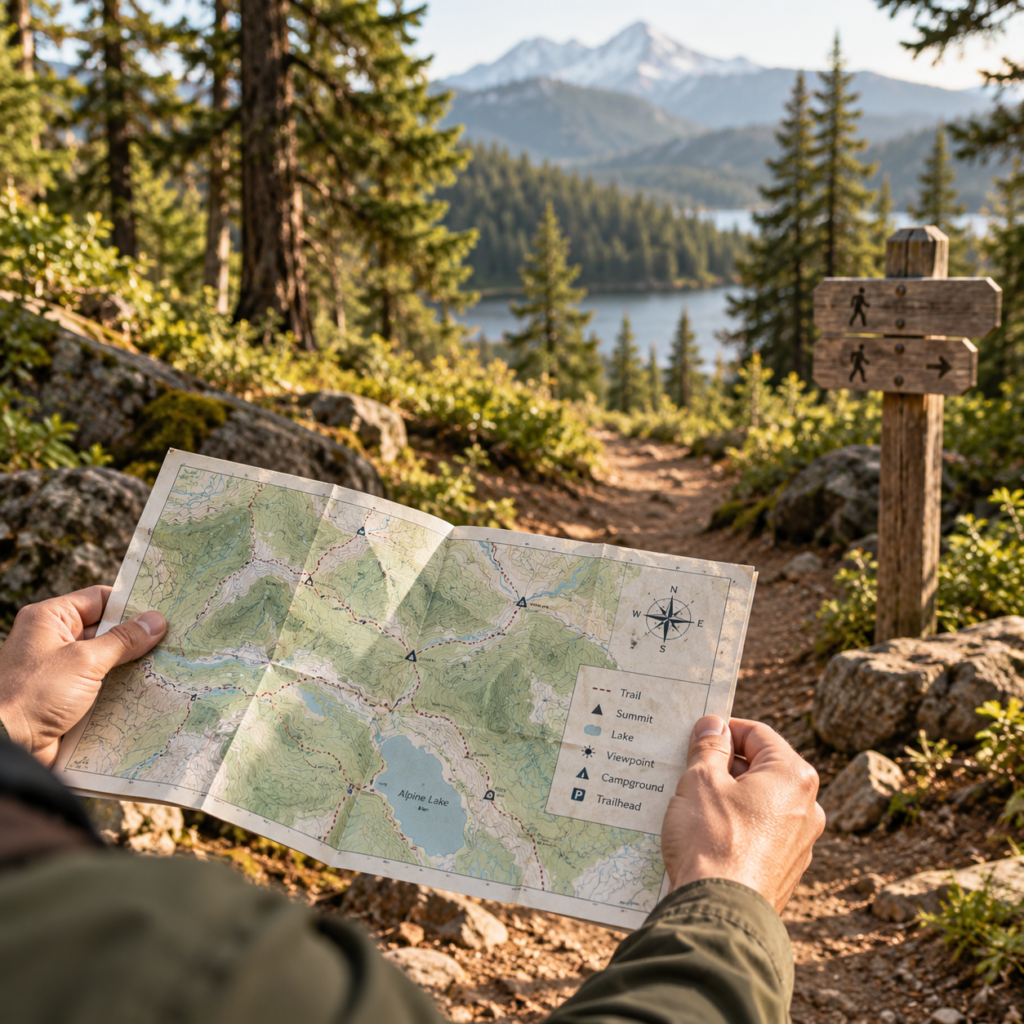
ONE SMALL EXPERIMENT
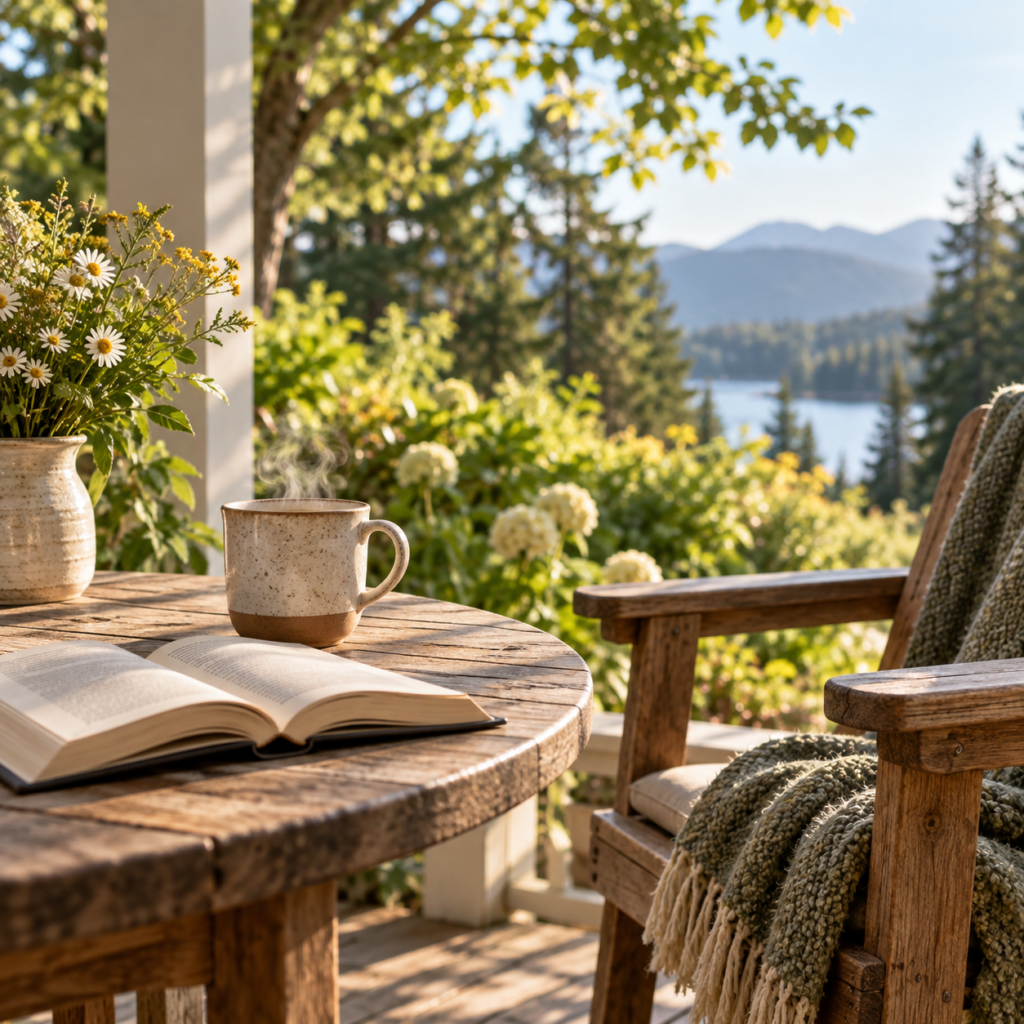
You don’t have to take our word for it.
Some questions are worth exploring in your own life. Not to prove anything. Not to turn one experience into evidence. Just to notice what happens.
THIS WEEK, TRY THIS
Take one ordinary thing you already do indoors—and take it outside.
Drink your morning coffee. Eat lunch. Make a phone call. Read ten pages of a book. Sit for five minutes after work.
Don’t try to make yourself feel better. Don’t decide ahead of time what’s supposed to happen.
Pay attention to what you notice. The light. The sounds. Your attention. Your thoughts. Whether five minutes feels different from the same five minutes indoors—or whether it doesn’t.
That’s it. Just notice whether anything feels different.
Curiosity Is Allowed to Ask for Evidence
You don’t have to choose between appreciating the world and asking questions about it.
Notice what interests you. Follow the question. Look at what we know. Pay attention to what we don’t.
Sometimes the answer will make the ordinary seem extraordinary. Sometimes it will make something extraordinary seem wonderfully ordinary.
Either way, curiosity gets to stay.
Walk
Walking workouts and everyday movement
Move
Simple ways to move more everyday
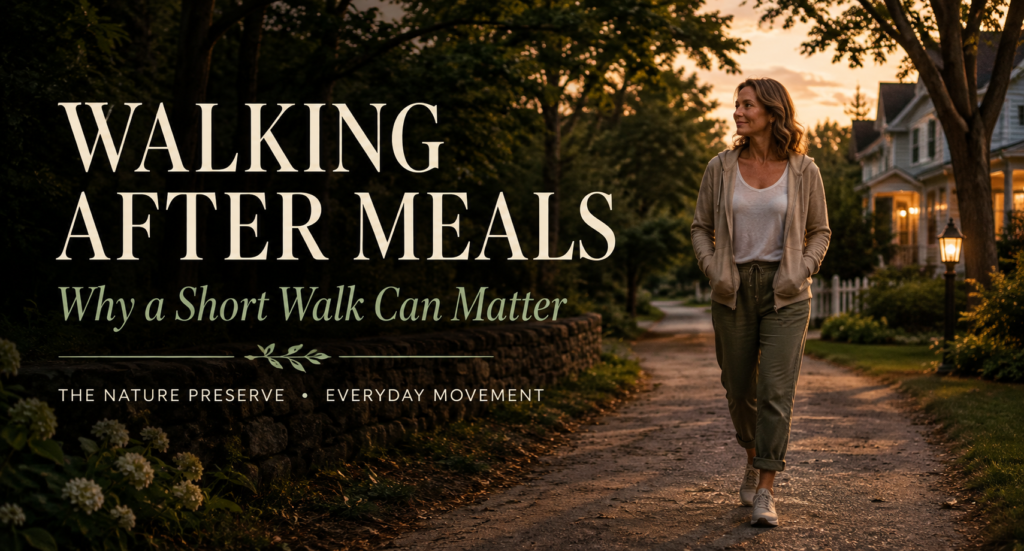
Walking After Meals
Why a Short Walk Can Matter