
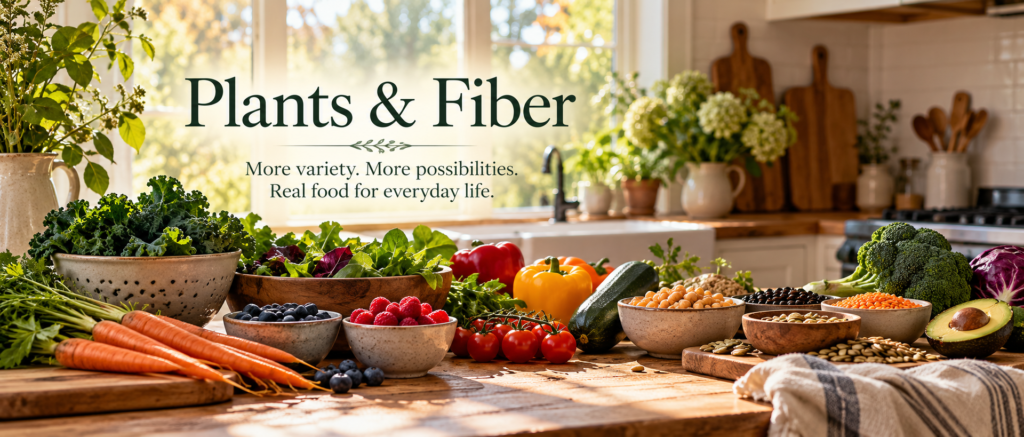
You don’t have to become vegetarian, overhaul your grocery list, or suddenly fall in love with kale to benefit from eating more plants.
Vegetables, fruits, beans, lentils, nuts, seeds, and whole grains bring different things to the table. Some provide fiber that supports digestion and helps feed the microbes living in your gut. Others contribute vitamins, minerals, and a remarkable variety of compounds that work alongside the rest of what you eat.
And there’s no single perfect way to put them on your plate.
This is where we’ll explore what plants and fiber actually do, where to find them, and how to make room for more of them in meals you already enjoy. No complicated rules. No foods you have to force yourself to eat. Just useful information and practical ideas you can take into your own kitchen.
Start Here
You don’t have to become vegetarian, overhaul your grocery list, or suddenly fall in love with kale to benefit from eating more plants.
Vegetables, fruits, beans, lentils, nuts, seeds, and whole grains bring different things to the table. Some provide fiber that supports digestion and helps feed the microbes living in your gut. Others contribute vitamins, minerals, and a remarkable variety of compounds that work alongside the rest of what you eat.
And there’s no single perfect way to put them on your plate.
This is where we’ll explore what plants and fiber actually do, where to find them, and how to make room for more of them in meals you already enjoy. No complicated rules. No foods you have to force yourself to eat. Just useful information and practical ideas you can take into your own kitchen.

A Little More on Your Plate
Eating more plants doesn’t have to mean changing everything about the way you eat. Sometimes it’s a matter of knowing where to find fiber, discovering a few ingredients you haven’t used much before, or finding simple ways to add variety to meals you already enjoy.
These guides take a closer look at the foods, choices, and everyday habits that can help you make room for more plants and fiber, one practical step at a time.
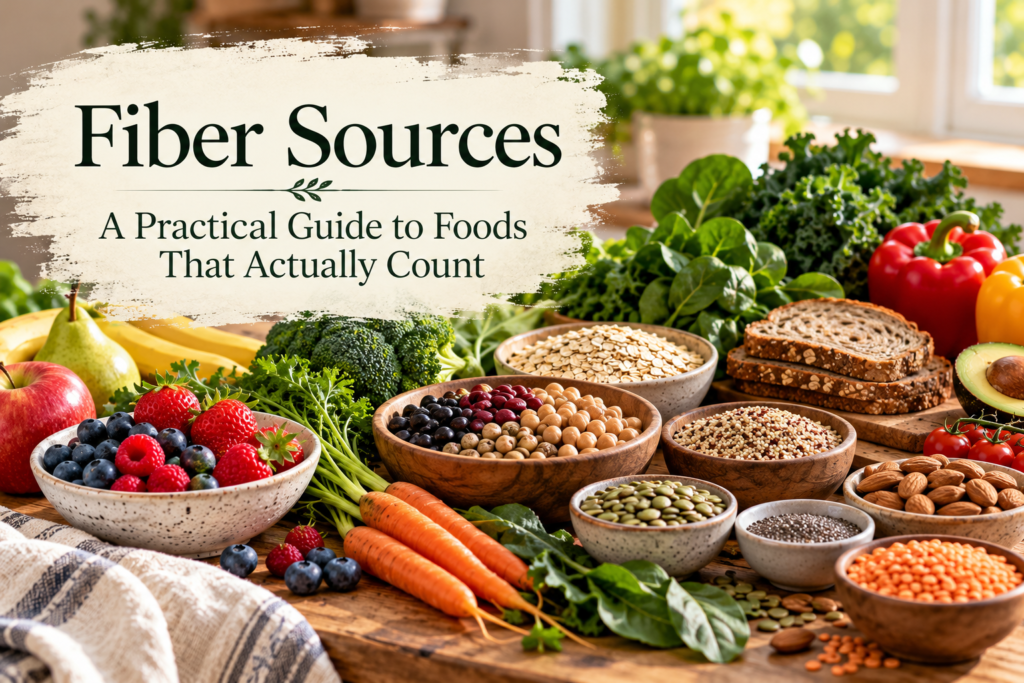
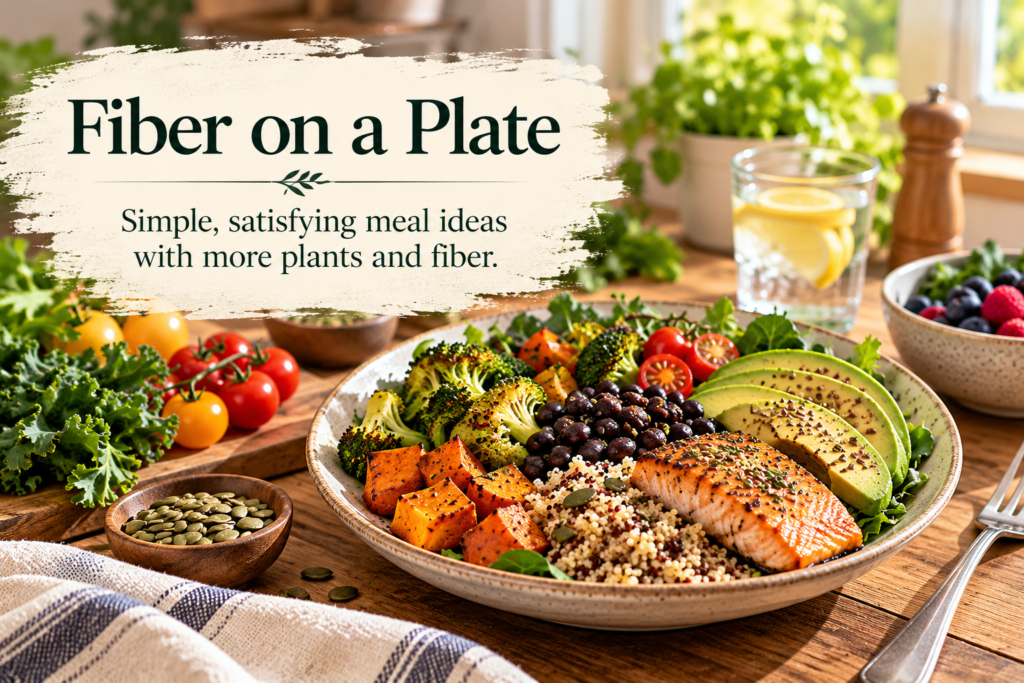
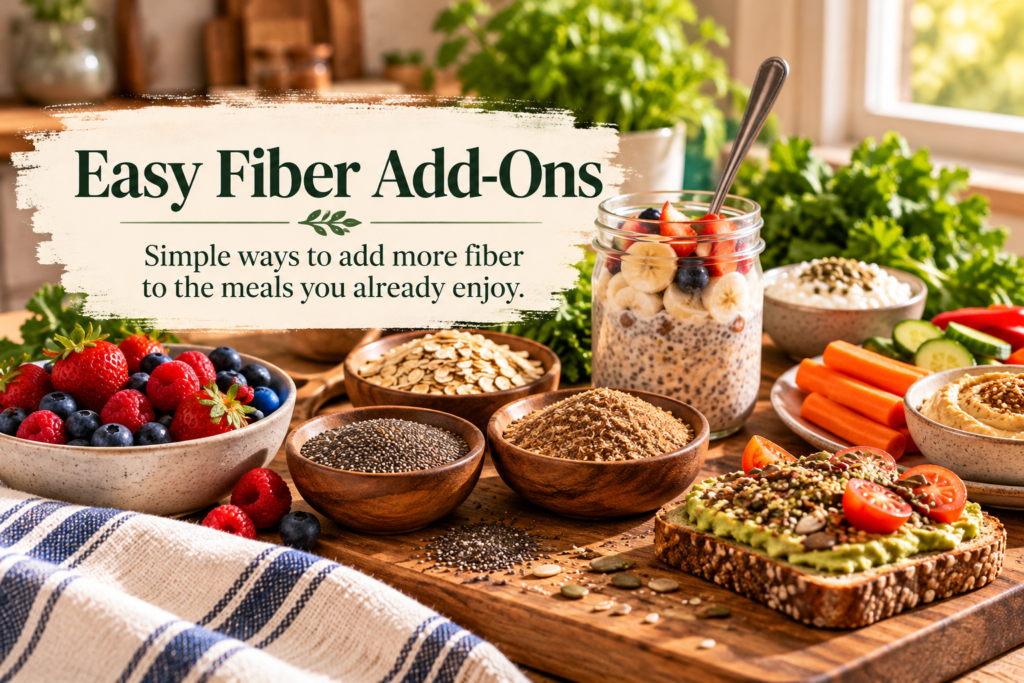
Find Your Starting Point
You don’t need a completely different grocery list to start eating more plants and fiber. Often, the easiest place to begin is with something you’re already making.
Add berries to your breakfast. Toss a handful of beans into a favorite soup. Try a different vegetable alongside dinner, sprinkle ground flaxseed over your oatmeal, or swap in a whole grain you haven’t cooked before.
None of these changes needs to happen all at once. And you don’t need to eat every plant food to benefit from including more variety.
Start with something you enjoy, something that’s easy to find, or something you’ve been curious to try. Give yourself time to discover what works for your appetite, your routine, and your digestion.
A little more variety, one meal at a time. That’s a perfectly good place to begin.