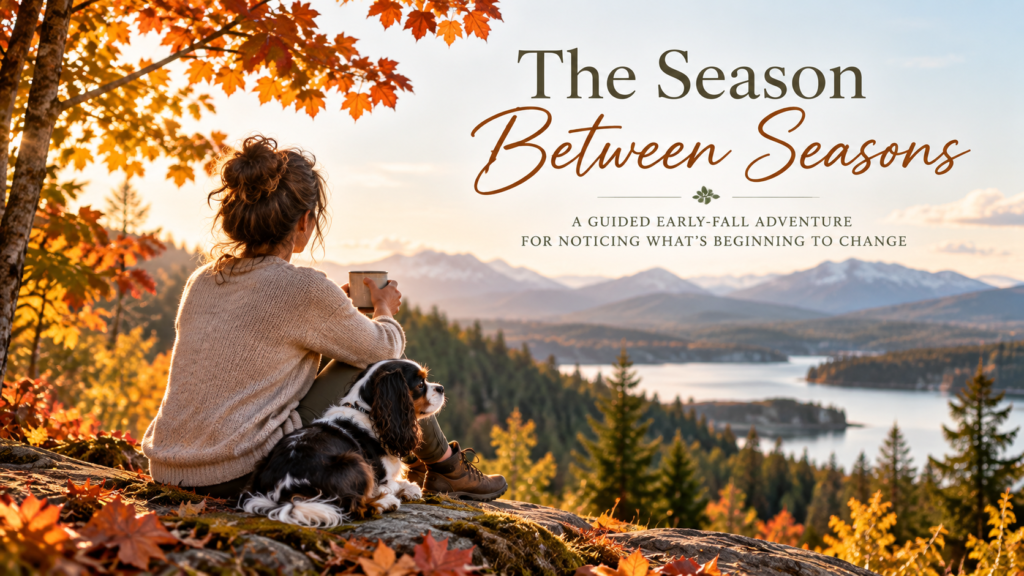
September can be surprisingly difficult to place.
The calendar says autumn is coming, but the afternoon may still feel like summer. Most of the trees are green. The garden is still producing. You leave the house in a sweater in the morning and regret it by lunchtime.
If you’re waiting for the whole landscape to turn orange before you call it fall, you can miss one of the most interesting parts of the season.
Because the change doesn’t happen all at once.
It starts at the edges.
A few leaves turn before the tree beside them. The morning air feels different against your skin. Flowers that were blooming a few weeks ago begin forming seed heads. Apples grow heavy on the branches. Shadows stretch a little farther across the trail. The evening arrives earlier than you remember it arriving last week.
Nothing dramatic has happened.
And yet almost everything has begun to move.
That is what we’re going outside to find.
The Adventure
Choose somewhere you can spend a little time outside. It doesn’t need to be a beautiful hiking trail or somewhere you’ve never been before. In fact, a familiar place can be even better because you already have a sense of what it usually looks and feels like. A neighborhood path, local park, orchard, garden, waterfront, nature trail, or even a few quiet streets with plenty of trees will work.
Then go for a walk with one purpose: look for evidence that the season is changing.
Don’t make a checklist before you leave. Don’t worry about identifying what you find. And don’t wait for the obvious signs of autumn—the brilliant leaves, pumpkins on porches, or first genuinely cold morning. You’re looking for the smaller changes that arrive before those things do.
Walk a little more slowly than you normally would. Look up into the trees and down along the edges of the path. Notice what’s growing, what’s fading, what’s ripening, and what’s beginning to fall. Pay attention to the air against your skin and the quality of the light around you. Listen for what is still noisy and what has become quieter.
You may find only three or four things.
That’s enough.
The point isn’t to prove that autumn has arrived. It’s to catch the landscape in the act of becoming something else.
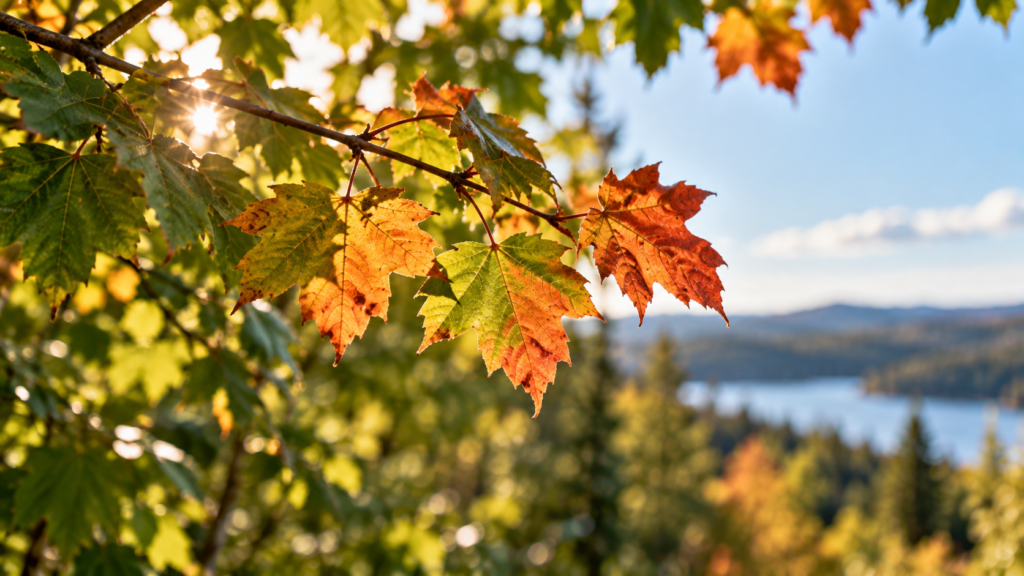
Look for the Changes at the Edges
Some changes will be easy to spot once you start looking. Others may be so small that you’re not entirely sure whether they’re new. That’s part of the fun.
Look at the trees. You may find a single branch changing color while the rest of the canopy is still green, leaves beginning to curl at the edges, or the first few scattered across the ground beneath them.
Look at what was flowering earlier in the season. Some blooms may still be hanging on while others have dried into seed heads, pods, hips, berries, or other shapes that weren’t there a few weeks ago. Fruit may be ripening on trees and vines. Grasses may have changed color. Plants along the trail may look less lush than they did in midsummer.
Then look beyond the plants.
Notice where the sun is. Notice how long the shadows have become. Feel whether the air changes when you step into shade. Listen for insects, birds, wind through dry leaves, or whatever else is making up the background noise today. If you’re near water, look at what’s happening along its edges. If you’re walking in the evening, notice how quickly the light disappears.
And notice yourself in the season, too. Did you bring a jacket? Are your hands colder than they would have been a month ago? Does the sun still feel hot while the breeze feels cool? Are you suddenly thinking about coffee when a few weeks ago you would have wanted something cold?
The season isn’t happening somewhere outside of you.
You’re standing in it.
You Don’t Need to Know What It’s Called
You may find a berry you can’t identify, a tree with leaves beginning to change, a bird making a sound you don’t recognize, or a strange little seed pod that makes you stop and look twice.
You do not have to know what any of it is before you’re allowed to be interested in it.
If curiosity makes you want to look something up later, wonderful. Take a photograph. Make a note. Use a field guide or identification app when you get home. But don’t let the need to name everything interrupt the experience of noticing it.
There is a difference between “I don’t know what that is” and “I didn’t see it.”
The first one is curiosity.
And curiosity is more than enough reason to stop.
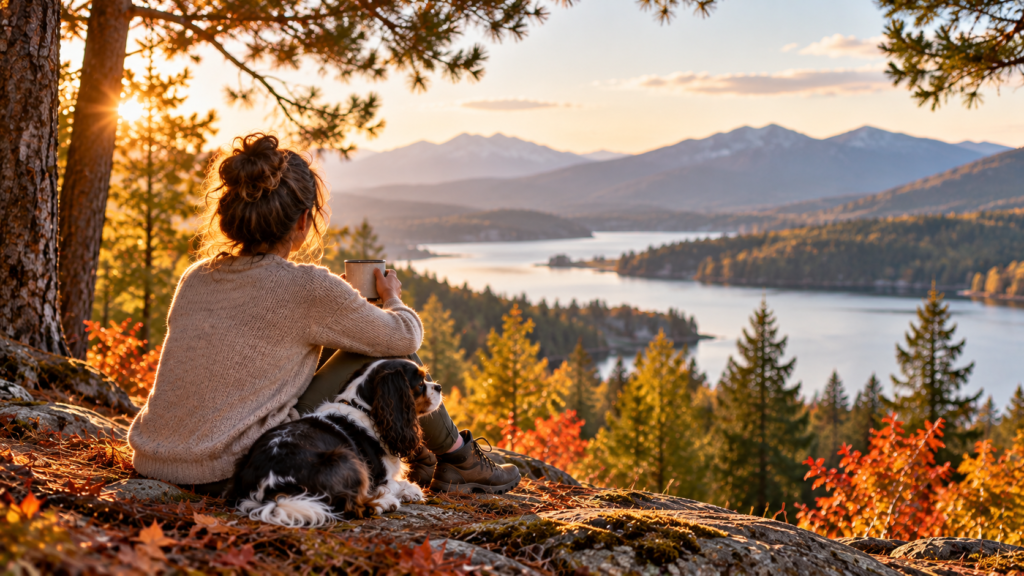
Bring One Question With You
If you’d like a little direction, choose one question before you start walking and carry it with you rather than trying to answer all of them.
What is different here than it would have been a month ago?
What looks like it is finishing?
What looks like it is just beginning?
Where can I see two seasons at once?
What would I have walked past if I weren’t looking for change?
You don’t need to write down your answer. You don’t even need to find one.
A good question can simply change what you notice.
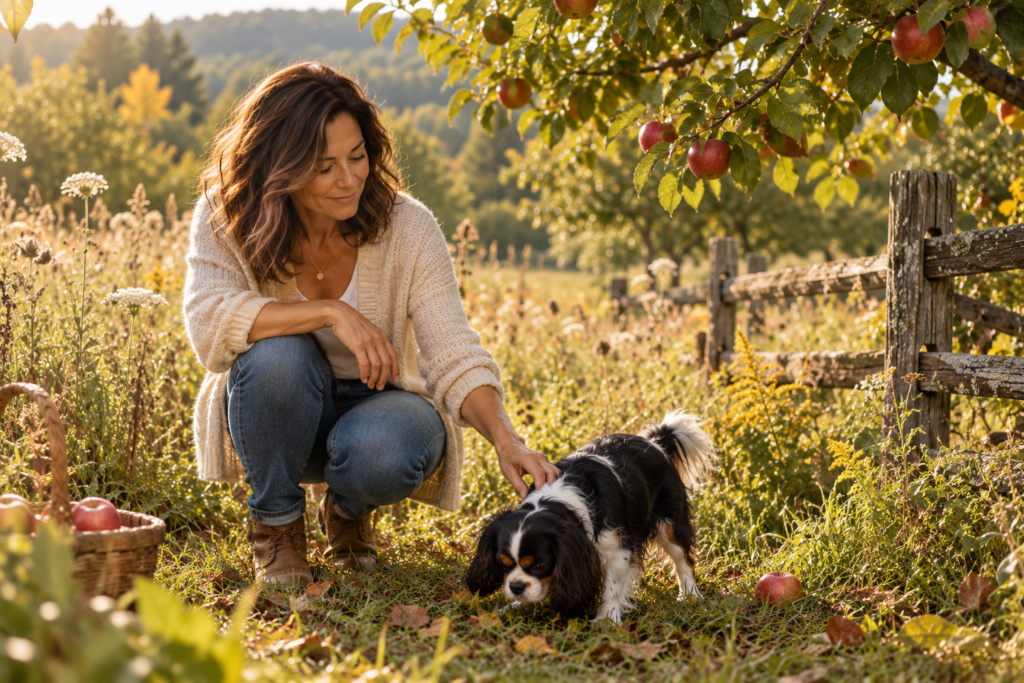
Come Back
If this is somewhere you can easily return to, come back in a week or two.
Walk roughly the same route. Find the tree with the first changing branch. Look for the flowers that had begun forming seeds. Check the apples, berries, grasses, water, shadows, or whatever caught your attention the first time.
Some things may look almost exactly the same.
Others won’t.
And that’s when this little adventure becomes especially interesting, because you aren’t remembering autumn as one big event anymore. You’ve watched part of it happen.
The branch became a tree. The scattered leaves became a layer under your feet. The fruit disappeared from the orchard. The evening that seemed slightly shorter suddenly requires you to turn the porch light on before dinner.
Seasons rarely arrive all at once.
We simply notice them all at once.
Before You Head Home
Take one last look around before you leave.
You don’t need to decide what the walk meant. You don’t need to turn it into gratitude practice, mindfulness homework, a workout, or another habit you’re supposed to maintain.
You went outside.
You paid attention.
You caught the world in the middle of changing.
And for one small stretch of an ordinary day, you were there to see it.