There are certain things that can take you right back to another time in your life.
The smell of something cooking in the kitchen. A particular song playing during the holidays. A familiar dish that always appears on the table, even though nobody can quite remember when it became a tradition.
Sometimes it’s something much smaller. Sunday dinner at your parents’ house. Birthday breakfasts. A yearly trip to the same little town. The way everyone ends up sitting around the table long after the meal is finished.
We don’t always realize how much these things mean to us until something changes.
And by the time we reach our forties and fifties, quite a lot may have changed.
Our children are growing up. Our parents are getting older. Families expand, move, and sometimes grow apart. Friendships change. The holidays we once knew may look very different now, and the people who made certain traditions special might no longer be there.
It’s a strange thing, realizing that some of the traditions we’ve carried through our lives are now ours to keep, change, or let go.
But there’s something lovely about that, too.
The Comfort of Something Familiar
I think part of what makes a tradition special is that we know what to expect.
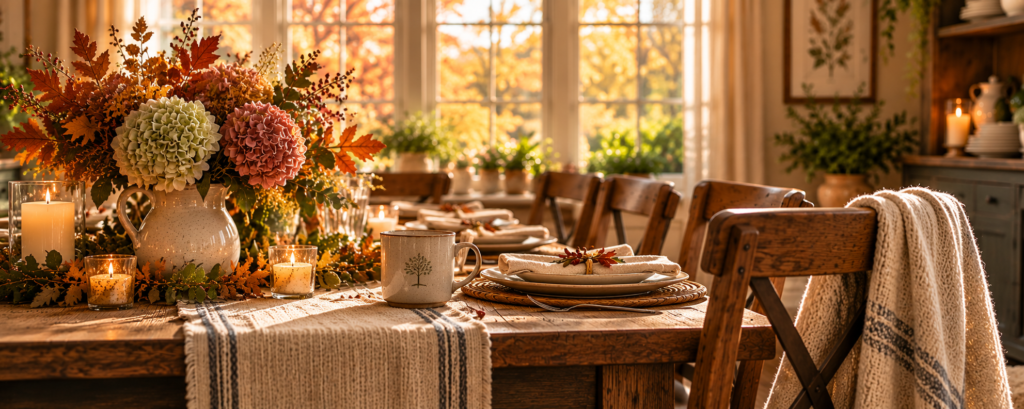
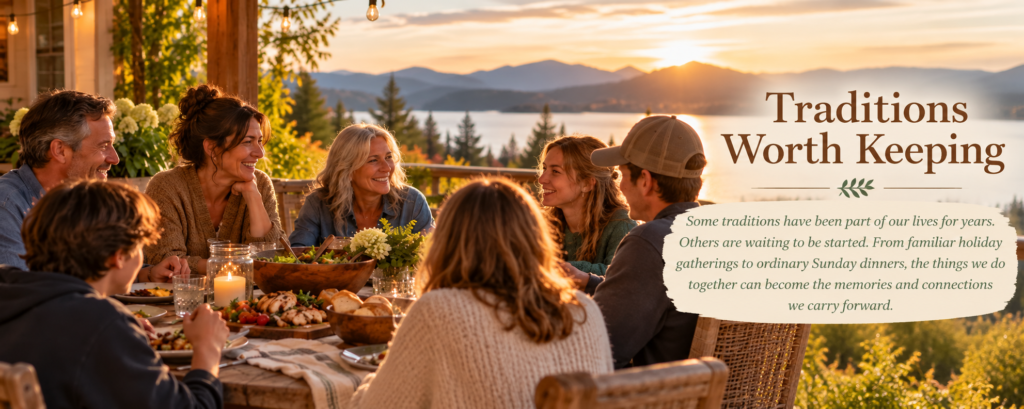
There’s comfort in returning to something familiar, especially when other parts of life feel uncertain. We know who’s bringing the pie. We know someone will tell the same story they’ve told every year. We know which chair everyone gravitates toward, even when nobody has assigned seats.
And yes, we probably know who’s going to be late.
Again.
These little rituals give our lives a sense of continuity. They remind us of people, places, and experiences that have mattered to us. Sometimes they help us feel connected to generations of family members we never even knew.
But traditions don’t have to be old to be meaningful.
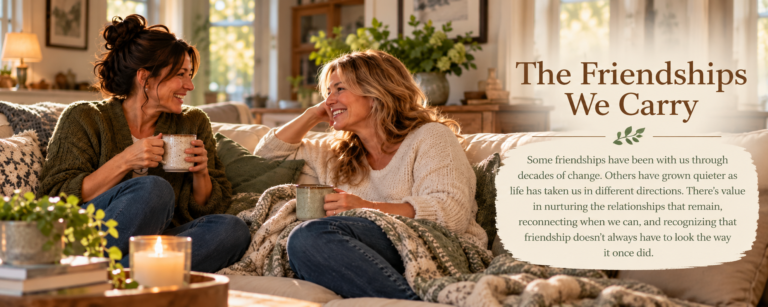
A weekly coffee date with a friend can become a tradition. So can a walk on the first day of spring, a monthly dinner with neighbors, or an afternoon spent baking with someone you love.
Sometimes all it takes is doing something once, enjoying it, and deciding you’d like to do it again.
When Life Starts Changing the Traditions
Midlife has a way of rearranging things.
The kids who once woke us at sunrise on Christmas morning might now sleep until noon. Parents who used to host every family gathering may need someone else to take over. Friends move away. Schedules become complicated. Some of us find ourselves with more time than we used to have, while others are juggling work, teenagers, aging parents, and everything in between.
And somewhere in the middle of all that, our own bodies may be changing, too.
Perimenopause and menopause can bring changes in sleep, energy, mood, and how we feel from one day to the next. Not every woman experiences those changes in the same way, of course. But for someone who’s dealing with interrupted sleep, fatigue, or a shorter fuse than she’s accustomed to, the thought of hosting twenty people and preparing an elaborate holiday meal might not sound quite as appealing as it once did.
That doesn’t mean she loves her family any less.
It might simply mean that what worked beautifully ten years ago doesn’t work quite as well now.
And I think we should be allowed to acknowledge that.
Sometimes keeping a tradition means changing how we do it. Maybe everyone brings a dish instead of one person preparing the entire meal. Maybe the gathering moves to someone else’s house. Maybe the big holiday dinner becomes a relaxed afternoon with soup and sandwiches.
The people and the time together can still matter, even when the details look different.
Keep the Meaning, Not Necessarily the Work
Have you ever stopped to think about why you do something every year?
Not because you dislike it, necessarily. Just because you’ve done it for so long that you can’t remember whether anyone actually chose it.
There are traditions we genuinely love. And then there are the ones we keep doing because that’s how we’ve always done things.
Sometimes those are the same traditions.
Sometimes they’re not.
If everyone looks forward to the big family dinner, wonderful. Keep it. But if the person responsible for making it happen spends three days exhausted, misses half the gathering because she’s in the kitchen, and needs another three days to recover, it might be worth asking whether there’s another way.
Could everyone contribute something? Could the menu be simpler? Could the family spend more time together and less time worrying about whether everything looks exactly the way it did twenty years ago?
We don’t have to abandon a tradition just because it’s become too much work.
Sometimes we can keep the best part and let the rest go.
And sometimes, if we’re being perfectly honest, a tradition has run its course.
That’s okay, too.
The Traditions We Haven’t Started Yet
One of the nice things about this stage of life is realizing that we can still begin things.
We aren’t limited to the traditions we grew up with or the ones we created when our children were little. We can make new ones that suit the people we are now.
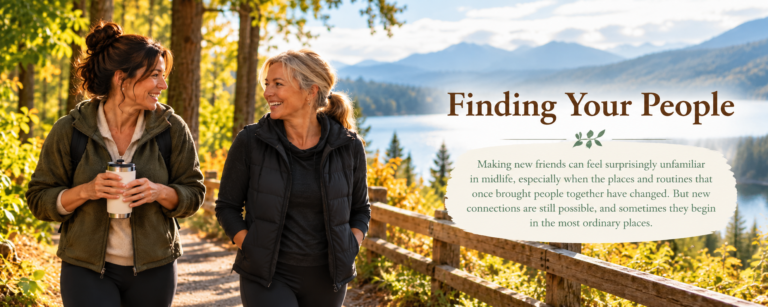
Maybe it’s a standing lunch date with friends on the first Friday of every month. Maybe it’s a yearly weekend away with your sisters. Maybe it’s an autumn walk followed by homemade soup, a summer evening spent watching the sunset, or a birthday celebration that involves doing something you’ve never tried before.
It could be something you do with your partner, your children, your neighbors, or a friend you only met last year.
And it doesn’t have to involve family at all.
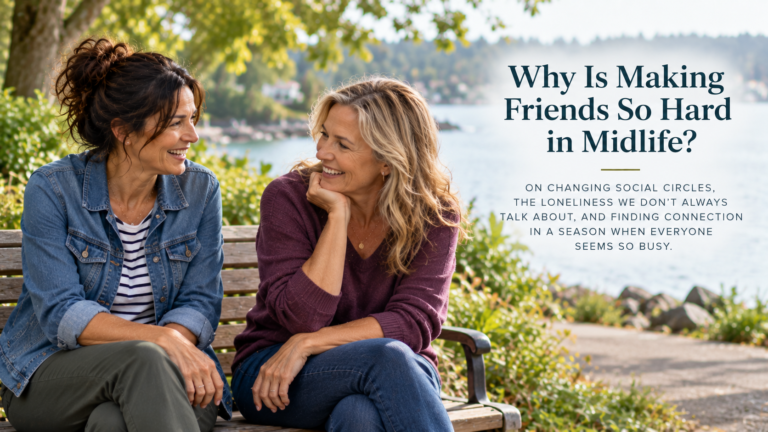
For some women, friendships and chosen family are the people who show up most consistently. Those relationships deserve traditions of their own.
I especially like the idea that we don’t have to wait for a special occasion to create something worth repeating.
An ordinary Sunday can become the Sunday everyone looks forward to.
Why Being Together Matters
There’s a reason I wanted to make room for gathering here at The Signals Project.
When we talk about taking care of ourselves in midlife, we spend a lot of time discussing food, movement, sleep, and the physical changes that can come with perimenopause and menopause. Those things matter. They’re a big part of what we’re building here.
But they’re not the whole picture.
Our relationships matter, too.
Having people we can laugh with, talk to, ask for help, or simply sit beside can make difficult seasons feel a little less isolating. Strong social connections are associated with better mental and physical health, although no single gathering or tradition can promise a particular health outcome.
And during a stage of life when so many things may be changing at once, familiar people and shared experiences can offer something valuable: a reminder that we’re still part of a world beyond whatever is happening with our bodies.
We can be dealing with hot flashes, poor sleep, changing family roles, or an overwhelming week and still have an afternoon that makes us laugh until our stomachs hurt.
We can be figuring out who we’re becoming and still find comfort in spending time with people who remember who we’ve been. People who know our stories, who have shared pieces of our lives, and who remind us that all those earlier versions of ourselves are still part of who we are today.
And I think that’s worth remembering, especially in midlife. We aren’t finished becoming who we are. We’re still learning, growing, changing our minds, discovering new interests, and sometimes realizing that things we once believed about ourselves no longer fit. We don’t have to remain the same person simply because that’s who we’ve always been. And the people who care about us can get to know these newer versions of us, too.
That’s worth making time for.
Not because every woman needs a crowded table or a busy social calendar. Some of us prefer a small circle. Some of us are happiest with one or two close relationships and plenty of quiet time.
Connection doesn’t have to look the same for everyone.
It just helps to have people and experiences that make us feel we belong.
Make Room for What Comes Next
I don’t think every tradition needs to last forever.
Some belong to a particular season of life, and that’s part of what makes them special. We can remember them fondly without trying to recreate them exactly as they were.
Others are worth carrying forward, even if we have to make a few adjustments along the way.
And some are still waiting for us to begin.
Maybe there’s something your family used to do that you’d love to bring back. Maybe there’s a friend you’ve been meaning to make regular plans with. Or maybe you’ve reached a point where you’re ready to start doing things a little differently.
You don’t have to make a grand announcement about it.
You can simply invite someone to dinner next Sunday. Suggest a monthly walk. Ask everyone to bring something instead of doing all the cooking yourself.
See what feels good. See what people enjoy. See what you’d like to do again.
Because the traditions worth keeping aren’t necessarily the oldest, the fanciest, or the ones that take the most work.
They’re the ones that continue to mean something to the people sharing them.
And there’s still plenty of time to make a few more.