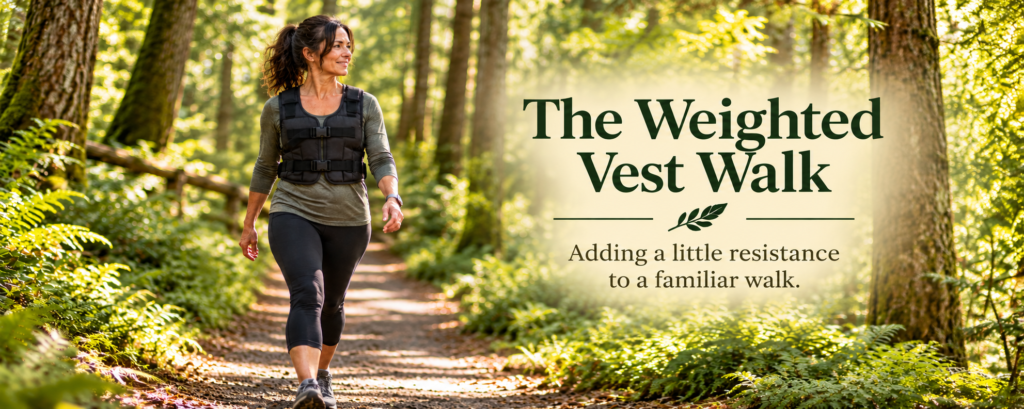
Walking is already a wonderful way to move. But sometimes, when your usual route begins to feel comfortable, you might find yourself looking for a little more challenge without necessarily walking farther or faster.
A weighted vest is one way to do that.
By adding weight around your torso, a vest increases the load your body carries as you walk. That can make familiar distances feel more demanding, asking your legs and cardiovascular system to work a little harder. It’s a simple idea, but there are a few things worth knowing before you strap one on.
Start Lighter Than You Think
One of the biggest mistakes with weighted walking is assuming that more weight means a better workout.
It doesn’t have to.
If you’re new to using a weighted vest, begin with a very light load and a short walk on level ground. Some beginners use around 5% of their body weight as a starting reference, but that’s not a requirement or a universally appropriate amount. Less may be better, depending on your strength, balance, and comfort.
Your first walk isn’t a test of how much you can carry. It’s an opportunity to see how your body responds.
Pay attention to your posture, breathing, and how your feet, knees, hips, and back feel during and after the walk. If the added weight changes the way you move or causes discomfort, reduce it or remove the vest.
Fit Matters as Much as Weight
A weighted vest should sit securely against your torso without bouncing, shifting, or restricting your breathing.
Look for adjustable straps, reasonably balanced weight distribution, and a fit that allows your arms to swing naturally. If you’re walking outdoors, visibility and comfort matter, too.
And remember that the terrain adds its own challenges. A vest that feels manageable on a flat sidewalk may feel considerably heavier on a steep hill or uneven trail.
Start with familiar, predictable ground before combining extra weight with more demanding terrain.
The Vest I Actually Use
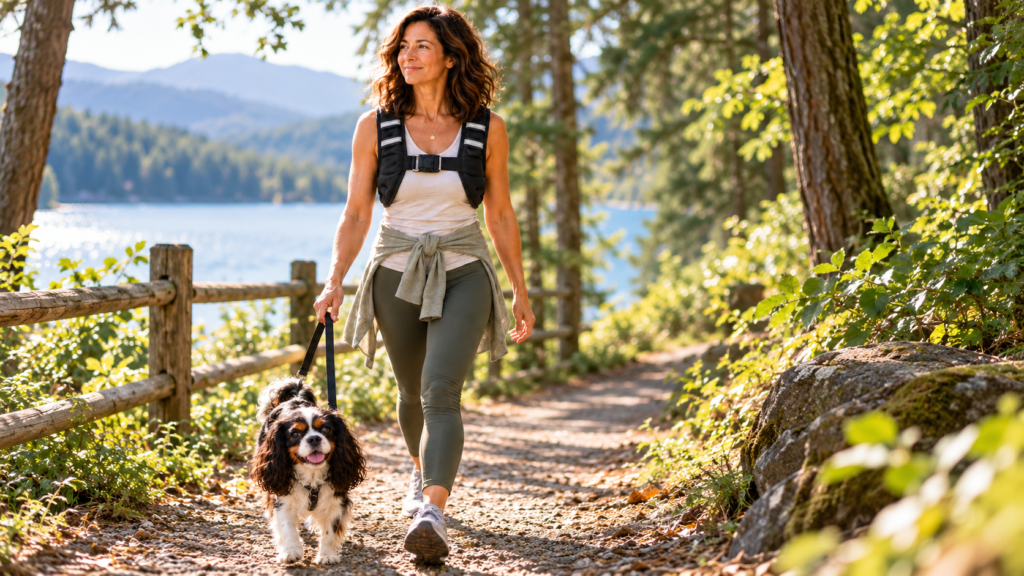
I use the ZELUS Weighted Vest with Reflective Stripe for some of my walks. I like having the option to add resistance without changing my entire routine.
It’s an option worth considering if you’re interested in trying weighted walking, but it’s certainly not something everyone needs. The right choice depends on fit, available weight, and what feels comfortable for your body.
TSP Tested Pick: ZELUS Weighted Vest with Reflective Stripe
Affiliate disclosure: This article contains an Amazon affiliate link. As an Amazon Associate, I earn from qualifying purchases at no additional cost to you.
Know When to Leave It Home
A weighted vest isn’t appropriate for every walk or every person. If you have osteoporosis, joint or back problems, balance difficulties, cardiovascular concerns, or another condition that could make additional loading risky, check with a qualified healthcare professional before trying one.
Even if you’re comfortable using a vest, there are days when an ordinary walk is the better choice.
You can also make walking more challenging by choosing a gentle hill, walking a little longer, or gradually increasing your pace. None of those requires purchasing anything.
A Little More, Not Always More
The purpose of adding weight isn’t to make every walk harder. It’s to introduce a manageable challenge when you’re ready for one.
You might wear a light vest for part of a familiar route, then leave it home for your next walk. Over time, you may find that the same load feels easier, or that you prefer walking without it.
Both are useful things to learn.
The vest is simply a tool. The walk still counts without it.
The Weighted Vest Walk
Adding a little resistance to an ordinary walk.
Walking is already a wonderful way to move. But sometimes, when your usual route begins to feel comfortable, you might find yourself looking for a little more challenge without necessarily walking farther or faster.
A weighted vest is one way to do that.
By adding weight around your torso, a vest increases the load your body carries as you walk. That can make familiar distances feel more demanding, asking your legs and cardiovascular system to work a little harder. It’s a simple idea, but there are a few things worth knowing before you strap one on.
Start Lighter Than You Think
One of the biggest mistakes with weighted walking is assuming that more weight means a better workout.
It doesn’t have to.
If you’re new to using a weighted vest, begin with a very light load and a short walk on level ground. Some beginners use around 5% of their body weight as a starting reference, but that’s not a requirement or a universally appropriate amount. Less may be better, depending on your strength, balance, and comfort.
Your first walk isn’t a test of how much you can carry. It’s an opportunity to see how your body responds.
Pay attention to your posture, breathing, and how your feet, knees, hips, and back feel during and after the walk. If the added weight changes the way you move or causes discomfort, reduce it or remove the vest.
Fit Matters as Much as Weight
A weighted vest should sit securely against your torso without bouncing, shifting, or restricting your breathing.
Look for adjustable straps, reasonably balanced weight distribution, and a fit that allows your arms to swing naturally. If you’re walking outdoors, visibility and comfort matter, too.
And remember that the terrain adds its own challenges. A vest that feels manageable on a flat sidewalk may feel considerably heavier on a steep hill or uneven trail.
Start with familiar, predictable ground before combining extra weight with more demanding terrain.
The Vest I Actually Use
I use the ZELUS Weighted Vest with Reflective Stripe for some of my walks. I like having the option to add resistance without changing my entire routine.
It’s an option worth considering if you’re interested in trying weighted walking, but it’s certainly not something everyone needs. The right choice depends on fit, available weight, and what feels comfortable for your body.
TSP Tested Pick: ZELUS Weighted Vest with Reflective Stripe
Affiliate disclosure: This article contains an Amazon affiliate link. As an Amazon Associate, I earn from qualifying purchases at no additional cost to you.
Know When to Leave It Home
A weighted vest isn’t appropriate for every walk or every person. If you have osteoporosis, joint or back problems, balance difficulties, cardiovascular concerns, or another condition that could make additional loading risky, check with a qualified healthcare professional before trying one.
Even if you’re comfortable using a vest, there are days when an ordinary walk is the better choice.
You can also make walking more challenging by choosing a gentle hill, walking a little longer, or gradually increasing your pace. None of those requires purchasing anything.
A Little More, Not Always More
The purpose of adding weight isn’t to make every walk harder. It’s to introduce a manageable challenge when you’re ready for one.
You might wear a light vest for part of a familiar route, then leave it home for your next walk. Over time, you may find that the same load feels easier, or that you prefer walking without it.
Both are useful things to learn.
The vest is simply a tool. The walk still counts without it.