
Walking doesn’t have to become a formal workout to help you grow stronger. Sometimes all it takes is choosing a route with a few hills, stopping at a sturdy bench for a couple of exercises, or adding a little resistance to a familiar walk.
There are plenty of ways to make an ordinary walk more challenging without turning it into something complicated. A short, steep hill asks something different of your body than a long, gradual climb. A few strength movements along the way can add variety, while a weighted vest may be an option for someone who’s ready for additional resistance.
This pathway is about exploring those possibilities at your own pace. You don’t need to try everything, follow a particular routine, or make every outing harder than the last. Sometimes you’ll want a challenge. Other days, you’ll simply want to enjoy the walk. There’s room for both.
Two Ways to Build Strength on a Walk
There isn’t just one way to make a walk more challenging. A hill can ask your legs and lungs to work a little harder, while a few simple strength exercises along the way can bring different muscles into the picture. Both can fit naturally into a walk you’re already enjoying.
Whether you’d rather explore a new incline or stop for a few movements along a familiar route, these two guides offer practical ways to get started. You can try either approach on its own, combine them occasionally, or simply keep the ideas in mind for a day when you’re feeling ready for something different.
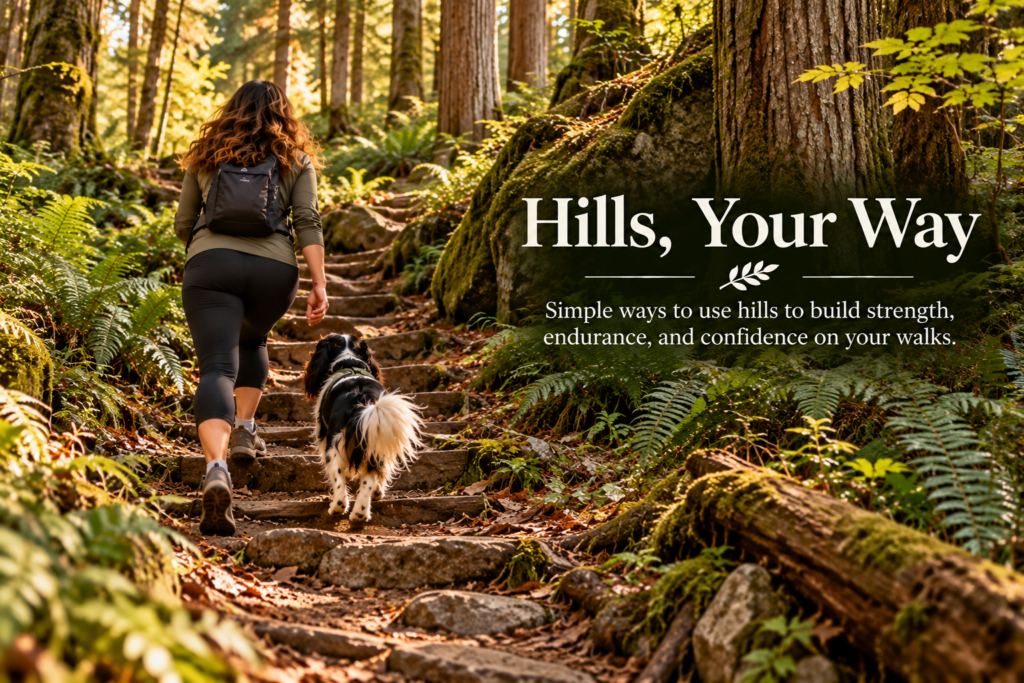
A hill can change the feel of a walk without changing much else. A short, steep climb can challenge your legs and breathing, while a longer, gentler slope gives you a chance to build endurance at a steadier pace. You can even revisit the same hill a few times, with plenty of recovery between efforts. Explore different ways to use inclines, whether you’re looking for a little extra challenge or simply curious about what your body can do.

Remember when a fallen log was something to balance on and a tree practically invited you to climb? The outdoors still offers opportunities to play, move, and challenge yourself in ways that don’t feel like exercise. Balancing, scrambling, stepping, and exploring can engage strength, coordination, and confidence, with plenty of ways to adapt to your abilities. Rediscover the little adventures hiding in the natural world, and the joy of moving simply because something looks fun.
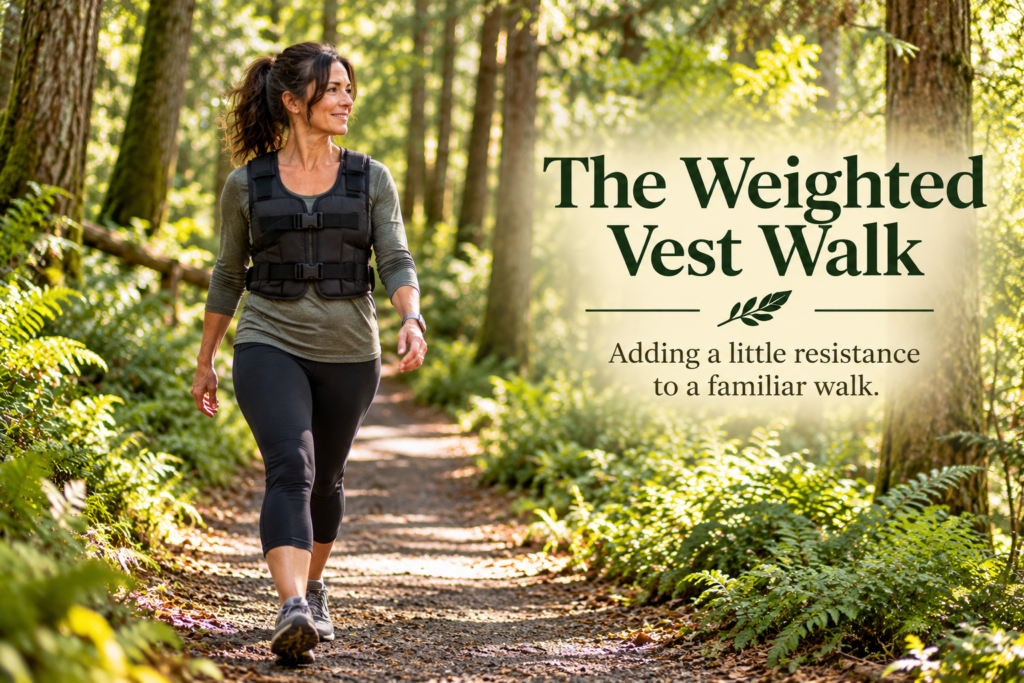
A weighted vest can add resistance to a walk you’re already comfortable doing, giving your muscles a little more work without requiring a new route or a faster pace. But more weight isn’t automatically better, and a vest isn’t the right choice for everyone. Fit, starting weight, posture, and how your body responds all matter. This short guide explores how to approach weighted walking thoughtfully, when to be cautious, and why starting small is usually the smartest way to begin.
Three Ways to Build Strength on a Walk
There are plenty of ways to add a little challenge to a walk, and they don’t all ask the same things of your body. A short hill repeated a few times can build power and stamina, a park bench can become a convenient place for a little strength work, and a long, gradual climb can help develop endurance.
These three ideas are meant to be possibilities, not a workout you have to complete. Choose one that sounds interesting, adapt it to your abilities, or save it for another day. The goal isn’t to make every walk harder. It’s to discover a few more ways to enjoy what your body can do.
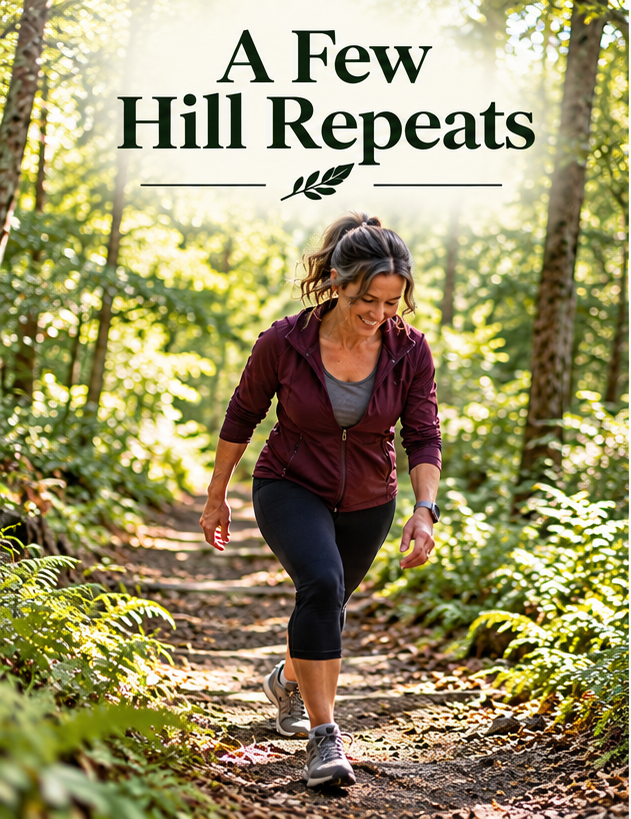
A Few Hill Repeats
You don’t need a mountain to make climbing part of your walk. A short hill in a neighborhood, park, or along a trail can give your legs and cardiovascular system a little extra work. Walking uphill several times, with an easy recovery between climbs, lets you adjust the challenge without committing to a long, difficult route.
Try This: Find a manageable hill and walk uphill at a pace that makes you breathe a little harder while still feeling in control. Walk slowly back down, or recover on level ground, before trying another climb. Start with two or three repetitions if that feels comfortable. There’s no need to race to the top, and you can stop whenever you’ve had enough.
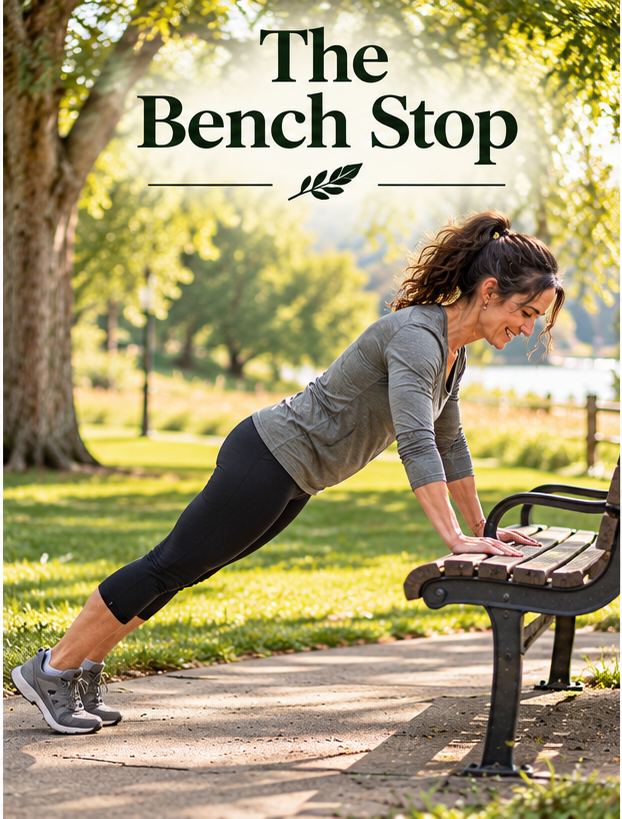
The Bench Stop
A sturdy park bench can offer more than a place to sit and enjoy the view. It can also become a convenient spot for a few simple strength movements during your walk. Sit-to-stands work your legs, incline push-ups challenge your upper body, and supported calf raises add a little attention to the muscles that help carry you along the trail.
Try This: Choose a stable bench on level ground. Try five controlled sit-to-stands without using your hands if comfortable, followed by five incline push-ups with your hands on a secure surface. Finish with eight slow calf raises while holding the bench for balance. Adjust the repetitions or choose just one movement. The idea is to add a little strength work, not turn your walk into an entire gym session.
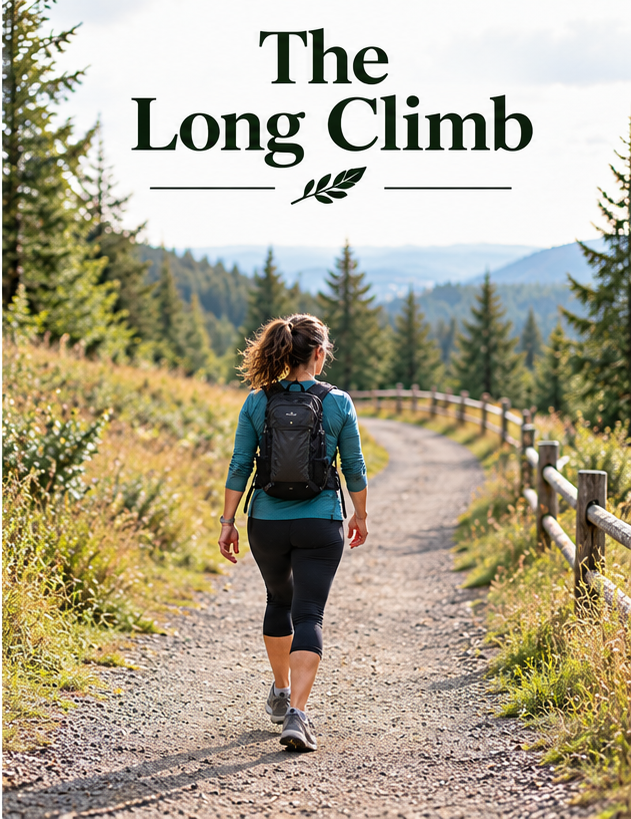
The Long Climb
Not every hill needs to be steep to offer a challenge. A long, gradual incline asks your muscles and cardiovascular system to keep working over a sustained stretch, building endurance in a different way from short hill repeats. The effort may feel manageable at first, then gradually become more noticeable as the climb continues.
Try This: Look for a route with a gentle, sustained uphill section and begin at a comfortable pace. Shorten your stride if the incline becomes more demanding, and slow down enough to maintain steady breathing. Choose a distance that leaves you with energy for the return trip, especially if the route is unfamiliar. A gradual climb doesn’t need to end at a summit to count.
Adding a new challenge to your walks can be satisfying, especially when something that once felt difficult begins to feel easier. But progress doesn’t always mean going farther, climbing higher, or adding more resistance. Sometimes it means noticing that you’re recovering more comfortably, feeling steadier on uneven ground, or enjoying a familiar route with less effort than before.
Knowing when to increase the challenge—and when to hold steady—is part of building strength that lasts. This guide explores some of the signs that you may be ready for more, the reasons an easier day might serve you better, and how to make those decisions without turning every walk into a test of your limits.
More Ways to Find Your Strength
Not every opportunity to build strength requires a hiking trail or a planned workout. Sometimes it’s a staircase you pass on an ordinary walk. Other times, it’s a winding trail that asks you to climb, balance, step over obstacles, and carefully make your way back down. Both offer opportunities to challenge your body in useful ways.
These final two guides explore strength from different directions: making use of what’s available close to home and discovering everything a trail can offer beyond the scenery.
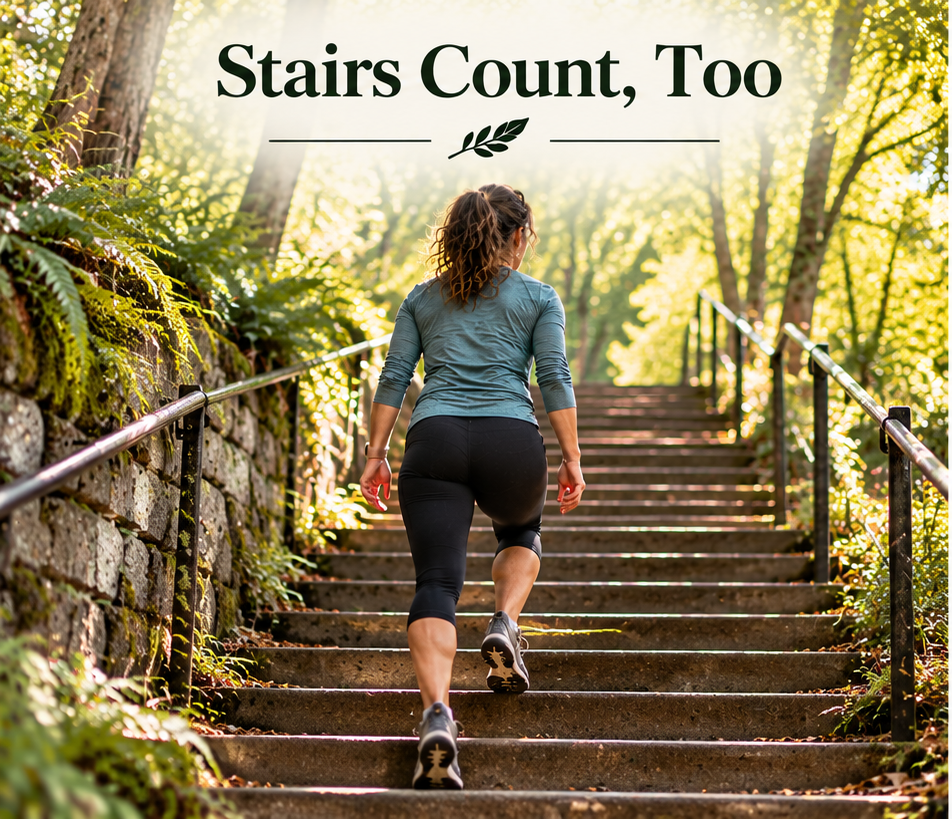
A staircase can be a surprisingly useful place to build strength and stamina. Neighborhood steps, park stairways, and even a few flights along a familiar route offer opportunities to challenge your legs and cardiovascular system without traveling far. Explore ways to make stairs part of your walking routine, from comfortable climbs to more demanding efforts, while remembering that coming back down deserves just as much attention.
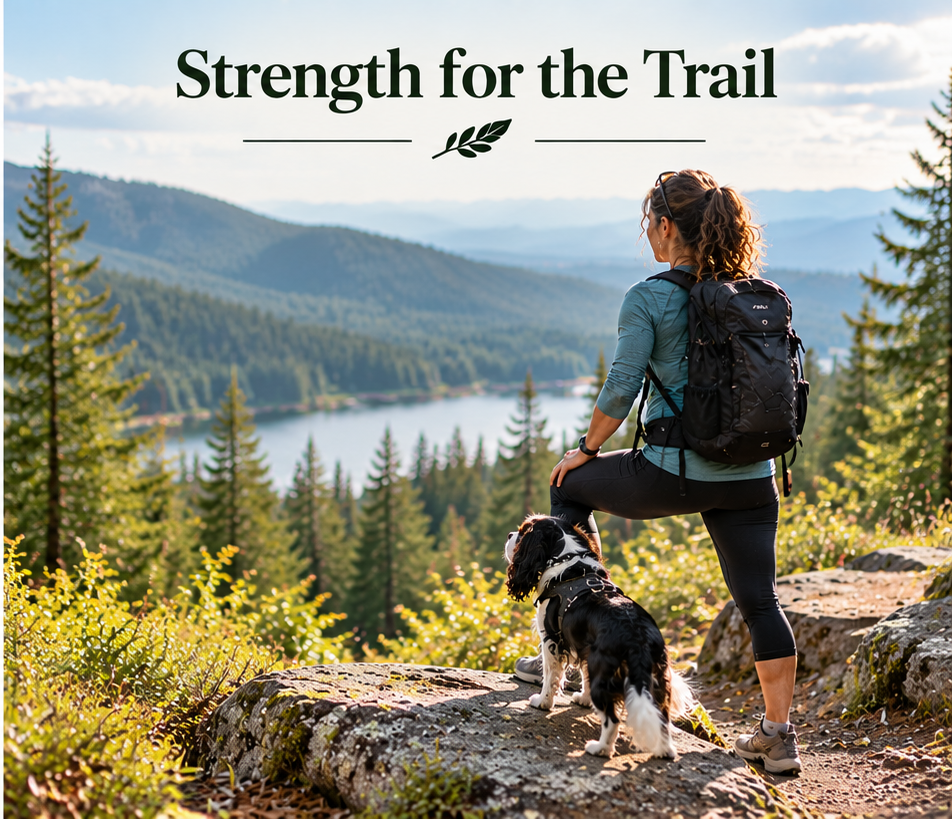
A trail offers far more than a beautiful destination. Climbing, descending, navigating uneven ground, and carrying what you need all place different demands on your body. Strength helps you meet those challenges, and the trail itself offers opportunities to develop it. Discover how to prepare for outdoor adventures, build capability along the way, and remember that reaching the viewpoint is only part of the journey. You’ll still need strength and energy for the trip back.