Have you ever started walking a little faster, felt yourself getting out of breath, and immediately slowed down because you figured you were overdoing it?
Well, sometimes slowing down is exactly the right thing to do. But it doesn’t necessarily mean you need to give up on walking at a quicker pace.
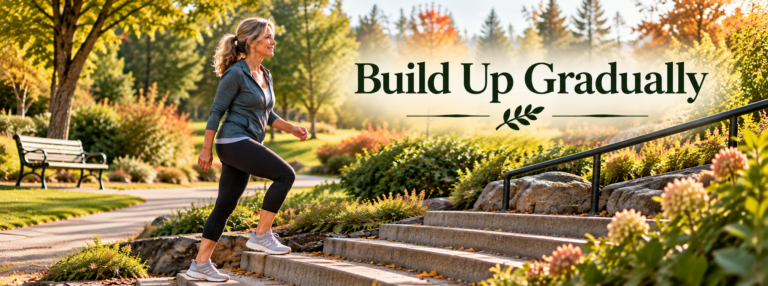
In fact, alternating between a brisk walk and an easier one can be a lovely way to build up your stamina without feeling like you have to maintain the same effort for your entire walk.
And the best part? You don’t need a stopwatch, a complicated plan, or even a particular route.
A Little Effort, Then a Little Breathing Room
The idea is pretty simple.
You walk at your usual comfortable pace for a few minutes. Then you pick things up just enough to notice your breathing getting a little quicker.
After a short stretch, you slow down again.
That’s your recovery. You’re still walking, just giving yourself a chance to catch your breath before deciding whether you’d like to pick up the pace again.
You can repeat that pattern a few times, or just once if that’s what feels good today.
There’s no magic number of intervals you need to complete.
Give It a Try
On your next walk, start with a few minutes at a comfortable pace.
When you’re ready, try walking briskly for about a minute. You should feel like you’re making an effort, but still be able to speak in sentences.
Then return to your easier pace for a couple of minutes, or however long you need to feel comfortable again.
If you’re feeling good, try another brisk stretch. If not, enjoy the rest of your walk at whatever pace suits you.
And if a full minute feels like too much, make it shorter. Thirty seconds counts, too.
Some Days Will Feel Different
One thing worth remembering, especially during perimenopause and menopause, is that your energy and recovery won’t necessarily feel the same every day.
A rough night’s sleep, a hot afternoon, or simply having a lot on your plate can change how much effort a walk requires.
So rather than deciding in advance that you must complete five brisk intervals, see how you feel as you go.
You might do several today and only one tomorrow. Or you might decide tomorrow is a perfectly good day for a leisurely stroll.
You’re not falling behind. You’re adjusting.
And really, that’s the whole point of this method. You’re giving your body a little challenge, followed by a little room to recover.
Over time, those brisk stretches may begin to feel easier. You might find yourself walking a little farther before wanting to slow down, or recovering more comfortably between efforts.
But there’s no rush to get there.
You’re still getting outside, moving your body, and making the walk your own. That’s a pretty good use of a few minutes, if you ask me.