Start Where You Are
You don’t need to know the names of every exercise or walk into this room already knowing what you’re doing. This library is here to make strength training easier to understand, one movement at a time. Explore the exercises, see what each one works, learn the basic movement, and find options that fit the equipment and experience you have right now.
You don’t need all of them. You don’t need to master them at once. Start with a few movements that feel approachable, practice them, and build from there. Strength is something you learn by doing—and there is plenty of room to begin exactly where you are.
Lower Body
Movements that primarily train the legs, hips, and glutes.
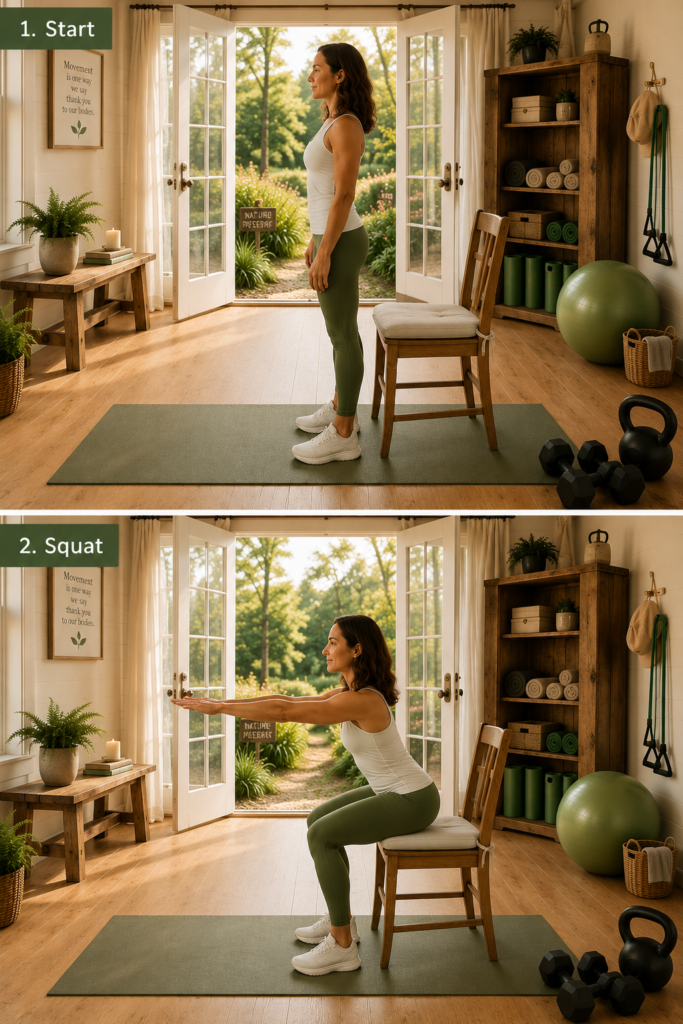
Chair Squat
Bodyweight • Lower Body
Stand just in front of a sturdy chair with your feet about hip- to shoulder-width apart. Bend at your hips and knees and lower with control until you lightly sit or touch the chair, then press through your feet to stand tall again.
Keep in mind: The chair is there to give you a clear target and a little confidence. Use your arms for balance if needed, and choose a chair height that lets you move comfortably and with control.
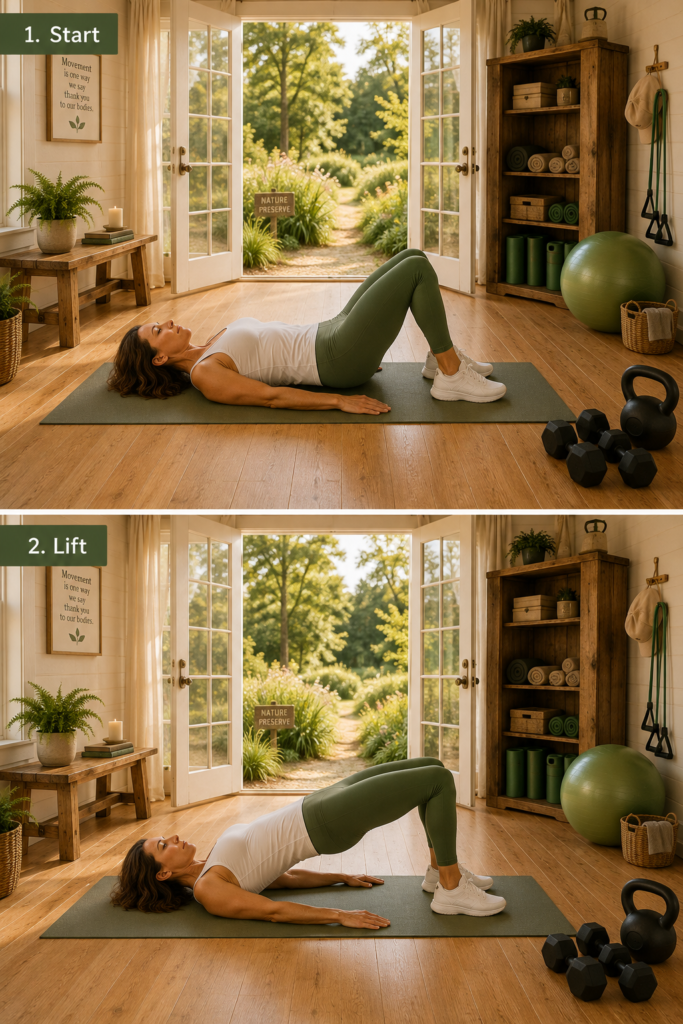
Glute Bridge
Bodyweight • Lower Body
Lie on your back with your knees bent and feet flat on the floor. Gently brace your middle, press through your feet, and lift your hips until your body forms a comfortable line from your shoulders toward your knees. Lower slowly back to the floor.
Keep in mind: Think about lifting with your glutes rather than arching your lower back. You don’t need to push your hips as high as possible—the goal is a controlled squeeze at the top.
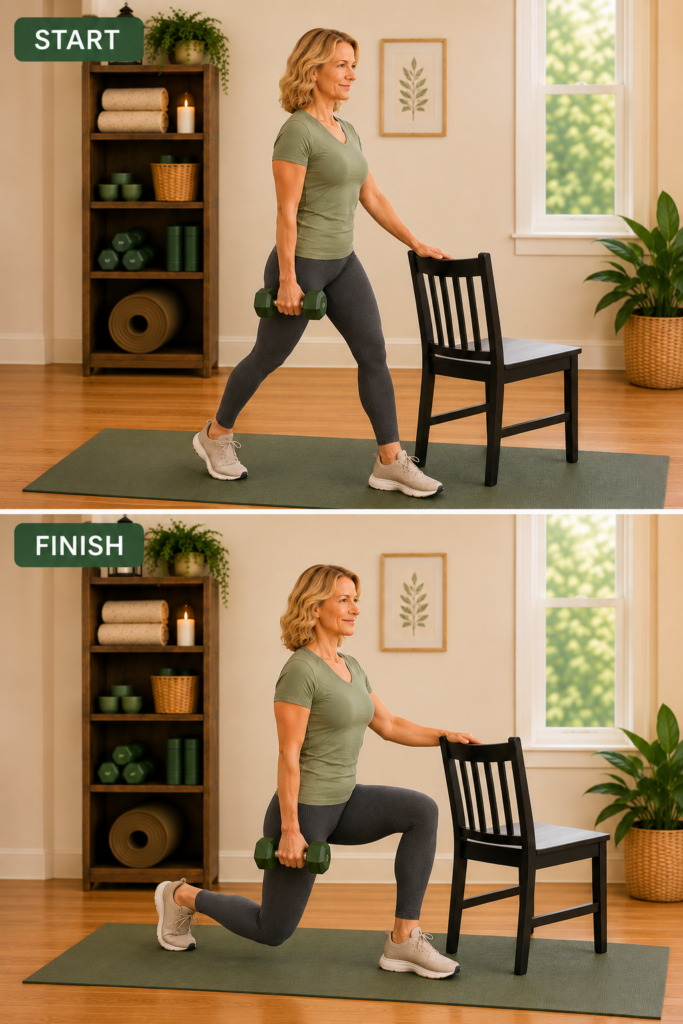
Supported Reverse Lunge
Dumbbell + Chair • Lower Body
Stand tall beside a sturdy chair and use one hand lightly for balance. Step one foot back and lower your body by bending both knees, then press through your front foot to return to standing. Complete your repetitions on one side before switching sides.
Keep in mind: The chair is for support, not something you need to avoid using. Take a shorter step or use a smaller range of motion if that feels more stable, and keep the front knee tracking in the same general direction as your toes.
Upper Body
Movements that primarily train the chest, back, shoulders, and arms.
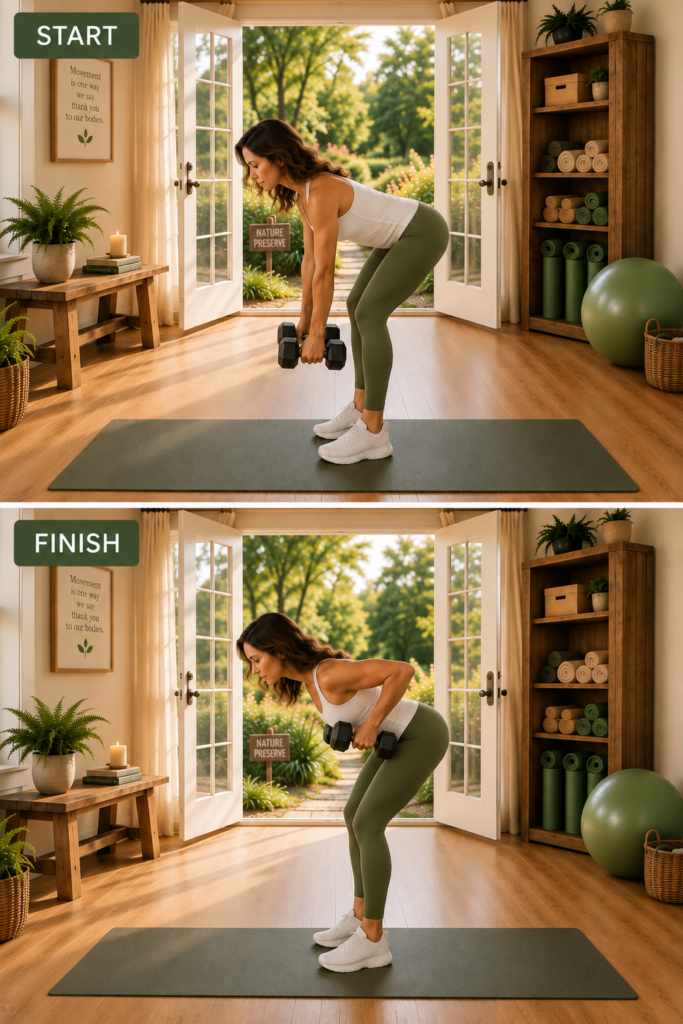
Dumbbell Row
Dumbbells • Upper Body
Stand with your feet comfortably apart and hinge forward at your hips, keeping your back long and your knees slightly bent. Let the dumbbells hang beneath your shoulders, then pull them toward your sides by bending your elbows. Lower the weights with control and repeat.
Keep in mind: Think about drawing your elbows back rather than simply lifting the weights. Keep your shoulders relaxed away from your ears and use a weight that lets you maintain the same steady position throughout the movement.
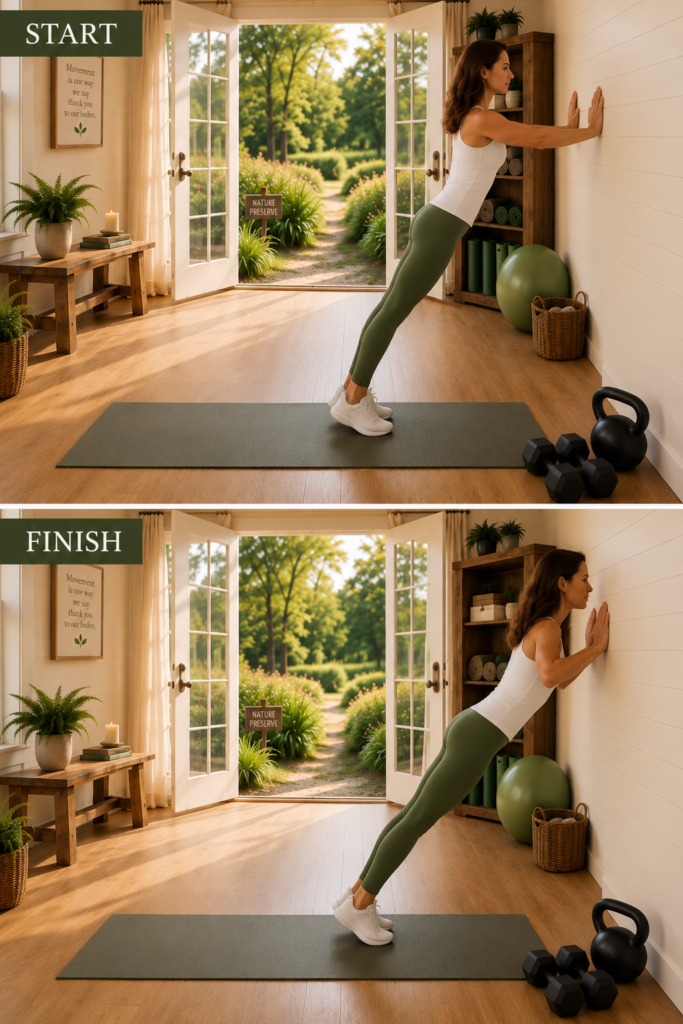
Wall Push-Up
Bodyweight • Upper Body
Stand facing a wall with your hands placed about shoulder-width apart. Keeping your body in a straight line, bend your elbows and bring your chest toward the wall. Press through your hands to straighten your arms and return to the starting position.
Keep in mind: Moving your feet closer to the wall makes the exercise easier; moving them farther away increases the challenge. Start at a distance where you can keep your body controlled from head to heels.
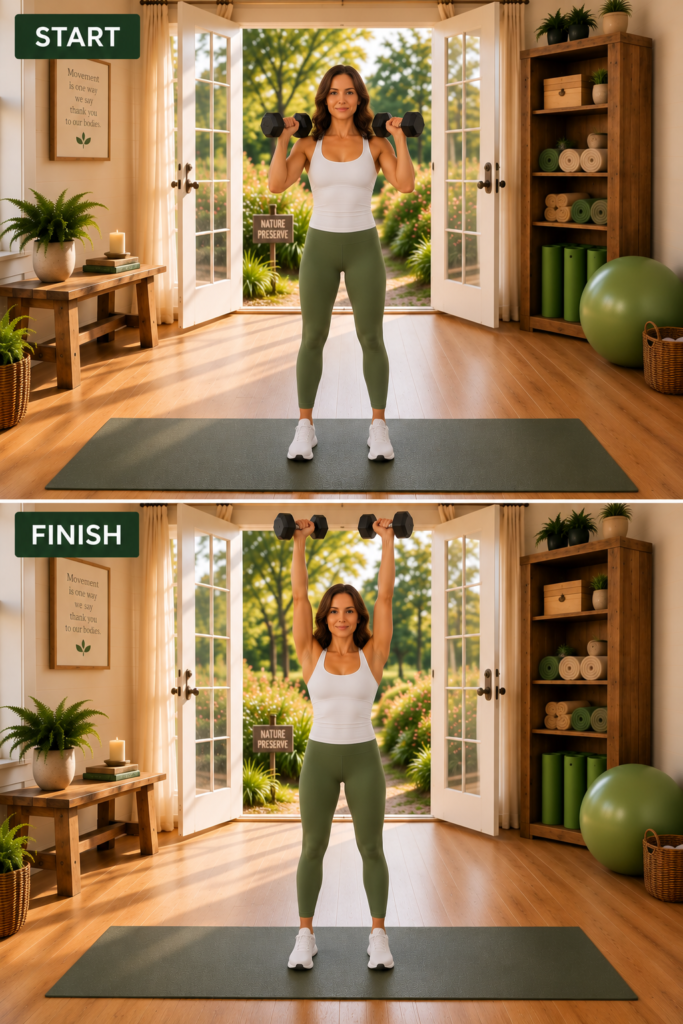
Standing DB Overhead Press
Dumbbells • Upper Body
Stand tall with your feet comfortably apart and hold a dumbbell in each hand at shoulder height. Gently brace your middle, then press the weights overhead until your arms are extended. Lower them with control back to shoulder height.
Keep in mind: Keep your ribs stacked over your hips rather than leaning back as the weights travel overhead. Use a weight that allows you to press smoothly without shrugging your shoulders or changing your posture.
Core & Stability
Movements that train the muscles around your trunk—including your abdominals, sides, and back—to help you stay steady, supported, and strong.
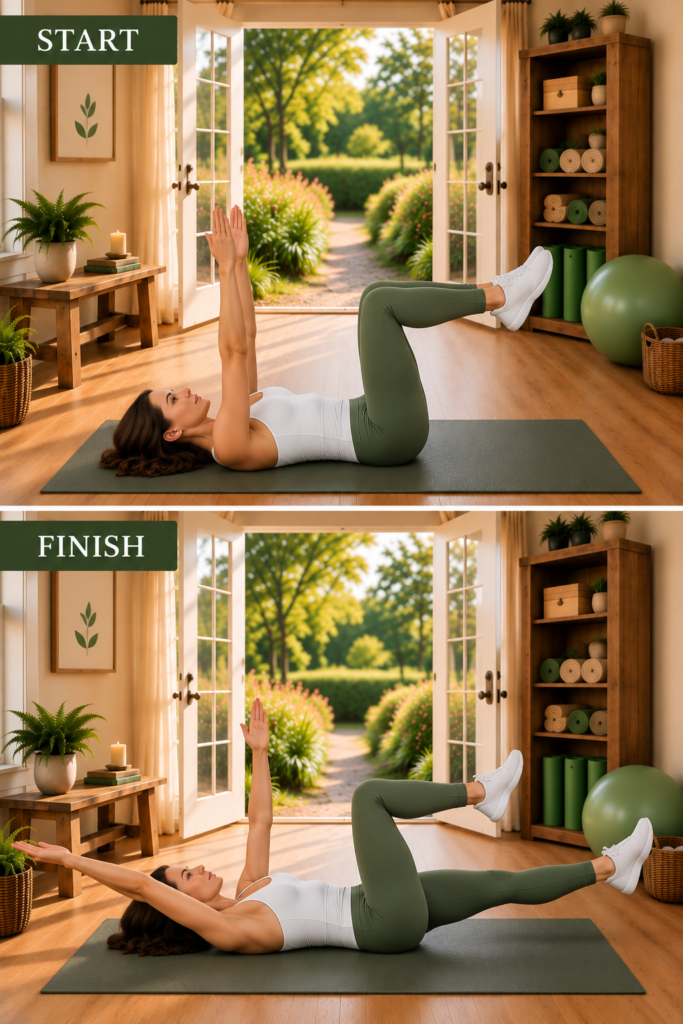
Dead Bug
Bodyweight • Core & Stability
Lie on your back with your arms reaching toward the ceiling and your knees bent at about 90 degrees. Gently brace your middle, then slowly extend one arm overhead and the opposite leg toward the floor. Return to the starting position and repeat on the other side.
Keep in mind: Move slowly and only extend as far as you can while keeping your lower back comfortably supported against the floor. A smaller, controlled movement is more useful than reaching farther and losing your position.
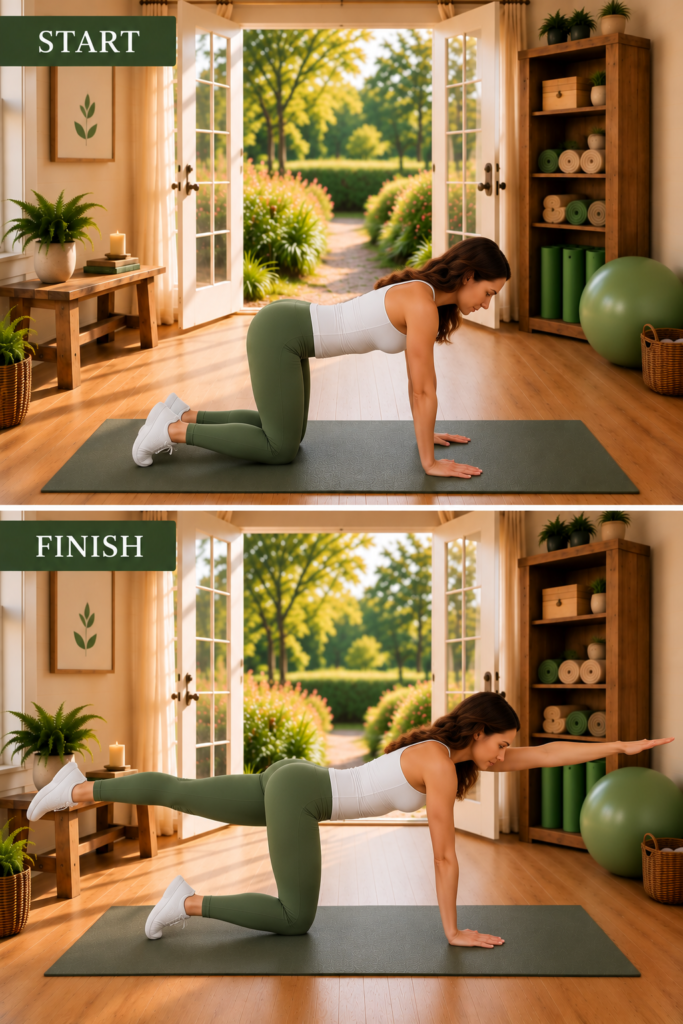
Bird Dog
Bodyweight • Core & Stability
Start on your hands and knees with your hands beneath your shoulders and your knees beneath your hips. Keeping your middle steady, extend one arm forward and the opposite leg behind you. Return with control, then repeat on the other side.
Keep in mind: Try to keep your hips level rather than rotating as you reach. Think about reaching your hand and foot away from each other instead of trying to lift them as high as possible.
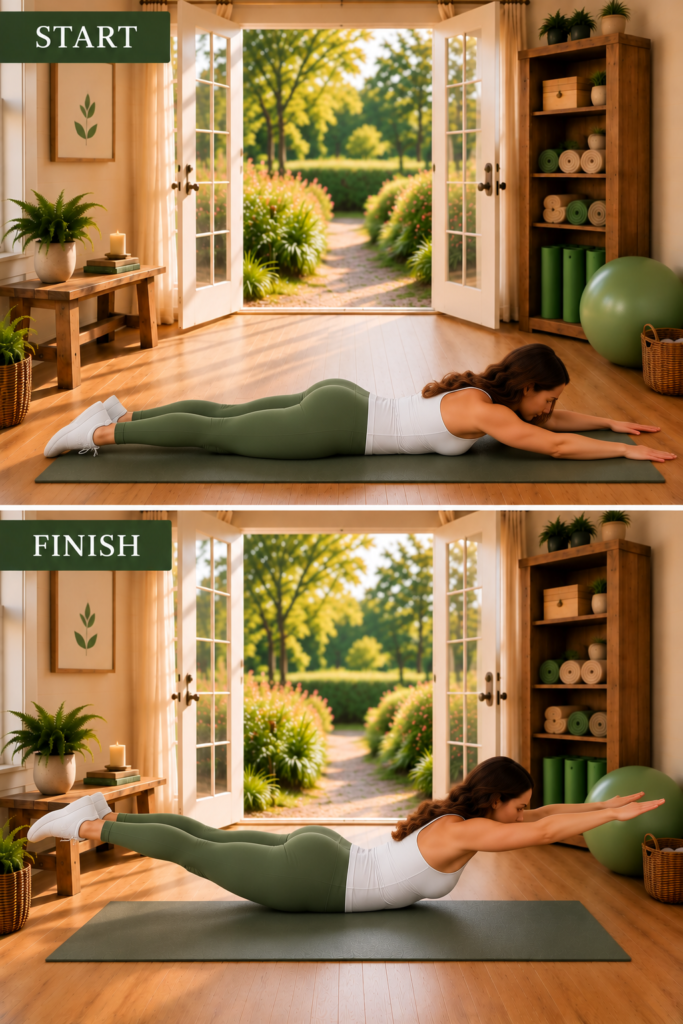
Superman
Bodyweight • Core & Stability
Lie face down with your arms extended in front of you and your legs straight behind you. Gently lift your arms, chest, and legs away from the floor, pause briefly, then lower back down with control.
Keep in mind: This movement doesn’t need to be big. Keep your gaze toward the floor so your neck stays comfortable, and focus on a gentle, controlled lift through the muscles along the back of your body rather than trying to get as far off the floor as possible.
Full Body & Everyday Strength
Movements that ask several areas of your body to work together, building strength and coordination for the things you do in everyday life.
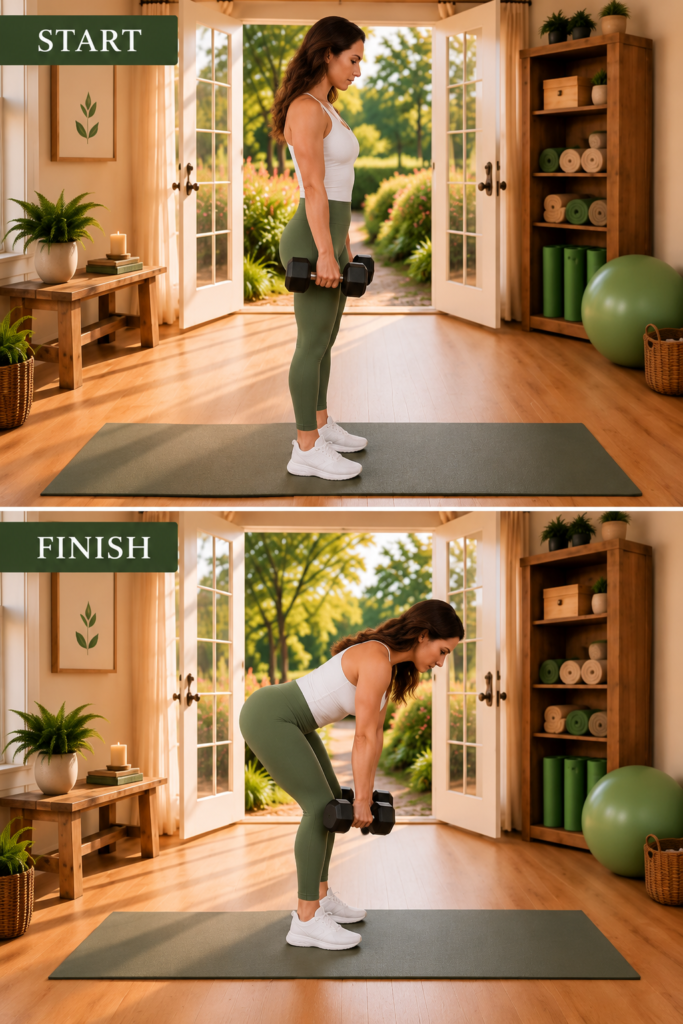
Dumbbell Romanian Deadlift
Dumbbells • Full Body & Everyday Strength
Stand tall with a dumbbell in each hand in front of your thighs. Soften your knees, then push your hips back as you lower the weights along your legs, keeping your back long. When you feel a comfortable stretch through the backs of your legs, press through your feet and bring your hips forward to return to standing.
Keep in mind: Think about sending your hips backward rather than squatting down. The dumbbells don’t need to reach the floor—lower only as far as you can while keeping your back long and the movement controlled.
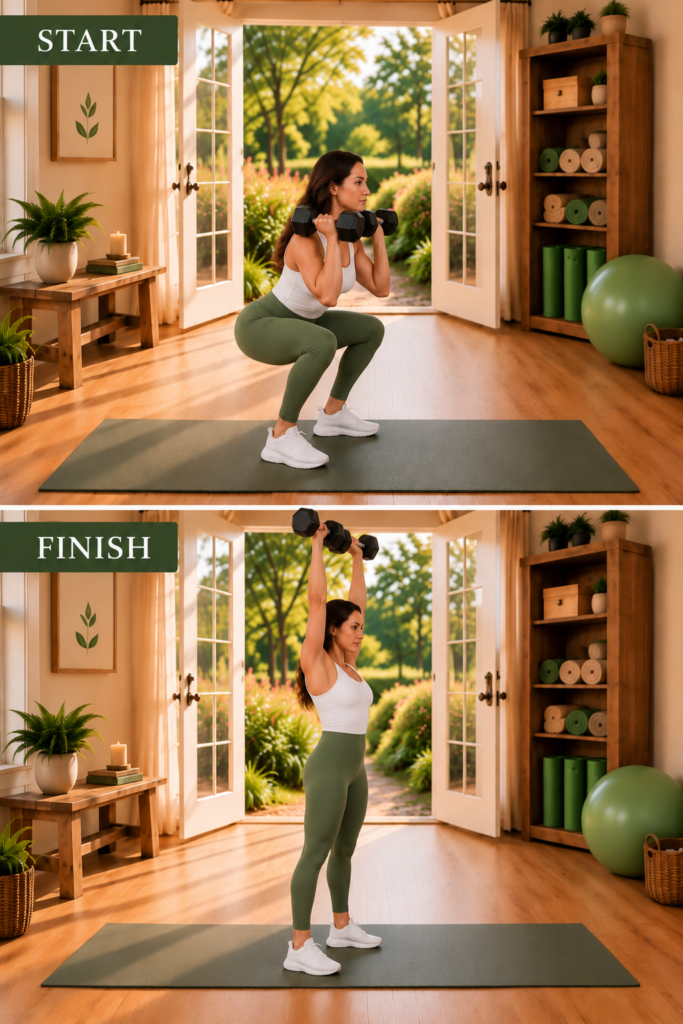
Squat to Overhead Press
Dumbbells • Full Body & Everyday Strength
Stand with your feet comfortably apart and hold a dumbbell in each hand at shoulder height. Bend at your hips and knees to lower into a squat, then press through your feet to stand. As you rise, press the dumbbells overhead. Lower the weights back to your shoulders before beginning the next repetition.
Keep in mind: Move at a pace that lets you stay in control through both parts of the exercise. Keep the weights comfortably at your shoulders during the squat, and avoid leaning backward as you press them overhead.
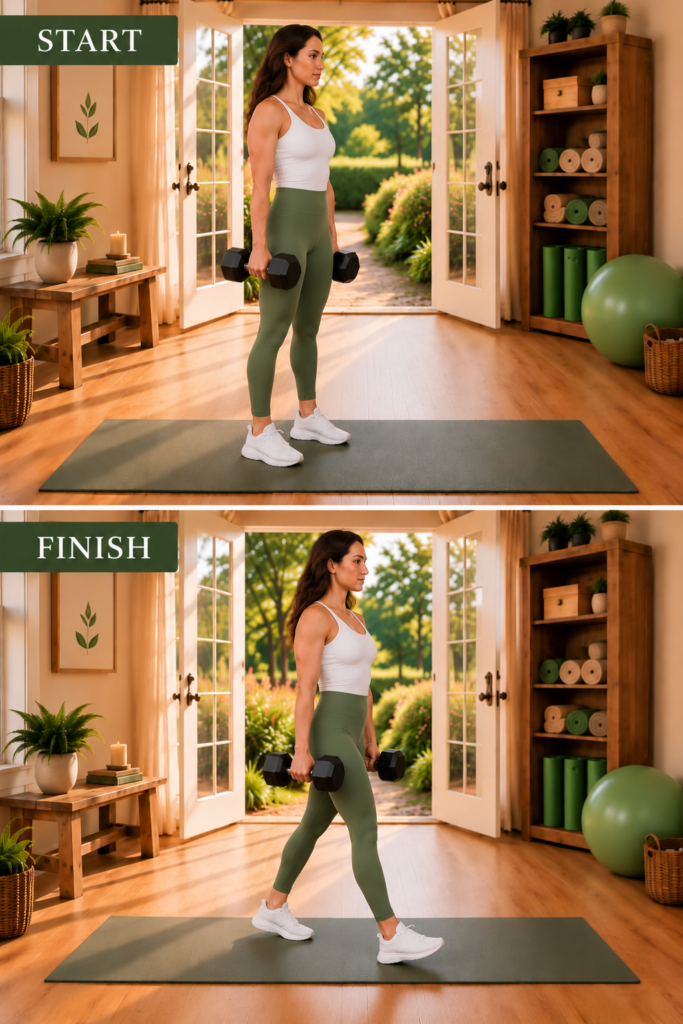
Farmer Carry
Dumbbells • Full Body & Everyday Strength
Stand tall with a dumbbell in each hand at your sides. Keeping your shoulders relaxed and your body upright, begin walking forward with steady, controlled steps. Continue walking for a set amount of time or distance, then carefully set the weights down.
Keep in mind: Choose a weight you can carry without leaning, rushing, or letting the dumbbells pull you out of position. Keep your steps natural and your gaze forward. If space is limited, turn around carefully and continue walking in the opposite direction.