
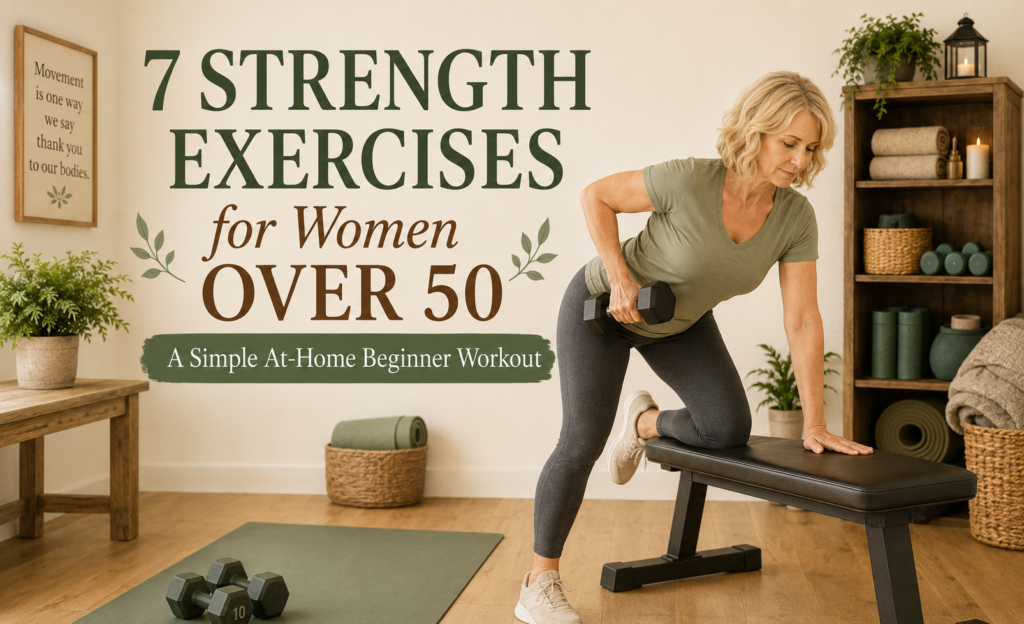
7 Strength Exercises for Women Over 50
An approachable at-home workout to help you begin building strength.
You don’t need a complicated workout to begin getting stronger.
These seven exercises were chosen to help you practice some of the basic movement patterns your body uses in everyday life—squatting, pushing, pulling, hinging, carrying, and moving with control.
If you’re new to strength training, begin with a weight that allows you to move comfortably and with good form. You do not need to lift as much as someone else, move as quickly as someone else, or prove anything here.
Your job today is simply to begin.
Move slowly. Pay attention to how each exercise feels. Rest when you need to. And remember: strength is something you build, one repetition at a time.
Before You Begin
For your first workout, keep it simple. Choose a pair of dumbbells you can control comfortably and give yourself permission to learn the movements before worrying about how much weight you’re lifting.
The right starting weight isn’t the same for everyone—or even for every exercise. Choose the range that gives you an appropriate challenge now with some room to progress.
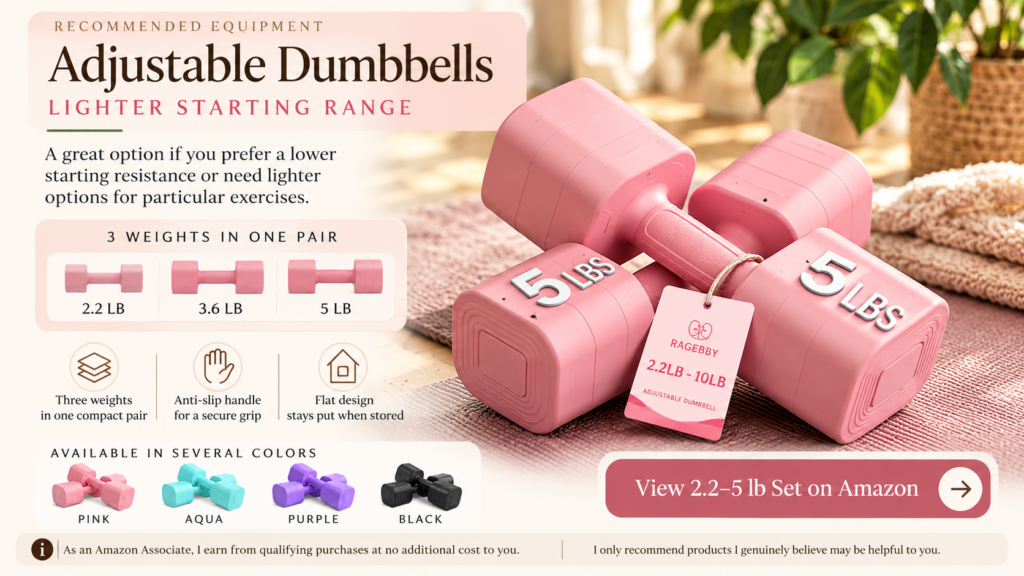
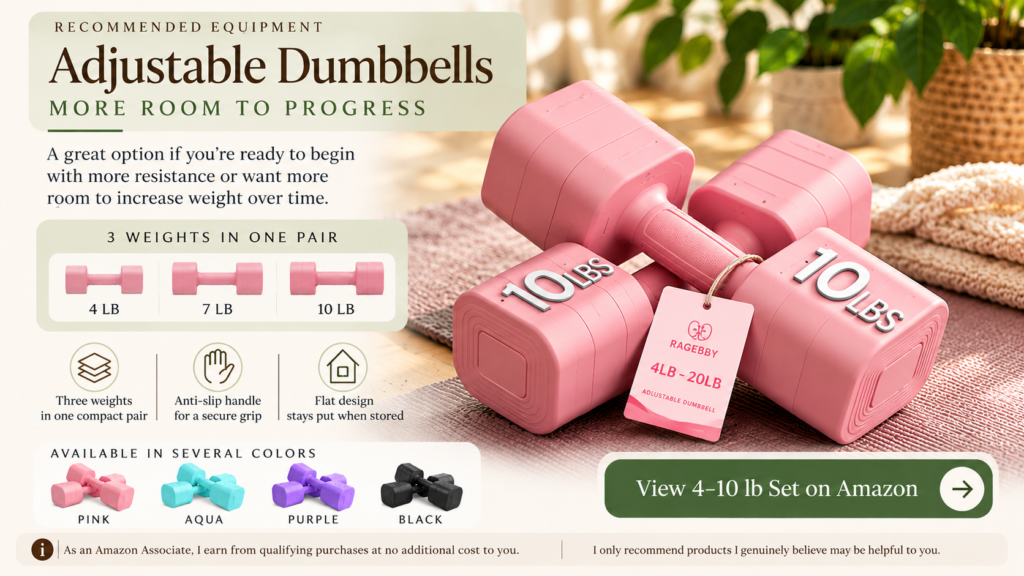
Some links in this section are affiliate links. I may earn a small commission at no additional cost to you.
Start with: 1 set of each exercise
Repetitions: 8–12 per exercise
Rest: About 60–90 seconds as needed
Equipment: A pair of dumbbells and a sturdy chair or bench if needed
Frequency: Begin with 2 strength-training days per week, with recovery time between sessions
The goal of your first workout isn’t to exhaust yourself. It’s to finish knowing you can come back and do it again.
Seven Strength Exercises For Women Over 50
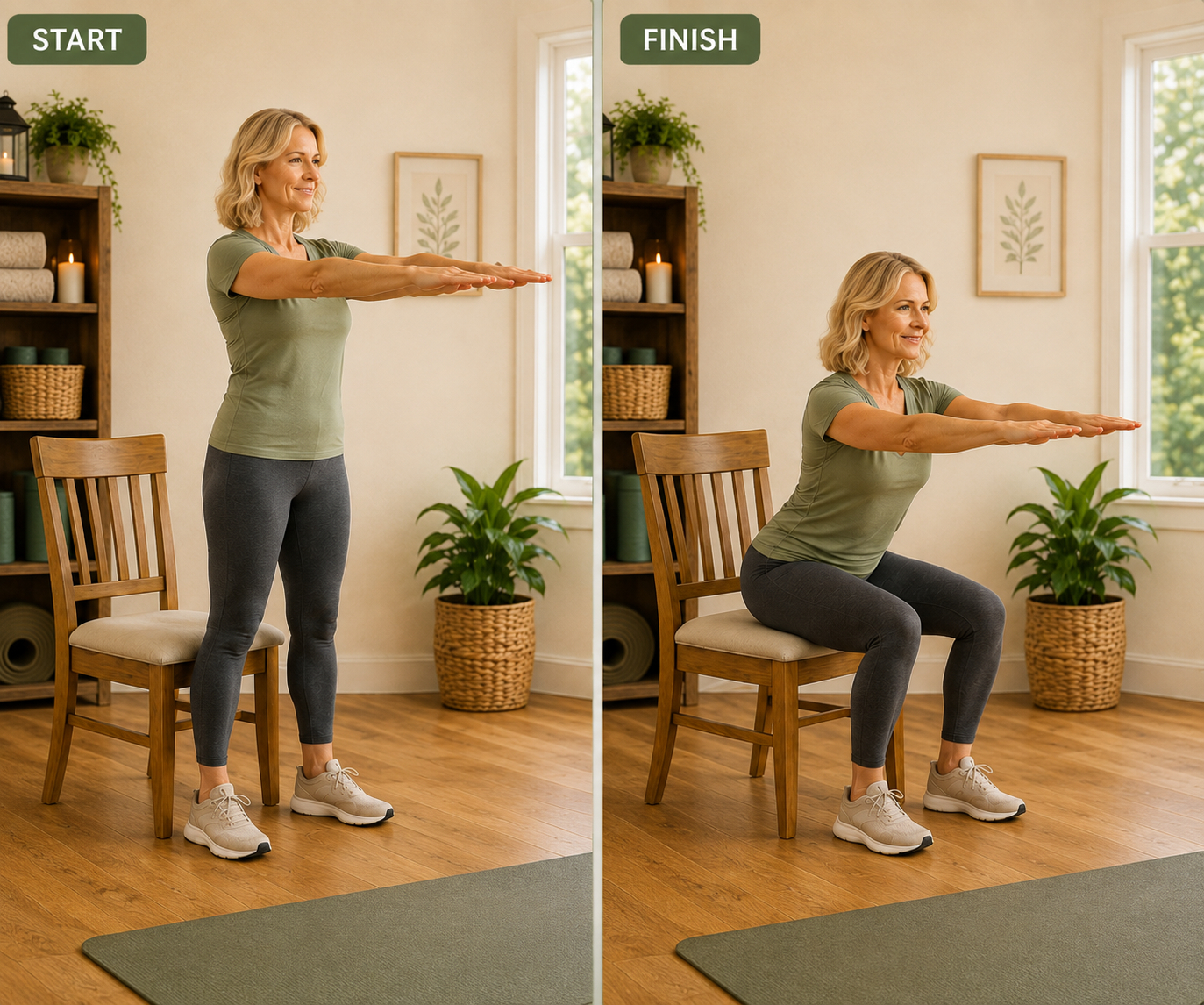
Chair Squats
How to: Stand in front of a sturdy chair with your feet about hip-width apart. Push your hips back and bend your knees as you lower with control until you lightly touch the chair. Press through your feet to stand tall, keeping your chest lifted and your knees tracking in the same direction as your toes.
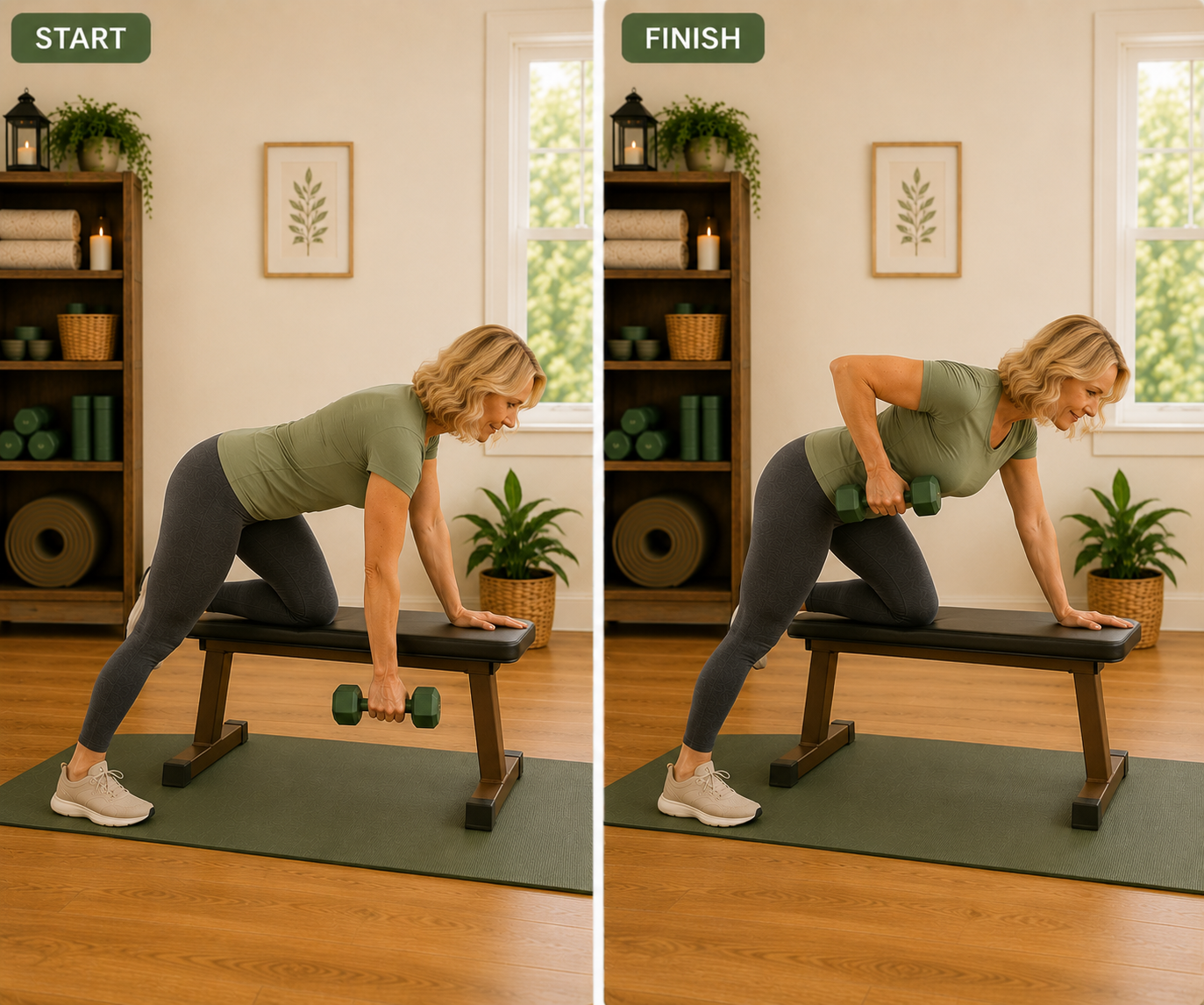
Dumbbell Row
How to: Place one hand on a sturdy chair or bench and hold a dumbbell in the opposite hand. Keep your back flat as you pull the weight toward your side, bringing your elbow back. Lower the dumbbell slowly until your arm is straight, keeping your shoulders level and the movement controlled.
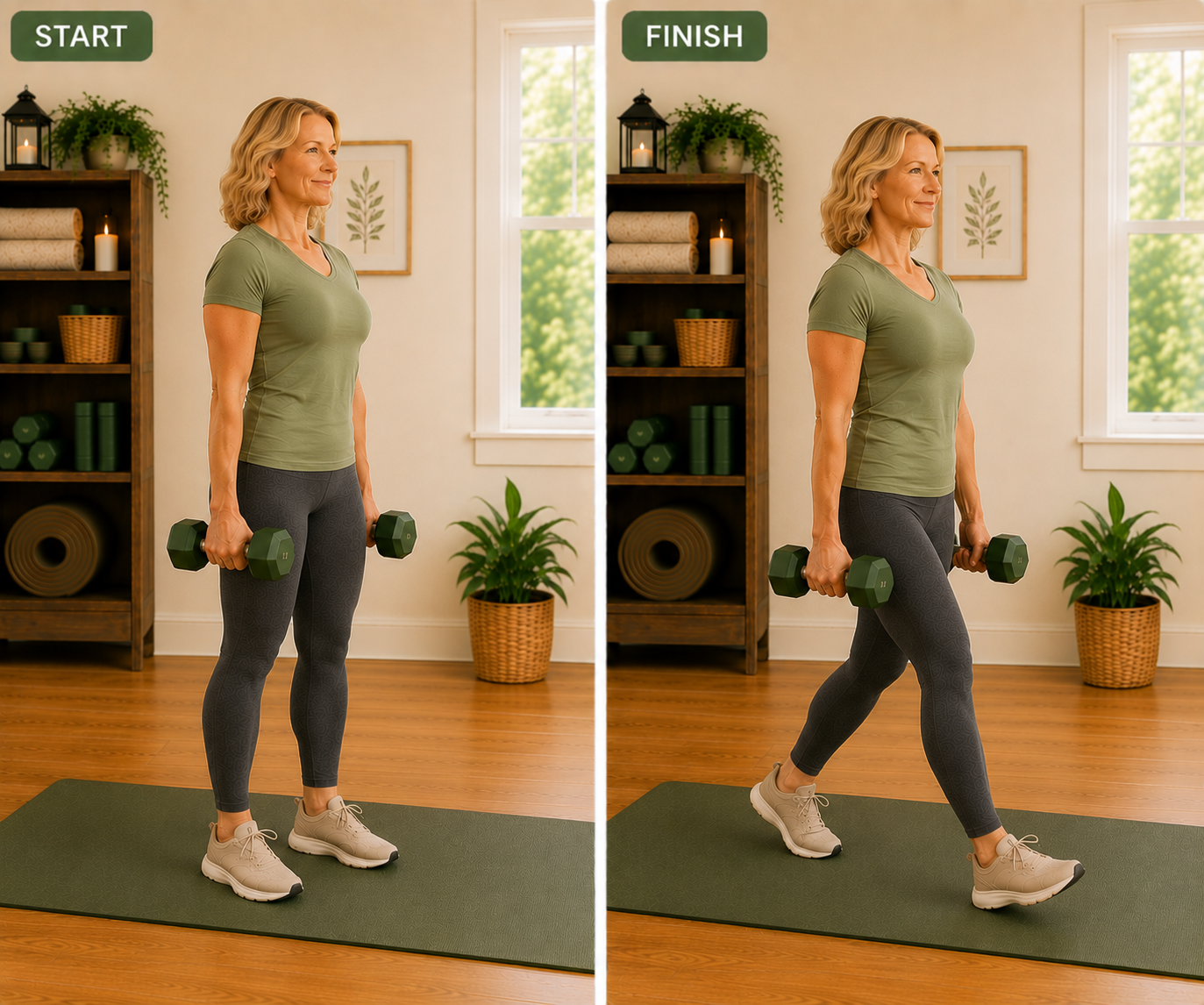
Farmer Carry
How to: Stand tall holding a dumbbell in each hand with your arms relaxed at your sides. Keep your chest lifted and your core gently engaged as you walk forward with slow, steady steps. Keep the weights close to your sides and your shoulders relaxed, maintaining an upright posture as you walk.
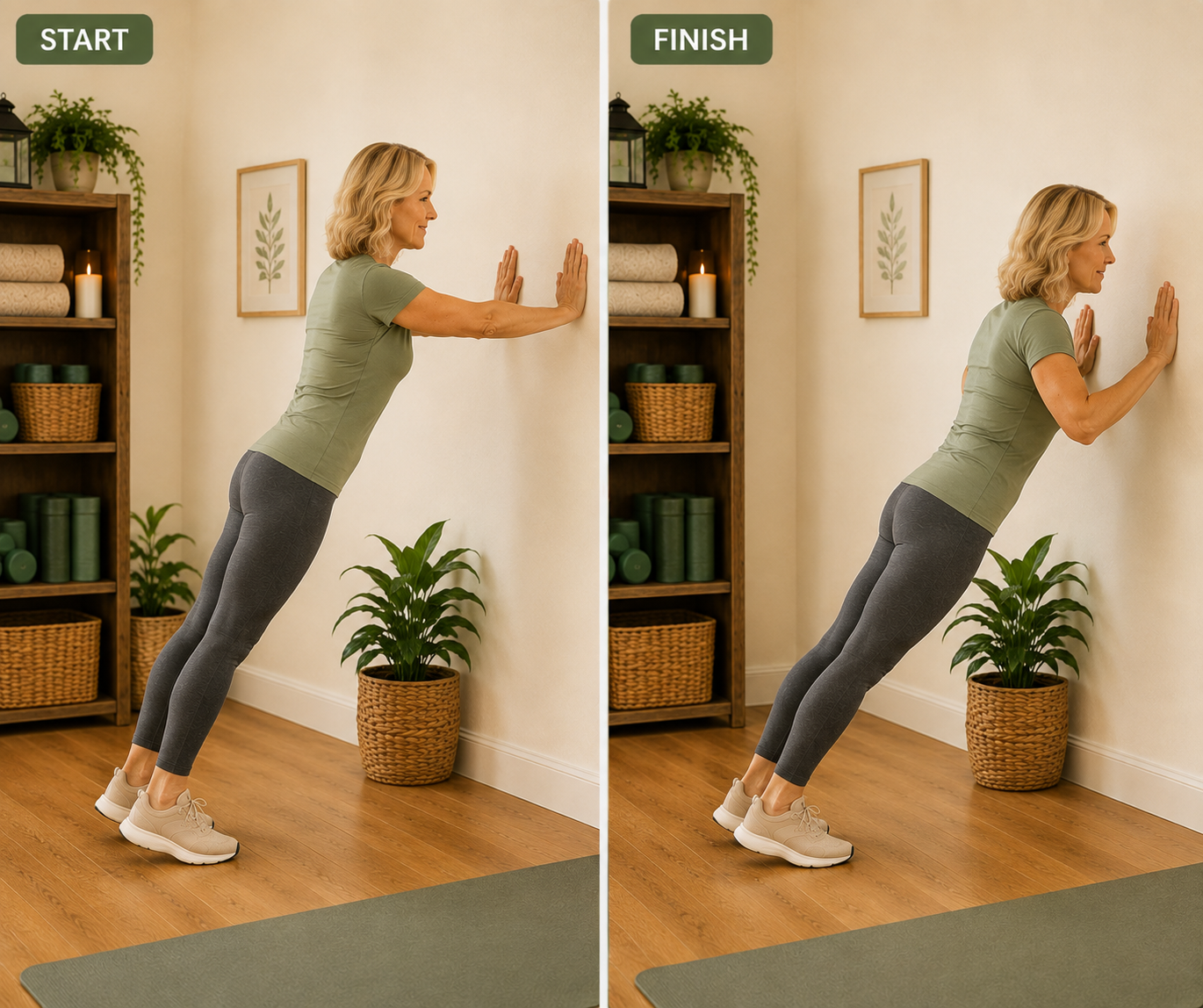
Wall Push Up
How to: Stand facing a wall and place your hands slightly wider than shoulder-width at chest height. Keep your body in a straight line as you bend your elbows and bring your chest toward the wall. Press through your hands to return to standing, keeping your core gently engaged.
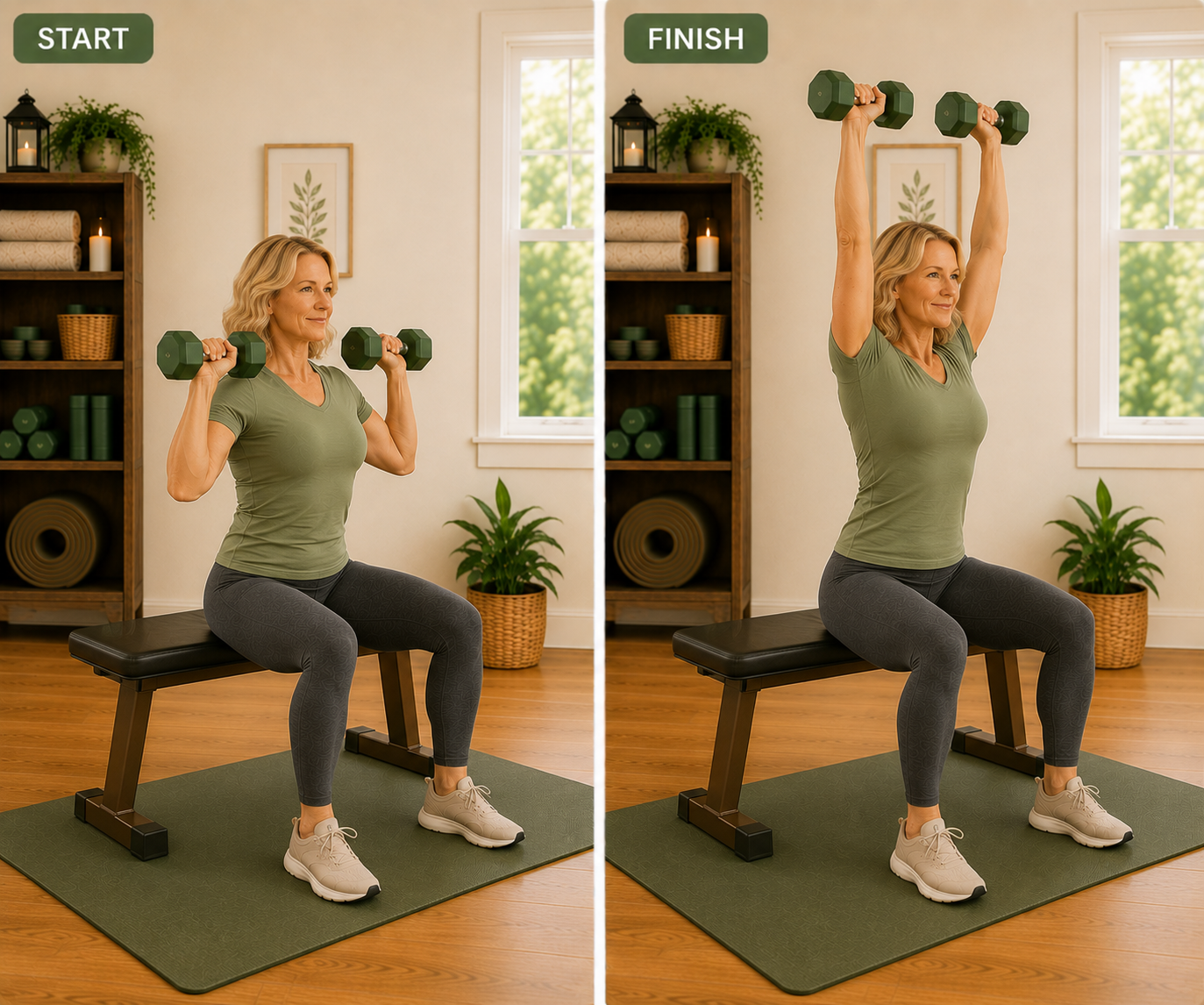
Seated Overhead Press
How to: Stand tall with your feet about hip-width apart and hold a dumbbell at each shoulder. Keeping your core engaged, press the weights overhead until your arms are straight. Lower the dumbbells slowly back to shoulder height, keeping your ribs down and the movement smooth and controlled.
Cool Down
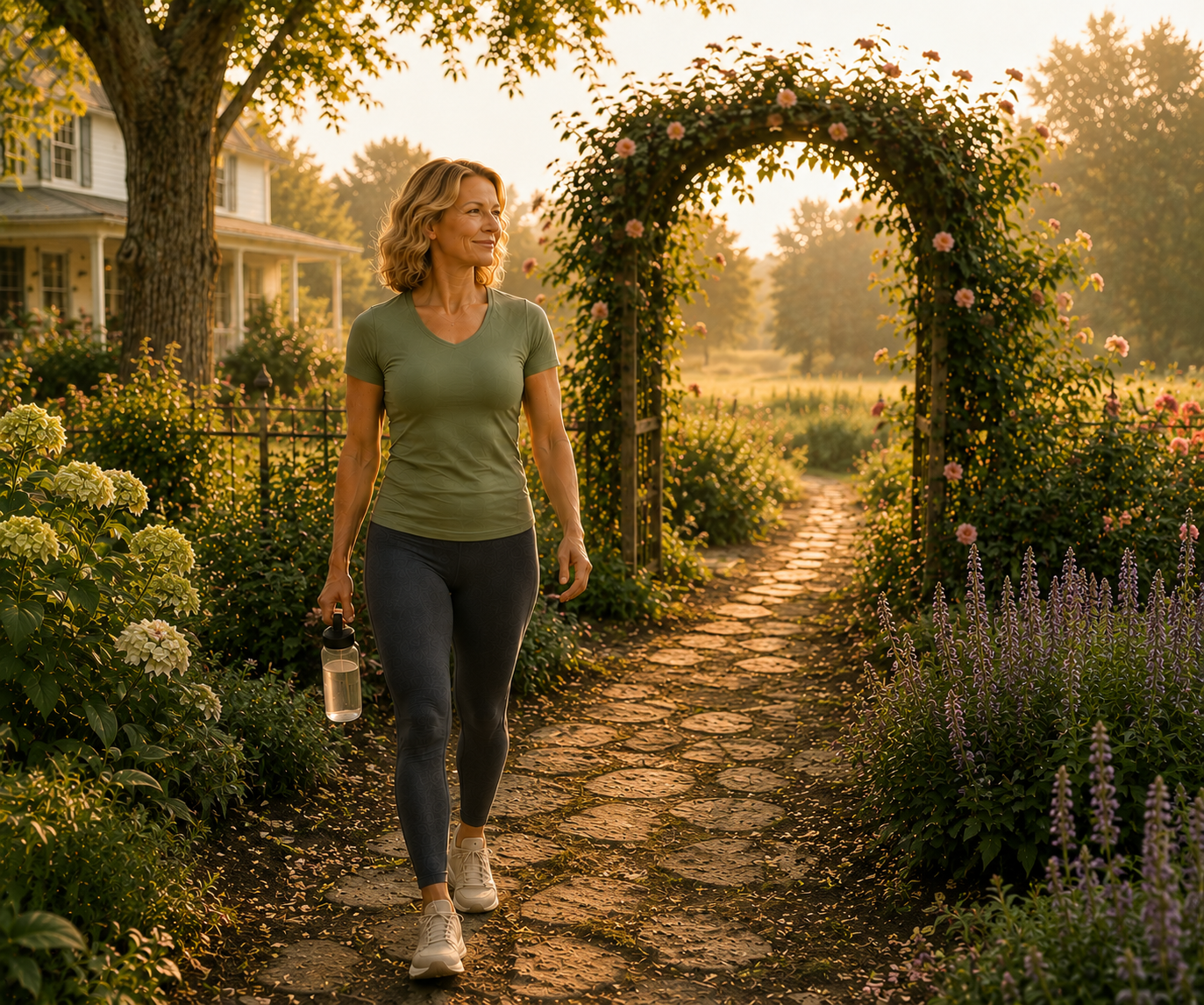
How to: Finish your workout with a few minutes of easy walking. Let your breathing gradually settle as you move at a comfortable pace. Keep your shoulders relaxed, allow your arms to swing naturally, and use this time to notice how your body feels before you move on with your day.
Glute Bridge
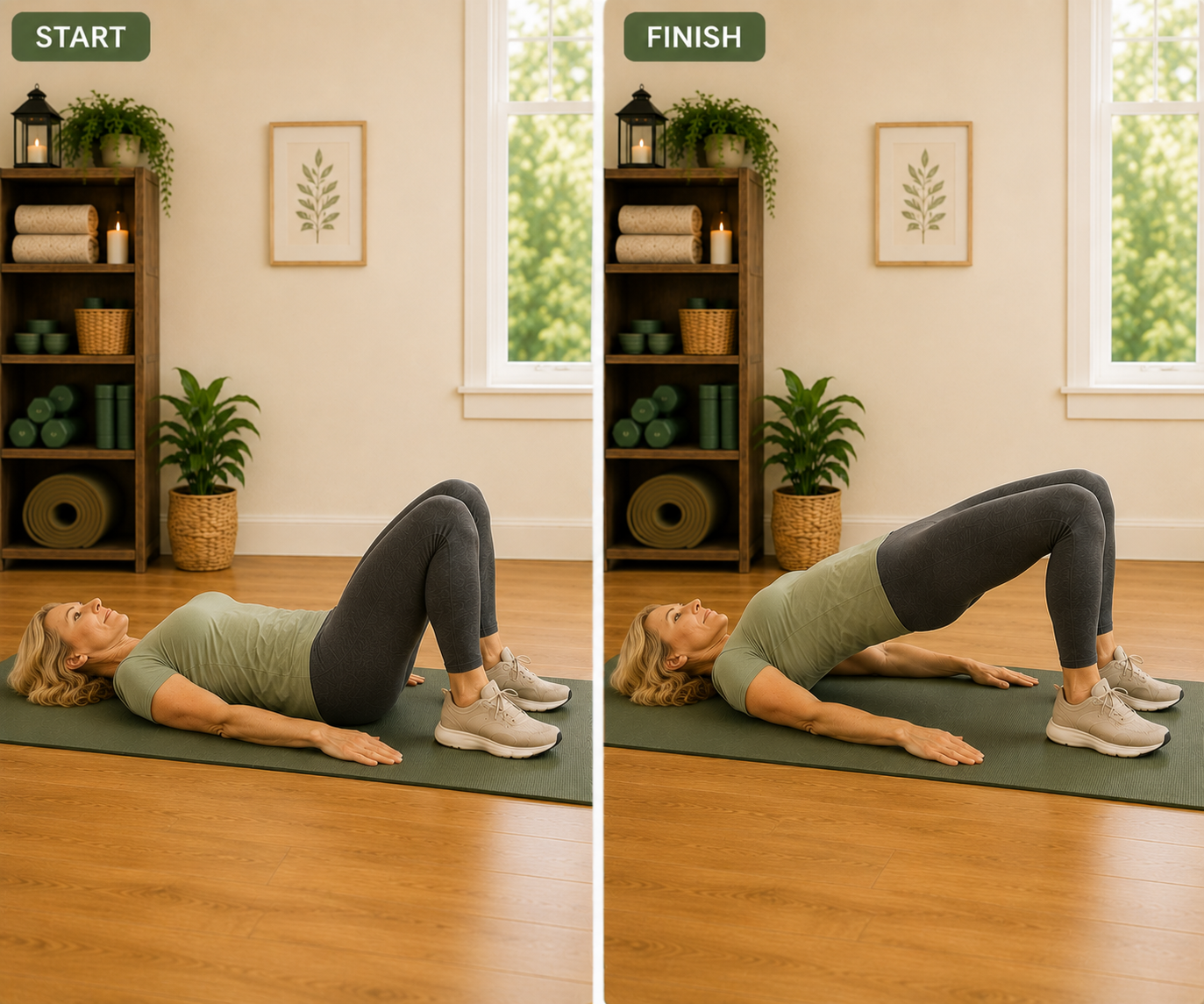
How to: Lie on your back with your knees bent, feet flat on the floor, and arms at your sides. Press through your feet and squeeze your glutes as you lift your hips. Pause briefly at the top, then lower your hips slowly back to the floor, keeping the movement smooth and controlled from start to finish.
Supported Reverse Lunge
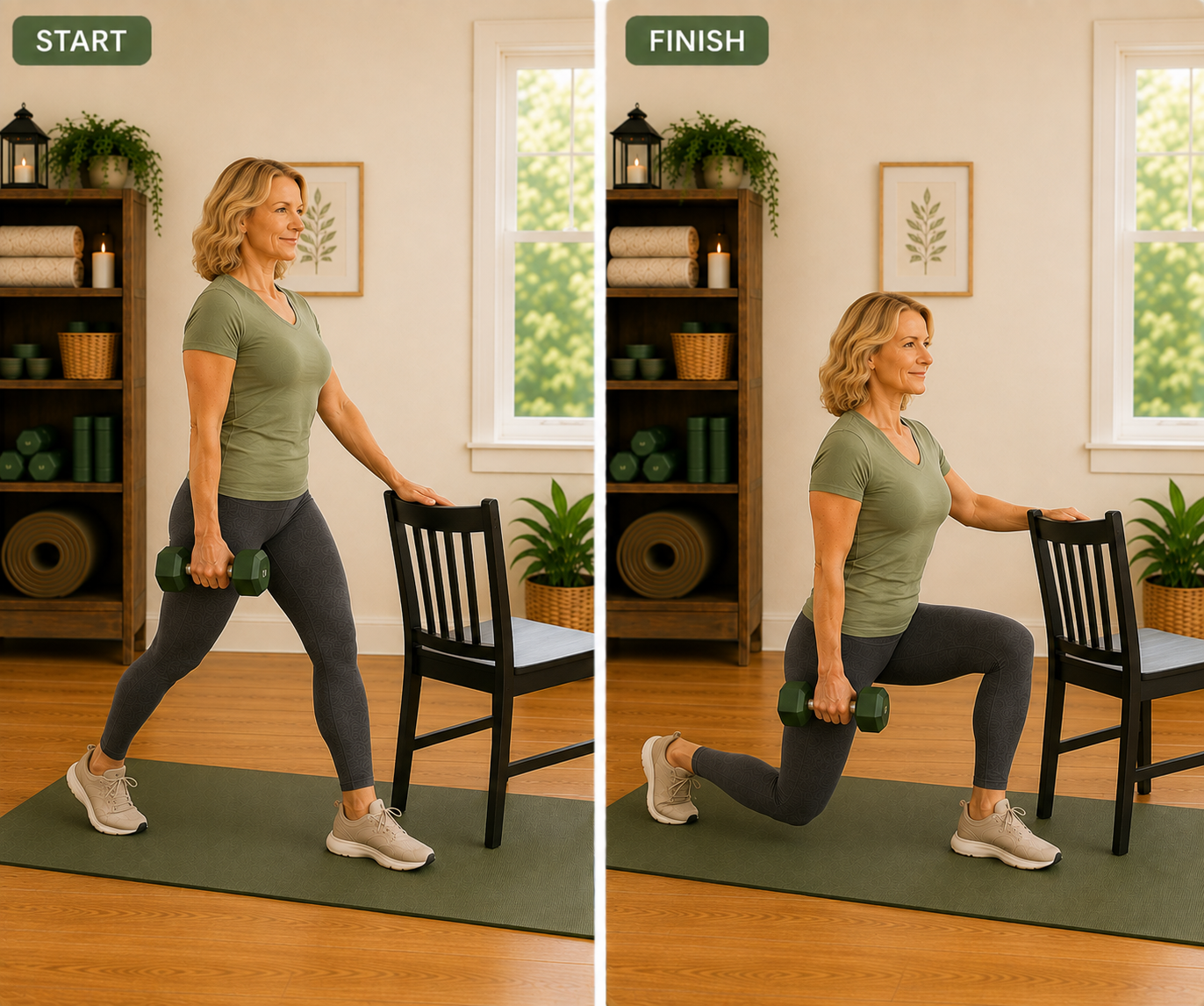
How to: Stand beside a sturdy chair, resting one hand on it for support and holding a dumbbell in the opposite hand. Step one foot back and lower your body with control, keeping your torso tall. Press through your front foot to return to standing, keeping the movement slow and steady.
A Quick Safety Note
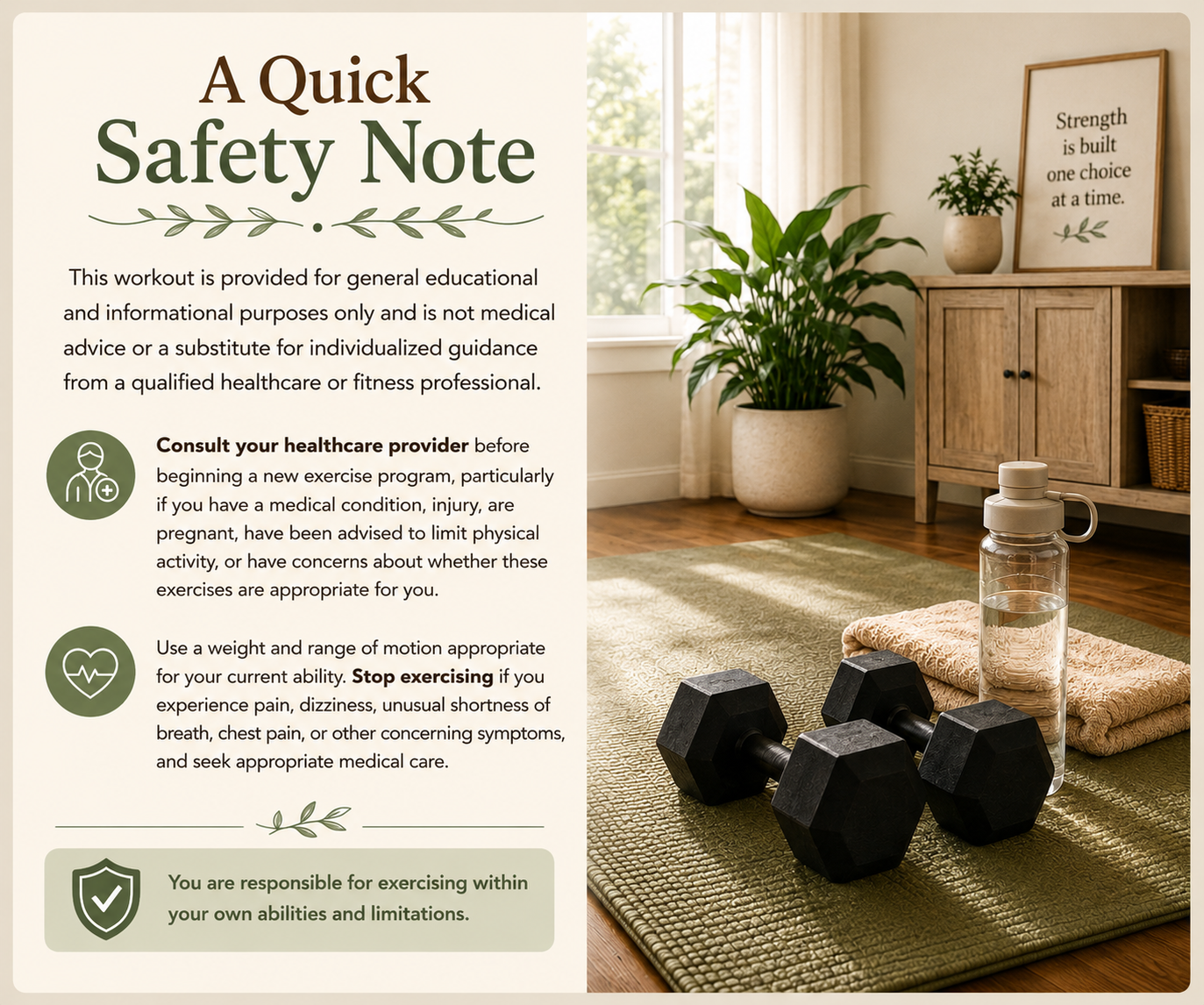
Please read this before beginning your workout. Your safety matters more than finishing every exercise. Choose movements and weights appropriate for your ability, stop if something doesn’t feel right, and consult a qualified healthcare professional when appropriate. Build strength safely.